
[ad_1]
Marrakech – Amnesty Morocco, together with its counterparts in Algeria and Tunisia, has issued a joint declaration expressing “deep concern” over the threats facing the Global Sumud Flotilla, which is currently approaching Gaza with vital humanitarian aid.
As the flotilla enters what activists call the “Orange Line” – around 150 nautical miles from Gaza’s coast – it faces heightened risk of Israeli interception. The declaration, released today, cites Israeli media reports of a possible military intervention on the high seas about 180 kilometers from Gaza’s shores, well beyond Israeli territorial waters.
The Maghreb sections stressed that Arab League states have both legal obligations to protect their citizens and moral responsibilities regarding Gaza’s blockade.
Amnesty called on these states to “condemn publicly any attack or obstruction to the flotilla operation, demand immediate protection of their citizens and all participants, and activate the diplomatic, legal, and consular levers necessary to prevent any violation of their rights.”
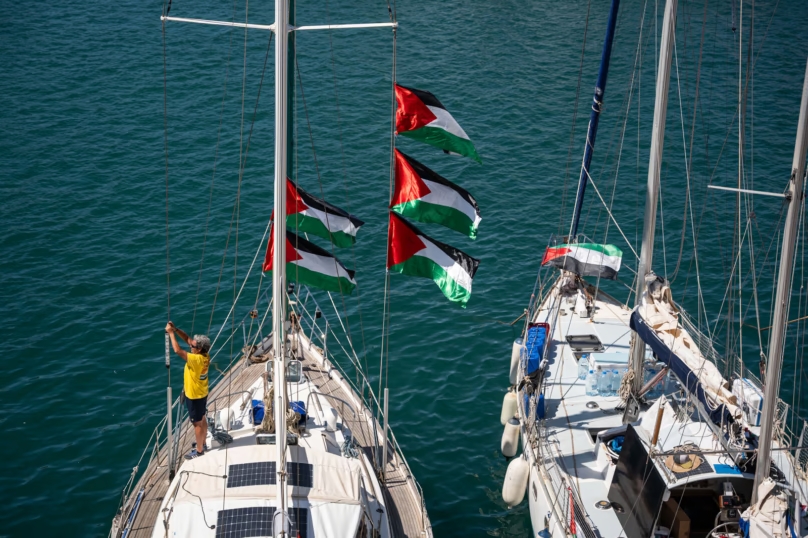
The Global Sumud Flotilla comprises over 40 vessels with hundreds of participants from 44 countries, including many from the Maghreb region. This peaceful civilian initiative seeks to break Israel’s 18-year blockade on Gaza, which has intensified since October 2023, creating conditions of organized famine and total siege.
“In a context of organized famine, collapse of the health system, and total siege, delivering humanitarian aid is an urgent and essential act of solidarity,” the Amnesty statement stressed.
Activists believe the flotilla could reach Gaza within three days, depending on weather conditions and potential risks, including engine failure or Israeli attacks.
Several flotilla vessels have already been attacked, including two struck by suspected drones while docked in Tunisia earlier this month.
According to Amnesty, any Israeli interception would constitute serious violations of international law, including “obstruction of humanitarian aid delivery to a civilian population at risk (a war crime), arbitrary detention of humanitarian volunteers and journalists, and violation of fundamental guarantees related to detention and deportation.”
In a separate statement released days ago, activists aboard the flotilla reported being targeted by explosions and multiple drone attacks while sailing in international waters off Greek shores. The statement noted these attacks, alongside threatening Israeli statements, put crew lives at risk and represent blatant attempts at intimidation.
In December 2024, Amnesty International published a landmark report concluding that “Israel has committed and is continuing to commit genocide against Palestinians in the Gaza Strip.” The report documented how Israel has “unleashed hell and destruction on Palestinians in Gaza brazenly, continuously and with total impunity.”
‘Nothing justifies intercepting a peaceful humanitarian initiative’
Turkish naval forces have provided support to the flotilla after one vessel began leaking, with Turkey’s defense ministry affirming its commitment to protecting “humanitarian values and the safety of innocent civilians.”
Meanwhile, the blockade has been in effect since January 2009 as part of Israel’s efforts to restrict Hamas’s ability to smuggle weapons. Under the San Remo Manual on naval warfare and the London Declaration of 1909, naval blockades are permitted as a military practice if certain conditions are met.
The manual states blockades cannot be imposed solely to starve civilians, but allows enforcement “by a combination of legitimate methods and means of warfare.”
A Times of Israel explainer notes that since the Global Sumud Flotilla openly declares its intention to breach the blockade, international law permits Israel to intercept the vessels even in international waters.
“You don’t have to wait for a point in time when vessels breach the blockaded area,” the article quotes legal experts. “It is enough that they are attempting to breach the blockade.”
Israeli authorities point to the recent delivery of 736 humanitarian aid trucks between September 14-19, carrying over 14,000 tons of aid. However, activists maintain that land deliveries remain insufficient to address the humanitarian catastrophe.
Amnesty Morocco’s declaration concludes with a firm assertion: “Nothing justifies intercepting a peaceful humanitarian initiative. Nothing justifies obstructing aid intended for a starving, besieged, and bombed population.”
Read also: Morocco’s Catholic Church Backs Gaza Aid Flotilla, Offers Spiritual Support
[ad_2]
Source link