
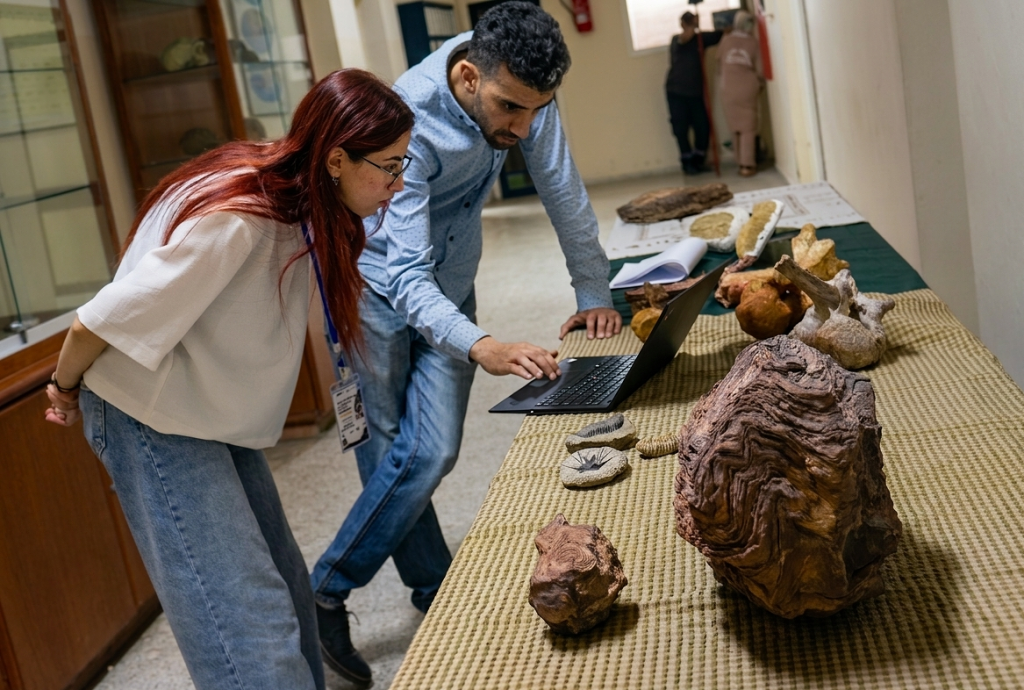
The Geology Department at the Faculty of Sciences Aïn Chock, part of Hassan II University of Casablanca, organized on May 25, 2026, in partnership with Al Jabr High School, a scientific and academic guidance event for secondary school students under the theme “Exploring Earth to Understand Our Future”. The initiative forms part of the university’s efforts to strengthen engagement with the educational community and support students in making informed academic choices.
The event comes at a time of increasing global attention toward Earth Sciences, a discipline gaining strategic importance amid environmental, climatic and economic transformations. Challenges related to water scarcity, climate change, natural disasters, natural resource management and alternative energy development have placed Earth Sciences among the key fields connected to sustainable development and environmental protection.
In his address, Abdelaziz Skri, Dean of the Faculty of Sciences Aïn Chock, emphasized the importance of university outreach toward younger students and highlighted the institution’s role in supporting academic orientation. He stated that Earth Sciences represent one of the strategic disciplines contributing to the understanding of Earth systems, the preservation of natural resources and responses to environmental and climate-related challenges.
Mounia Miara, Vice Dean in charge of pedagogical affairs, presented an overview of the academic programs and study tracks available at the Faculty of Sciences Aïn Chock. Her presentation focused on the diversity of scientific training opportunities provided by the institution and the academic and professional prospects associated with them.
The program also featured a scientific lecture delivered by Dr. Hoda Bouziane entitled “Earth Sciences 360 Degrees”. Through this presentation, students were introduced to the broad scope of Earth Sciences and their contribution to understanding natural phenomena and environmental changes, as well as their applications in water management, energy, mineral resources, environmental studies, land-use planning and natural risk prevention.
Another lecture was presented by Dr. Khadija Othmane under the title “Igneous Rocks: Origin and Classification”. The session introduced participants to the formation processes of igneous rocks, their main characteristics and their classification based on mineral composition and cooling conditions, providing students with an accessible and interactive introduction to a fundamental aspect of geology.
The scientific day further included practical activities conducted in the laboratories of the Geology Department, where students explored igneous rocks, microscopic observation techniques and geological analysis methods. Participants also visited different facilities dedicated to scientific training and research within the institution.
According to the organizers, initiatives of this kind contribute to strengthening links between universities and educational institutions while encouraging students to explore their scientific potential and consider academic pathways aligned with future challenges, particularly in areas related to the environment, sustainable development and natural resources.