
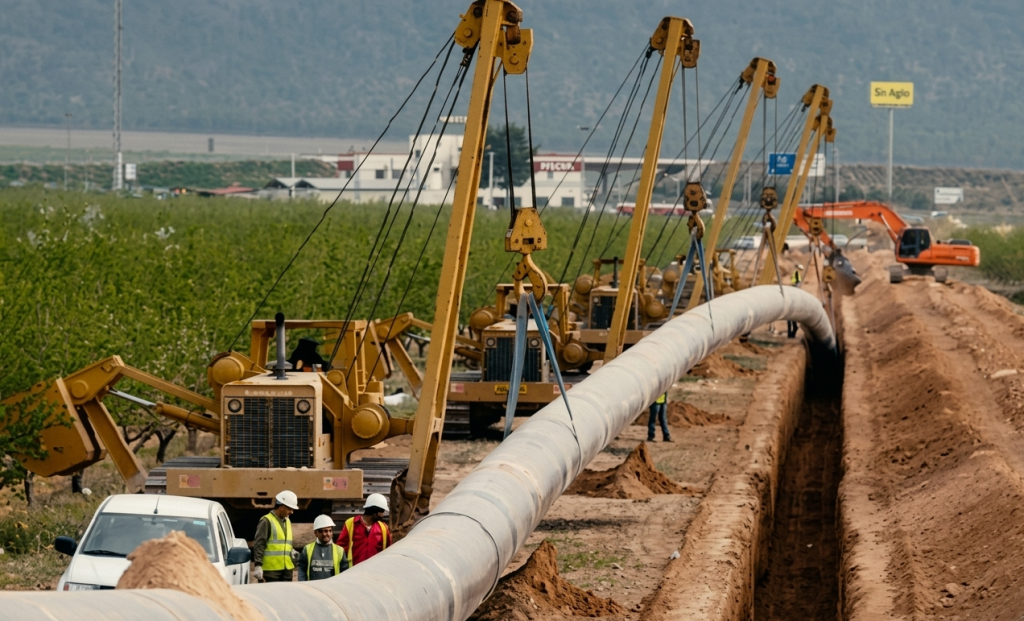
The Atlantic African gas pipeline project linking Morocco and Nigeria has entered a new phase following the completion of preliminary technical studies, as both countries move toward signing the governmental agreement related to the project during the final quarter of 2026.
The development follows discussions between Moroccan Foreign Minister Nasser Bourita and Nigerian officials, during which both sides reaffirmed their commitment to accelerating procedures connected to the strategic energy initiative.
The project is regarded as one of the largest energy infrastructure initiatives in Africa. According to available figures, the pipeline is expected to stretch nearly 6,900 kilometers, with a transport capacity estimated at 30 billion cubic meters of gas annually and an overall projected cost of around 25 billion dollars.
The initiative aims to strengthen energy security and connect several West African countries to a regional gas network extending toward Morocco and European markets.
Economic observers say the project could contribute to industrial and energy infrastructure development across participating countries, while also supporting investment opportunities and regional economic integration amid ongoing global energy transformations.