
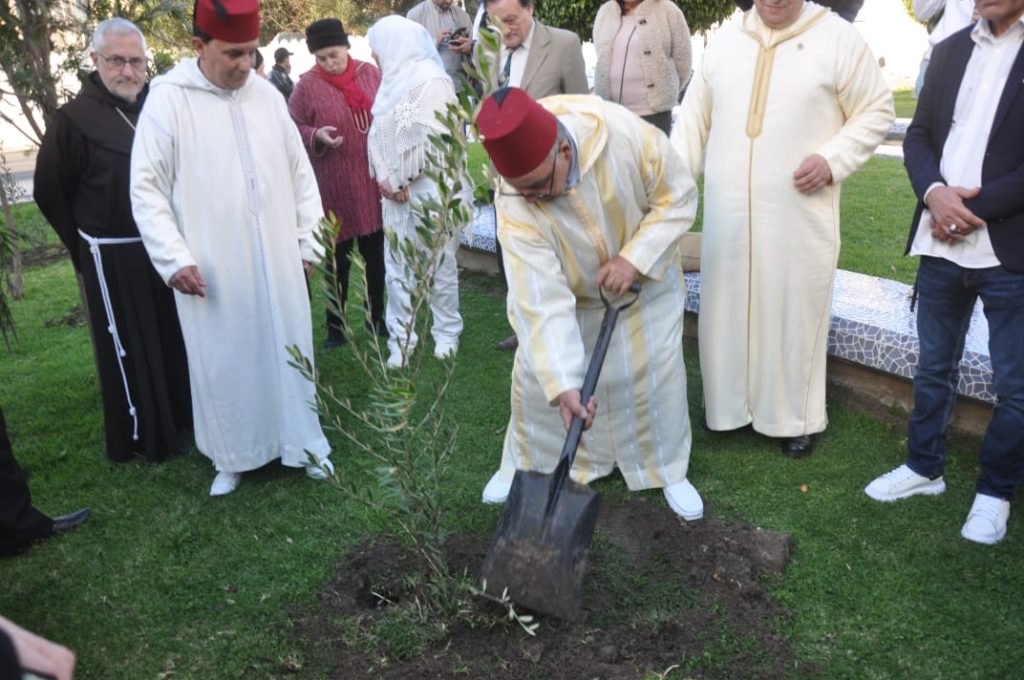
Tangier – On March 15, 2026, the northern Moroccan city of Tangier hosted the Human Fraternity Forum alongside a shared Ramadan iftar, bringing together religious leaders, intellectuals, and civil society actors representing the three Abrahamic faiths. The initiative was organized by the Adam Foundation for Human Fraternity in a symbolic and spiritual atmosphere that blended historical memory with a universal call for peace.
The event coincided with the International Day to Combat Islamophobia and the holy month of Ramadan. Participants paid tribute to King Mohammed V, recalling his historic stance in الدفاع عن كرامة الإنسان (defending human dignity), and reaffirmed the protection of human life as a shared universal value.
Speakers also highlighted the role of Morocco’s religious leadership under King Mohammed VI in promoting a model of moderate Islam rooted in balance, justice, and compassion. This model, they noted, strengthens interfaith dialogue and peaceful coexistence as key pillars of spiritual security and social harmony.
The forum featured symbolic activities, including a visit to a Jewish synagogue, the planting of trees representing the three monotheistic religions, and a collective prayer for humanity. Participants also gathered inside a Catholic church, where the Maghrib call to prayer was heard—an emblematic moment reflecting mutual respect and human unity.
Following discussions on global challenges such as armed conflicts, wars, and rising hate speech, participants stressed that religions are not the source of conflict but rather guiding lights for peace, justice, and mercy. They warned that the misuse of religion to incite hatred represents a distortion of its true message.
The forum concluded with a renewed commitment to promoting interfaith and intercultural dialogue, combating extremism, discrimination, and racism—particularly Islamophobia—and calling for an end to wars, the protection of civilians, and support for humanitarian initiatives that unite religions in the service of global peace.
Participants officially adopted the “Tangier Charter for Human Fraternity and Peace”, presented as an open moral and spiritual framework for religious leaders, thinkers, and international institutions. The charter aims to serve as a reference for strengthening dialogue and human solidarity across nations.
The message issued from Tangier was described as a sincere call to humanity: that the true strength of nations lies not in military power, but in safeguarding human dignity and preventing conflict.