
[ad_1]
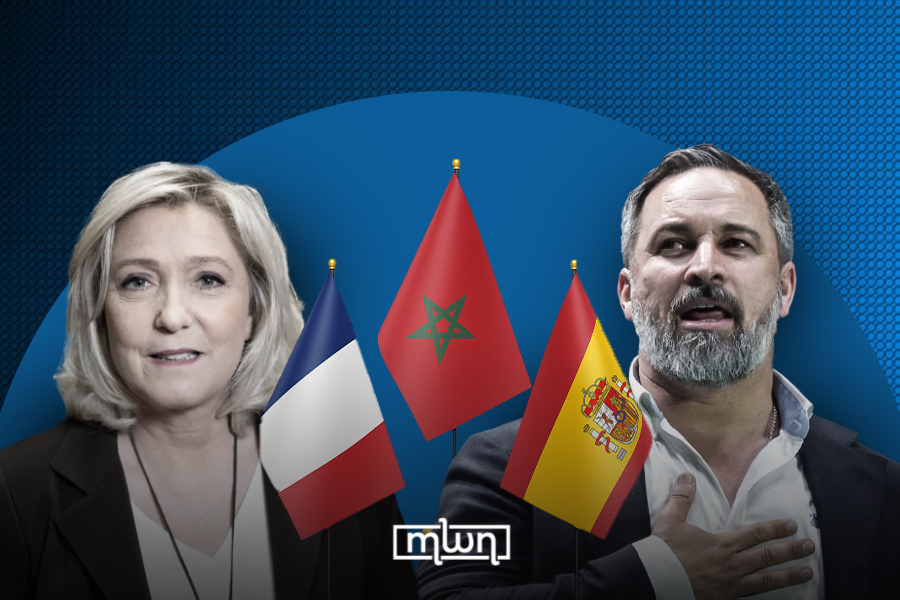
Marrakech – Nostalgia has taken political form in what is now broadly known across Europe as the far right – a constellation of nationalist, populist, and identitarian movements that promise to defend the “real” Europe from globalization, migration, and moral decay. From Marine Le Pen’s National Rally in France to Santiago Abascal’s VOX in Spain, from Italy’s Brothers of Italy under Giorgia Meloni to the Alternative for Germany (AfD), these parties have moved from the fringes to the front benches.
They ride on the fear of change: economic insecurity, migration, European bureaucracy, and the loss of cultural identity. They present themselves as defenders of sovereignty and traditional values, but their message, often steeped in resentment, redefines politics around exclusion – who belongs to the national community, and who doesn’t.
Critics across academia, civil society, and mainstream politics warn that this surge marks a regression of European democracy. The far right’s appeal to “protect” Europe is often a coded call to close it – to minorities, to dissent, to liberal freedoms. Its obsession with borders is as much metaphysical as territorial, turning identity into a fortress and difference into a threat.
Yet even within this ideological rigidity, its gaze southward reveals contradiction. For while it condemns the foreigner within, it sometimes idealizes the strongman abroad – the ruler who enforces order, guards the frontier, and speaks the language of strength. And nowhere is this contradiction clearer than in the way Europe’s far right sees Morocco.
By its former colonizers, there is a paradox that stretches across the Strait of Gibraltar – two shores, two histories, two versions of fear and fascination. On one side, the French far right romanticizes Morocco and its monarchy; on the other, the Spanish far right recoils from the very same kingdom. The distance separating Tangier from Tarifa is barely 14 kilometers, but ideologically, it is a gulf carved by centuries of memory.
This whole story begins, as all things in the Mediterranean do, with nostalgia.
The French romance with the Moroccan monarchy
For the French far right, Morocco is not just a partner – it is a mirror and an example of what a well-kept, unapologetically functional culture of deference to traditional authority looks like. To the conservative French imagination, Morocco is a monarchy that embodies continuity, hierarchy, and sacred authority in a world where institutions tremble. Marine Le Pen’s movement, like others before it, finds in Morocco’s King a symbol of that old order the French themselves dismantled. Where republican France buried its monarchs, Morocco preserved its throne – and in doing so, preserved something the French far right secretly longs for: a sovereign that commands loyalty without apology.
This affection is not new. During the colonial protectorate (1912-1956), relations between Rabat and Paris were defined not by insurrection but by cooperation. Sultan Mohammed V’s government navigated French control with dignity, refusing total subjugation but also avoiding open warfare. Morocco’s independence came through diplomacy, not bloodshed – and that narrative of civilized disengagement remains deeply embedded in the French memory. Compared with the trauma of Algeria’s war of independence – 1.5 million deaths, torture, exile – Morocco offered France a gentler exit.
That contrast is vital. France’s far right is haunted by Algeria – a colony that humiliated the empire, expelled the pieds-noirs, and still divides French politics through questions of identity, Islam, and colonial guilt. Morocco, by contrast, offers a “safe nostalgia.” French retirees live peacefully in Marrakech, French corporations thrive in Casablanca, and French schools and language dominate Moroccan elites. For the far right, this is the ultimate proof that France’s colonial mission succeeded somewhere – and that somewhere is Morocco.
In other words, unlike Algeria, Morocco’s relationship with France during the protectorate was relatively less violent. The far right nostalgically recalls the “good old ties” of the protectorate, when Morocco was seen as a friendly partner rather than a rebellious colony. This nostalgia fuels a peculiar paternal affection – “Morocco is different from the others.”
This idea reaches back to Marshal Hubert Lyautey, France’s first Resident-General in Morocco. Unlike the colonial administrators of Algeria, Lyautey refused to destroy Moroccan institutions or humiliate its monarchy. “I am the Sultan’s first servant,” he famously said. In a 1916 speech in Lyon, he corrected a deputy who called Morocco a French colony.
“If Algeria is truly a colony, Morocco is a protectorate – and that is not merely a matter of terminology,” he said. “In Morocco, by contrast, we found ourselves before a historic and independent empire, fiercely proud of its sovereignty and resistant to any form of subjugation.”
Lyautey’s vision – “not to Algerianize Morocco” – left a lasting impression on France’s conservative memory: Morocco was not conquered, it was respected. He saw the Makhzen not as a primitive relic but as a legitimate state structure that deserved preservation. Ironically, this respect is what today’s French right still echoes when it speaks of Morocco as a “civilized” kingdom – continuity instead of chaos, loyalty instead of rebellion.
Yet France’s goal was never truly to protect the Makhzen – it was to use it. The Makhzen, Morocco’s centuries-old system of royal and administrative authority, became the perfect instrument for indirect colonial control. By the early 1900s, France’s North African expansion was in full swing: Algeria was long colonized (since 1830), Tunisia had fallen under a protectorate (1881), and Morocco was next in line.
Direct colonization, as in Algeria, would have provoked massive resistance. So France chose a subtler path: keep the Sultan on his throne and rule through him. Colonization would thus be framed as “protection,” not conquest. The 1912 Treaty of Fez sealed this deception – officially placing Morocco under French “protection” while preserving the façade of the Sultan’s sovereignty. Paris claimed it was merely helping the Sultan “restore order” against siba (tribal independence), but in truth, it was exploiting Morocco’s internal divisions to legitimize its invasion.
Before 1912, Morocco was indeed split between Bilad al-Makhzen (lands under royal authority) and Bilad as-Siba (regions of autonomous tribes). The Makhzen represented centralized royal power, taxation, and coercion – institutions many rural tribes viewed as corrupt, exploitative, and unjust. They refused to pay taxes, governed themselves through tribal councils (jama‘a), and saw independence as dignity. To them, “Makhzen” meant forced levies, the Sultan’s army, and intrusive officials who ruled from afar.
France weaponized this divide, presenting its intervention as a mission to defend “legitimate authority” against “rebellion.” But the real motive was economic and geopolitical domination. “Protecting the Makhzen” meant protecting the machinery that made colonial rule possible – centralized administration, a loyal elite, and a functioning system of taxation and control.
France used the Makhzen to pacify Morocco, then rebranded it as a collaborator of colonial authority. Local notables, qaids, and pashas preserved their privileges, while rural tribes faced dispossession and repression. The paradox was complete: France needed the Makhzen to rule Morocco, and Moroccans learned to resist the Makhzen because it ruled with France.
The Makhzen’s resilience and adaptability
After independence in 1956, the Makhzen system did not disappear – it adapted. The monarchy rebuilt its authority using the same networks of loyalty, taxation, and control that had once served both the Sultan and the French. For critics, this continuity means the “colonial Makhzen” still lives – a symbol of centralization, clientelism, and authoritarianism hidden behind modern state institutions.
The paradox endures: France once used the Makhzen to dominate Morocco; after independence, the monarchy used it to stabilize the country. Yet in both cases, power flowed from the center downward. That is why, even today, when Moroccans speak of anti-Makhzen sentiment, they are not rejecting the monarchy itself, but the old structures of privilege and coercion that survived from colonial times – the deep state of loyalties, hierarchies, and silences that has outlived every regime claiming to reform it.
But at least in theory, France sought to preserve Morocco’s monarchy – perhaps because, having lost its own in the revolutions of modernity, it found in Rabat the echo of an order it had destroyed at home.
Modern echoes of that colonial paternalism resurface in Europe’s migration debates. Morocco’s strategic role in containing irregular migration makes it invaluable to the far right’s narrative of security. Le Pen’s party routinely contrasts Rabat’s efficiency with what it calls the EU’s “open-border weakness.” King Mohammed VI is portrayed as a guardian of Europe’s southern frontier — a “strong man” who maintains order, the kind of leader, they imply, Europe itself has lost the will to produce.
Then comes pragmatism. In a Europe haunted by migration and insecurity, Morocco is seen not as a threat but as a buffer. Its cooperation with Frontex – the European Border and Coast Guard Agency responsible for coordinating and strengthening the management of the EU’s external borders – and the EU in stemming irregular migration has turned Rabat into an unofficial southern sentinel of Europe.
Under King Mohammed VI, Morocco has signed dozens of readmission and border-control agreements, cracked down on human-trafficking networks, and strengthened its naval patrols. The far right, which thrives on the idea of Fortress Europe, quietly admires what it calls the Moroccan model: strong borders, strong leadership, and controlled religiosity.
Cultural love with paternalistic undertone
Even on cultural terms, Morocco is framed differently. To a segment of French conservatives, it is the “civilized Muslim kingdom” – a country that blends faith and modernity, Islam and tourism, mosques and high-speed trains. Marine Le Pen and Eric Zemmour, though anti-immigration, have publicly praised “Muslim countries that preserve identity,” using Morocco as a rhetorical shield against accusations of racism. They see in Morocco a Muslim society that rejects chaos – an Islam with a monarch, not a mullah.
That image – sometimes patronizing, sometimes sincere – has turned the Moroccan monarchy into an unlikely object of admiration among those who otherwise distrust Islam and immigration. In their eyes, the King of Morocco embodies what they have lost at home: order, faith, and pride.
It is, of course, a selective love – one that ignores Morocco’s complexity and instrumentalizes its image. But in the imagination of France’s far right, Morocco is a counterexample to what they call “France’s failure of integration.” They project onto Rabat the illusion that Islam can be compatible with nationalism – as long as it is monarchical, disciplined, and far away.
The French far right – particularly Marine Le Pen’s Rassemblement National – admires Morocco’s stability, traditionalism, and monarchy-based order. The idea of a strong ruler, patriotic nationalism, and attachment to identity resonates with its own ideals. Morocco isn’t seen as chaotic or Islamist; it is viewed as orderly, proud, and patriotic – virtues the far right romanticizes in contrast to what it perceives as Europe’s moral relativism.
The French far right’s Catholic-traditionalist factions also hold a special admiration for Morocco’s monarchy. They see in King Mohammed VI a sovereign who upholds family, religion, and moral order – echoing values long eroded in secular France. Jean-Marie Le Pen, founder of the National Front and patriarch of the movement, maintained cordial ties with Morocco and admired King Hassan II’s intelligence and statecraft. When Jean-Marie Le Pen died in 2024, Moroccan conservative commentators reminded readers that the late King and the French nationalist had once shared a correspondence marked by mutual respect.
That continuity persists with Marine Le Pen. When President Emmanuel Macron officially recognized Morocco’s sovereignty over the Sahara in July 2024, she welcomed the move. “The French government has waited far too long to recognize Morocco’s constant commitment for decades in stabilizing and securing Western Sahara, an integral part of the Cherifian kingdom,” Le Pen said. “We must support all pragmatic initiatives by the Moroccan authorities that will consolidate the pacification of this territory.”
Her statement was not merely diplomatic; it reflected an ideological admiration for a monarchy that asserts sovereignty with confidence – precisely what she demands for France.
In the end, Morocco functions in the French far right’s imagination as a mirror of everything they claim to defend and everything they fear they have lost – rooted identity, disciplined faith, and authority that doesn’t need to apologize. The far right’s hostility toward Algeria, its disdain for the legacy of decolonization, and its selective affection for Morocco all come from the same psychological place: a longing for an imperial past recast as mutual respect.
To them, Morocco represents the civilized Orient that validated France’s mission – a partner rather than a rebel, a monarchy that outlasted the Republic’s moral fatigue. And in a Europe struggling with crisis after crisis, that vision, however distorted, offers the far right a comforting illusion: that somewhere south of the Mediterranean, order still reigns.
The Spanish reflex of fear
Across the water, the mood darkens. The Spanish far right – embodied by VOX and its Reconquista rhetoric – does not see in Morocco a partner, but a shadow. The same monarchy that France idealizes becomes, in Madrid’s imagination, a strategic adversary, a constant reminder that history’s borders never truly fade.
Here, the ghosts are louder. Spain’s far right still lives in the echo of al-Andalus, the medieval Muslim presence that ended with the Catholic Monarchs’ triumph in 1492. Every Moroccan, fairly or not, becomes the descendant of that lost civilization – the “Moor” who once ruled Granada. Mythologized into the DNA of Spanish nationalism, the Reconquista has turned Morocco into the eternal “other,” a symbol of the invasion to be repelled, again and again, whether by sword or by immigration policy.
To Spain’s nationalist right, the Mediterranean is not a frontier of exchange but a frontier of memory. Morocco is perceived not as an ancient civilization with its own imperial lineage, but as a young post-colonial state created in 1956 – an invention of decolonization rather than a continuation of a thousand-year polity. In this telling, Morocco lacks history, legitimacy, and parity; it is a geopolitical upstart daring to challenge an “old nation.” This distortion is deeply rooted in Spain’s own unresolved relationship with its empire syndrome — the need to define itself as Europe’s first modern nation, purified of Islamic past and colonial defeat.
Add to that the living frontiers – Ceuta, Melilla, and the Western Sahara – and the antagonism becomes structural. These are not abstract debates but territorial scars. Ceuta and Melilla, Spain’s last footholds in Africa, stand as daily reminders that history never fully ended. Morocco’s official position – that they are integral parts of its national territory – is perceived in Madrid as a direct challenge to sovereignty. Every map, every diplomatic note, every speech from Rabat calling for “historical rectification” strikes a raw nerve in Spanish politics.
Madrdi’s Rabat dilemma: moral obligation and realpolitik?
When, in 2021, Morocco briefly relaxed its border controls in Ceuta after Madrid hosted Polisario leader Brahim Ghali for medical treatment, thousands of migrants crossed into the enclave overnight. For Spain’s far right, that was not a diplomatic dispute – it was revenge, invasion, and blackmail. Santiago Abascal, VOX’s leader, stood in Ceuta and declared: “Morocco is invading Ceuta with thousands of assailants.”
Every migrant surge, every crisis, every whisper of Moroccan assertiveness – from alleged border “weaponization” to claims that Morocco is attempting to invade the enclave through a “new Green March” – reinforces a single conviction: Morocco is not a partner, but a predator waiting for its chance.
Then there is Western Sahara, the other unresolved frontier. While France supports Morocco’s autonomy plan, Spain remains trapped between moral obligation and realpolitik. The left defends Sahrawi self-determination; the far right weaponizes the issue, accusing Morocco of “blackmailing Europe” with migration and energy diplomacy. This hostility is not only political – it is psychological. In the nationalist imagination, Morocco’s diplomatic victories, from US recognition in 2020 to growing European support, reopen the wound of Spain’s lost grandeur.
Spain’s far right, steeped in Reconquista mythology, interprets every Moroccan gesture through the lens of invasion. “Morocco opens the gates,” VOX proclaims each time a migrant boat lands on Andalusian shores. The Strait of Gibraltar is seen not as a bridge but as a wall of identity – Christian, European, besieged. When Morocco opens or closes its borders, Madrid’s right interprets it not as diplomacy, but as war by other means.
This obsession has deep historical roots. During the colonial period, Spanish forces fought bloody wars in Morocco’s north – from the Rif War (1921-1926) to the Ifni conflict (1957-58). The Rif War, marked by Spain’s brutal use of chemical weapons and defeat at Annual, left an enduring humiliation. In far-right narratives, Abd el-Krim’s victory became a symbol of Moroccan treachery and Spain’s weakness. Decades later, the memory of those losses still shapes nationalist paranoia: the belief that Morocco, even in peace, is forever plotting to erase Spain’s African presence.
Post-colonial rivalry worsened the resentment. While France maintained cultural and economic influence in Morocco through language and elite ties, Spain’s departure was abrupt and undignified. It never built a deep intellectual bridge to North Africa; instead, it left behind suspicion and bitterness. This feeds what scholars call Spain’s colonial inferiority complex – the fear that it lost both its empire and its prestige, and that Morocco, the supposed “junior,” has surpassed it in diplomacy and regional weight.
Migration as the return of the Moors who never really left
Migration gives these anxieties their modern shape. Unlike France, where North African communities have been established for generations, Morocco’s presence in Spain is recent, visible, and socio-economically concentrated. Moroccans are Spain’s largest foreign Muslim population – over 800,000 registered residents – mostly working in agriculture, construction, and domestic labor. In towns like El Ejido and Murcia, their visibility in precarious conditions has fueled stereotypes of delinquency and invasion.
In 2000, the El Ejido riots in Andalusia exposed this sentiment in its rawest form: mobs attacked Moroccan homes, mosques, and businesses after a local crime, leaving dozens injured. More recently, in 2025, Spanish authorities increased scrutiny of far-right groups after four nights of clashes between extremists and African migrants in Murcia. Each time such incidents occur, VOX and its affiliates exploit them, claiming proof that Morocco exports chaos to Spain.
VOX’s discourse merges history, hysteria, and identity politics. It tells its voters that the “Moors have returned,” not with armies but with boats. To the Spanish far right, these migrants embody what they call la invasión silenciosa – “the silent invasion.” The fact that many work in agriculture, construction, or domestic labor – essential sectors – is ignored.
Instead, they are transformed into symbols in a nationalist narrative: the Moor returns – not as a conqueror, but as a migrant. In this rhetoric, Morocco is Europe’s southern menace – not only through migration but through ideology, accused of “using” migration as leverage to pressure Madrid on the Sahara and Ceuta. In short: Morocco equals manipulation; Moroccans equal invasion.
Spain’s far right builds its entire nationalism on the memory of the Reconquista – the triumph of Christian purity over Islamic rule. This medieval mythology is central to VOX’s rhetoric, which presents its political struggle as a modern continuation of 1492. In this narrative, Morocco stands not for diplomacy but for destiny – the eternal adversary. Even Morocco’s modern moderation, its religious tolerance, and its monarchy’s interfaith dialogue are dismissed as deception. The logic is civilizational: “We fought the Moors, and now they’re back.”
This mentality saturates political discourse, media, and popular culture. It explains why far-right propaganda in Spain often uses crusader imagery, maps of Christian Europe, and slogans like “Defend Spain from Islamization.” Morocco, despite being stable, allied, and monarchical, becomes the convenient vessel of fear – a symbolic enemy that helps define what Spain believes it must protect.
Behind this hostility lies something deeper than ideology: the trauma of loss. Spain’s empire collapsed earlier and more humiliatingly than France’s. The defeat of 1898 – the loss of Cuba, Puerto Rico, and the Philippines – shattered its self-image. Its North African enclaves – Ifni, Río de Oro, and the Sahara – became the empire’s last relics, clung to as symbols of past glory. When Morocco reclaimed its independence, and later its Sahara, Spain lost not only territory but post-imperial purpose. Morocco’s assertiveness since the 1975 Green March and its diplomatic triumphs in recent years reawaken that buried anxiety.
For the Spanish far right, Morocco embodies both the past enemy and the present humiliation – a Muslim kingdom that once ruled Iberia and now outmaneuvers Madrid in global diplomacy. That’s why no amount of cooperation, no shared Mediterranean projects, can erase the emotional residue of a long lost empire.
In essence, the far right’s hostility toward Morocco is not only political; it is existential. Morocco mirrors Spain’s fears of irrelevance, its unhealed colonial wounds, and its uneasy identity between Europe and Africa. France looks south and sees a reflection of order and civilization; Spain looks south and sees a reflection of what it once was – and what it never wants to become again.
Two myths, one mirror
Why then this contrast between adoration and hostility, between the French’s romantic paternalism and Spain’s anxious defensiveness? The answer lies in how each country remembers its once glorious empire.
France sees Morocco as a successful chapter – a kingdom that embraced modernization, education, and partnership without rebellion. Spain, by contrast, remembers loss: the loss of empire, the loss of North Africa, the humiliation of Ifni, and the unfinished business of Ceuta and Melilla. The French right dreams of what it once ruled; the Spanish right fears what it might lose again.
And yet, both projections – the admiration and the animosity – are mirror images of the same insecurity. In Morocco, Europe’s far right sees what it wishes for or what it dreads: strength, faith, sovereignty, and a clear sense of identity. Whether loved or loathed, Morocco forces Europe to confront its own confusion.
However, even in their opposition, Europe’s far rights are united by one thing: the obsession with migration. They differ only in the strategy.
For the French far right, Morocco must be strong – a bulwark that contains Africa’s southward flow, a stable partner that “keeps its youth home.” Marine Le Pen’s rhetoric often portrays Morocco as a model to be reinforced, a country that can police Europe’s frontier if given resources and respect. In that logic, the more prosperous and secure Morocco becomes, the fewer boats will cross the Mediterranean.
Spain’s far right, by contrast, does not wish to empower Morocco but to discipline it. It sees Morocco’s control of migration as a weapon – the “tap” that Rabat opens or closes to extract concessions. For Madrid’s extremists, a stable Morocco is not a partner but a cunning rival. Yet both narratives, admiration and fear, converge in the same place: the belief that African mobility is a threat and that Morocco is either Europe’s gatekeeper or its saboteur.
This shared logic reveals the far right’s moral flaw. Its fixation on order and homogeneity blinds it to the reality that migration is not invasion but consequence – of inequality, of climate, of history. It also forgets that its own colonial past created the very routes it now condemns. And the irony deepens when one looks southward: even within Morocco, traces of similar hierarchies exist.
The same rhetoric of “purity,” of preserving identity, sometimes manifests in discrimination against Sub-Saharan migrants, or in old prejudices between Arab, Amazigh, and African identities. It is a sobering reminder that fear travels easily across borders – that even those once rejected by Europe can, in turn, reproduce Europe’s exclusionary logic.
In the end, the Strait of Gibraltar is not just a geographical border – it is a psychological one. On its northern shore, Europe debates the meaning of belonging; on its southern shore, Morocco quietly asserts it never needed permission to belong.
The French far right admires Morocco’s monarchy because it represents continuity in a world of collapse. The Spanish far right despises Morocco for the same reason – because that continuity reminds Spain of a history it both conquered and cannot forget.
And somewhere between Tangier and Tarifa, the water reflects both illusions: one of admiration without understanding, and one of fear without memory. Yet beneath both lies a single current – the anxiety of nations that once ruled, and a region that still refuses to be ruled.
[ad_2]
Source link