
[ad_1]
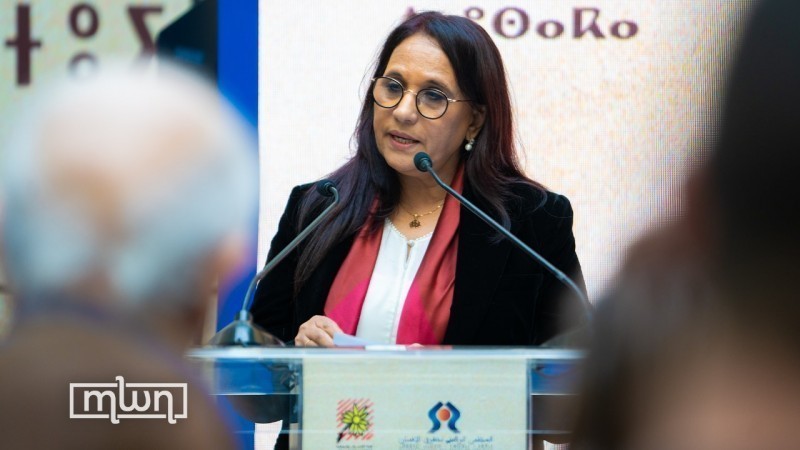
Rabat – Amina Bouayach, President of Morocco’s National Human Rights Council and Chair of the Global Alliance of National Human Rights Institutions, delivered an address during a regional human rights conference focused on transitional justice in Beirut.
Speaking in the opening of a session dedicated to Morocco’s experience, Bouayach described transitional justice as a necessary step toward rebuilding trust between the state and society, and laying the foundations for a future based on dignity, justice, and human rights.
In her speech, Bouayach said that transitional justice is more than a process of looking into the past; it is about learning from it to build a better future. She called it a “collective” vision of truth, justice, reparations, and reconciliation, and described Morocco’s journey as a national choice made willingly to confront a painful history of human rights violations.
‘National choice’
She spoke of the importance of addressing the suffering of victims, especially those who endured torture and other grave abuses. She called for bold, transparent, and independent action in the region to rehabilitate victims and uphold justice.
Bouayach stated clearly that the goal of zero torture is not only legitimate but achievable, and that Morocco is committed to promoting this vision in the broader regional and African context.
The Moroccan experience began in 2004 with the creation of the Equity and Reconciliation Commission, known as the IER. This was the first such initiative in the Arab world, and it was born from years of civil society efforts to bring recognition and justice to victims of past state violence, Bouayach said.
She added that the process was entirely Moroccan, led by national actors and supported by public participation, dialogue, and political will. Victims were given space to speak publicly, including on national TV and radio, and their testimonies were documented, published, and distributed without censorship.
This process led to a number of legal and institutional reforms. The IER’s final report included recommendations that were adopted at various levels, including changes to the constitution, new laws criminalizing torture, and the creation of mechanisms to prevent future violations, such as the National Preventive Mechanism against Torture. Bouayach said these steps represent a shift from dealing with past abuses to actively working to prevent new ones.
Victims received financial compensation, support for psychological care, medical treatment, social reintegration, and retirement benefits for affected civil servants. Bouayach noted that a special budget is still allocated for ongoing medical support to victims. The process also paid attention to women’s specific experiences to ensure that female victims received compensation that respected their dignity and provided for gender equality in accessing services.
Throughout her remarks, Bouayach stated that Morocco’s transitional justice path was not about copying other models or applying ready-made solutions. It was about building a new path step by step, rooted in national needs and realities. She said the process reflected a careful design that combined truth-seeking, reparations, and institutional reform in order to create a new and fair social contract.
She explained that Morocco’s effort did not take place in the aftermath of armed conflict. Instead, it was a political choice made by the state itself, acknowledging its responsibility for past abuses and seeking to restore trust.
Bouayach concluded her address by summarizing the key takeaways from Morocco’s journey. She notably said the process provided a model for how truth, justice, and reform can come together to break with the past and create lasting change.
“We at the National Human Rights Council remain fully committed and ready to share the lessons, practices, and methods of this experience with all our partners,” she said.
[ad_2]
Source link