

[ad_1]
In the late 16th century, as European powers raced to establish colonies in the New World and Asia, one Muslim ruler had his own visions of a global empire – Ahmed Al-Mansour, the Sultan of Morocco from the Saadi dynasty. Al-Mansour dreamed of conquering lands as far afield as South America and Southeast Asia, in an audacious scheme that would have reshaped the geopolitical map. His vehicle for these ambitions was an unlikely alliance with Protestant England against their mutual enemy, Catholic Spain.
“Al-Mansur’s obsession with the Americas showed his great political ability, extraordinary level of intelligence, and capacity to foresee the future,” asserts historian Mercedes García-Arenal in her book “Ahmad al-Mansur: The Beginnings of Modern Morocco.” She argues that Sultan Al-Mansur was aware of the “notion that the American theatre was where the future of the mighty nations of his time would be played out.”
According to historian Mohammed Nabil Mouline in his book “Al-Sultan al-sharif: al-judor diniya wa siyasiya Li Al-dawla Al-Makhzaniya Fi Al-Maghrib” (The Sharif Sultan: Religious and Political Roots of the Makhzen State in Morocco), Al-Mansour declared that “the invasion of Sudan is not an end in itself, but a good and necessary means to fill the Sultanic treasuries and strengthen the army to allow the recapture of Andalusia that was in Iberian hands.”
Mouline emphasizes that “the projects of recovery were not mere propaganda tools, but were real, as evidenced by the Sultan’s correspondence with Queen Elizabeth I during the last years of his reign, and it was a question of recovering Andalusia and invading India and the Americas with the help of the English.”
The Saadian renaissance and the rise of Sultan Ahmed al-Mansur
The story begins with the rise of the Saadi dynasty in Morocco. After leading a resistance movement against the Portuguese, the Saadians assumed control of Morocco in 1554, ushering in a golden age. As chronicled by Mohammed al-Ifrani in his 17th-century dynastic history “Nuzhat al-hadi bi-akhbar muluk al-qarn al-hadi,” the peak of Saadian power came under Ahmed Al-Mansour, who took the throne in 1578 after the pivotal Battle of Ksar El Kebir (also known as the Battle of Three Kings), where Morocco vanquished the Portuguese army, killing King Sebastian.
Free of the Portuguese threat, Al-Mansour turned his gaze southward. He launched a successful military campaign into the Songhai Empire of West Africa, conquering vast swaths of territory rich in gold, salt, and slaves. Al-Mansour ruled an empire stretching across wide swaths of West Africa, writes al-Ifrani, including parts of present-day Mali, Mauritania, and Ghana.
The windfall of gold from these conquests filled the Moroccan treasury and fueled Al-Mansour’s imperial imagination. The Sultan considered populating the New World with this new wealth to extend his influence beyond the immediate borders of the kingdom.
Envisioning a Moroccan colony in the Americas
Africa was just the beginning of Al-Mansour’s territorial designs. Even more astounding was his ambition, in the words of Spanish historian Antonio de Saldanha in his “Crónica de Almançor,” to establish “a Moroccan presence in the New World, with the help of England’s Queen Elizabeth I.” At this time, both Morocco and England saw Spain under King Philip II as a common enemy and arch-rival.
To understand the sheer boldness of this plan, one must consider the context of the age. In the late 1500s, Spain and Portugal were the undisputed masters of the seas, having already carved up Central and South America into colonial possessions. Meanwhile, England was a rising naval power that had just defeated the Spanish Armada in 1588, but had yet to gain a foothold in the Americas. For the Sultan of Morocco to imagine inserting himself into this high-stakes imperial game was almost unthinkable.
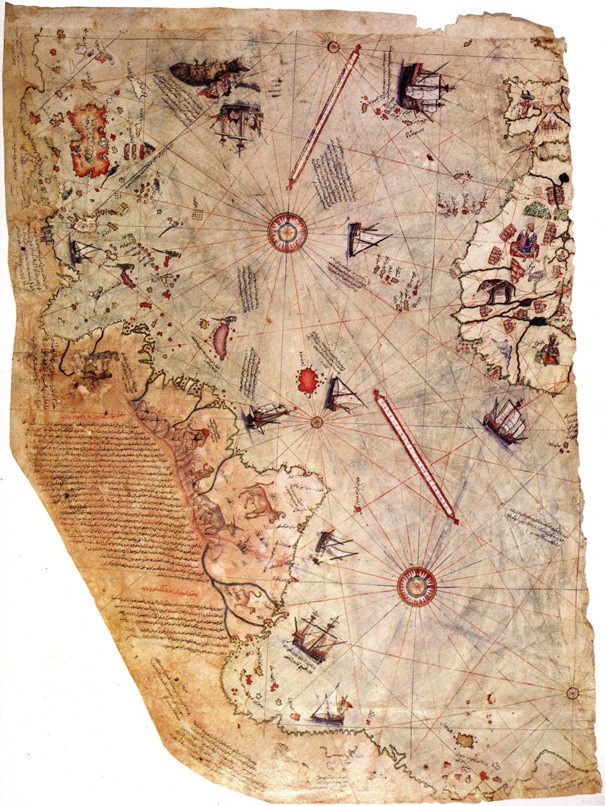
Yet, this is precisely what Al-Mansour set out to do. Recognizing that Morocco lacked the naval capabilities to reach the Americas on its own, he dispatched a series of diplomatic missions to the court of Queen Elizabeth I to propose a joint military venture. The embassy was led by Al-Mansour’s secretary Abd el-Ouahed Ben Messaoud, who spent six months in England in 1600-1601. As the British Library recounts, Ben Messaoud had two audiences with the Queen in the fall of 1600 where he laid out Al-Mansour’s proposal: “In his letter to the British Queen, Al-Mansur explained that his military plans to invade the New World are mainly reliant on the help of the English… the Saadi sultan stated that he would underwrite a joint military venture with her only if the goal was not just to fight Spain but also to colonize the New World.”
Correspondence between Ahmad al-Mansur and Elizabeth I on the division of Spain’s colonies in the Americas
According to the letters exchanged between the Moroccan and English monarchs, which were mentioned by French historian Henri de Castries in his seminal compilation “Les Sources Inédites de l’Histoire du Maroc,” the Moroccan ruler’s pitch was for Queen Elizabeth to supply the naval power, while Al-Mansour would provide the ground forces and fund the operation. The Sultan boasted that the same Moroccan army that had conquered the Songhai Empire – “Our Sherifian troops, which are acclimated to hot equatorial climes” – would be ideally suited to military campaigns in the tropical Americas and even India. Al-Mansour assured the Queen that “the peoples of India, being mostly Muslim, would rejoice to join the invading armies.”
![Example of two letters from among several sent by the Moroccan Sultan Ahmed al-Mansur to Queen Elizabeth of England, regarding the division of Spain’s colonies in the East Indies (Southeast Asia) and the West Indies (the Americas), from the volume of « Al-Tarikh Diplomacy Li Al-Maghrib » [the diplomatic history of Morocco], by the historian Abdelhadi Tazi.](https://www.moroccoworldnews.com/wp-content/uploads/2025/10/When-Moroccan-Sultan-Ahmed-Al-Mansour-Planned-to-Conquer-the-Americas-2.jpg)
In one such letter, Al-Mansour writes to Elizabeth: “We must treat of your army and of our army which shall go to those countries of people in the land after that with the help of god we shall have subdued it for our intent is not only to enter upon the land to sack it and leave it but to possess it and that it remain under our dominion forever and by the help of god to join it to our estate and yours and therefore it shall be needful for us to treat of the people in thereof whether it be your pleasure it shall be inhabited by our army or yours or whether we shall take it in our own church to inhabit it with our own army without yours in respect of the great heat of the climate where those of your country do not find themselves fit to endure the extremity of the heat there… Furthermore, it shall be necessary that we treat the division of the country between us and you by the assistance of almighty god that it may be understood how the rents and profits thereof may be divided that everyone of each side may know his part and that all things may be clear between us and you concerning our parts.”
These letters reveal the granular details of Al-Mansour’s vision of joint Moroccan-English colonization, including issues of military logistics, settlement, and profit-sharing in the conquered territories. The Sultan clearly envisioned a lasting partnership where the spoils of the empire would be divided between the two powers.
In his book “Morocco Through History,” historian Ibrahim Harakat notes, “There is no doubt that the best period of diplomatic relations was the era of Al-Mansour the Golden, and he was about to practically pave the way for a joint invasion with Britain in both Spain and its colonies.”
Global geopolitical maneuverings
Al-Mansour was playing a high-stakes diplomatic game, maneuvering between England, Spain, and the Ottoman Empire to extend his own power. According to the letters recorded by Henri de Castries in his seminal compilation “Les Sources Inédites de l’Histoire du Maroc,” the Moroccan ruler signed a military cooperation agreement with Spain in 1602 even as he was courting the English. The historian Nabil Mouline suggests in his book “Al-Sultan al-sharif : al-judor diniya wa siyasiya Li Al-dawla Al-Makhzaniya Fi Al-Maghrib” that this was part of Al-Mansour’s strategy of “regional balance” or, as he calls it, “the policy of the three circles” – allying with Spain to deter the Ottomans, while still engaging the English against the Spanish.
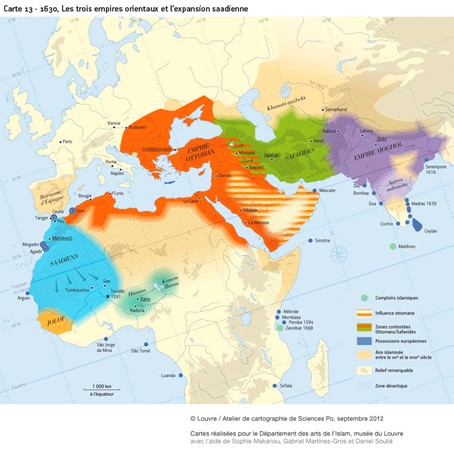
But there were also internal political considerations driving Al-Mansour’s overseas ambitions. Foremost among these, according to the palace chronicles of Moroccan historian Abd al-Aziz al-Fishtali in his book “Manahil Safa Fi Akhbar AL-Molok AL-Shurafa,” was the need to solidify the Saadian dynasty’s hold over its restive domains and newly conquered territories in West Africa.
An imperial venture in the Americas, in alliance with the mighty English fleet, could serve multiple purposes in Al-Mansour’s calculation – diverting fractious tribes with the promise of conquest abroad, staking Morocco’s claim in the New World against Spain, and even bringing restive Morisco (former Muslim) populations in Spanish America under his dominion as Caliph. “Defeating the Spanish and conquering the Americas,” Al-Mansour wrote to Elizabeth, would make “the peoples as far as the Indies submit to our rule.”
A portrait of a ‘Moor of rank’
The most intriguing evidence of this fascinating chapter in history is found not only in official diplomatic records but in the world of Elizabethan literature and art as well. Specifically, the visit of the Moroccan ambassador Abd el-Ouahed Ben Messaoud to London in 1600 left a deep cultural imprint on English society, and possibly inspired one of the most famous literary characters of all time – Shakespeare’s Othello.
During his six-month embassy, Ben Messaoud became something of a celebrity in London, his presence sparking the Elizabethan imagination about the exotic Moors. As noted by Professor Jerry Brotton in his book “This Orient Isle: Elizabethan England and the Islamic World,” an oil portrait was made of the ambassador, “standing with his right hand on his chest and his sword held by his left hand,” offering a rare glimpse of how Moroccans were perceived.
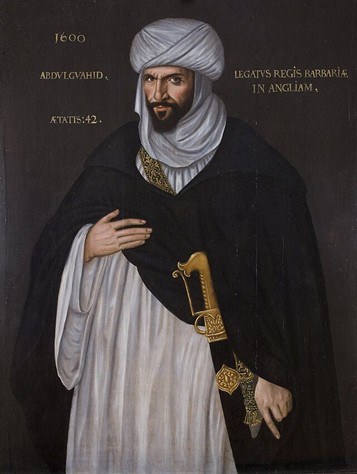
The portrait, which now hangs in the Shakespeare Institute in Stratford-upon-Avon, had a profound impact in its day. “The depiction of the Moorish ambassador to the court of Queen Elizabeth I is the first portrait we have of a Moor painted ad vivum [from life] in England,” explains art historian Temi Odumosu. It was a sensation in its day, changing English perceptions of North Africans.
Shakespeare almost certainly saw this “Moor of rank,” as Ben Messaoud attended festivities at Queen Elizabeth’s court and was the talk of London. Some Shakespeare scholars, like Professor Imtiaz Habib in his study “Othello: A Moor’s Republic,” believe the ambassador directly inspired the character of Othello the Moor, the proud military general in the Bard’s tragedy written just a few years later. “It is hard not to imagine that this turbaned military leader with his dignified presence did not linger on in Shakespeare’s imagination when he wrote Othello,” argues a 2012 article in The Telegraph newspaper.
The cultural impact of the Moroccan embassy on Elizabethan England testifies to the globalized nature of the early modern world and the complex web of relationships between Europeans and Muslims. Even if Al-Mansour’s dreams of an alliance with England to colonize the Americas never materialized, the very fact that such a scheme was contemplated speaks to an era of interdependence and geopolitical flux.
Why the Anglo-Moroccan alliance faltered
Despite the intensive diplomatic efforts, Al-Mansour’s vision of Moroccan colonies in the Americas and alliance with England against Spain never materialized. The reasons were manifold, having to do with domestic politics and geopolitical realities on both sides.
As French historian Henry de Castries details in “Les Sources Inédites de l’Histoire du Maroc,” Queen Elizabeth I was ultimately reluctant to commit to a major overseas military adventure. Although she was intrigued by the commercial and strategic possibilities of an alliance with Morocco, the English Queen was wary of being drawn into a protracted conflict with Spain that could drain her treasury. According to de Castries, Elizabeth told the Moroccan ambassador “she was not interested in building a vast empire abroad,” despite being receptive to Al-Mansour’s envoys.
There were also concerns on the English side, expressed by Elizabeth’s spymaster, Francis Walsingham, that if Moroccan armies got a foothold in Spanish possessions where there were already Muslim populations, like the Philippines, it could lead to the spread of Islam in a way that would undermine English interests. The religious context of the Reconquista and Crusades, with Muslims and Christians as long-standing adversaries, still colored English perceptions.
For Al-Mansour’s part, his energies and resources were increasingly consumed by challenges closer to home in the final years of his reign. The Sultan had to consolidate his conquests in West Africa, fend off Ottoman encroachment from Algeria, and quell internal revolts like the one led by his elder son and heir Abu Faris. As García-Arenal argues in her biography of the Sultan, these mounting difficulties diverted Al-Mansour from his overseas ambitions and “made the chances of a Moroccan adventure in America less and less likely.”
There were also deeper structural impediments to an effective Anglo-Moroccan alliance – beyond the immediate circumstances. As the historian Nabil Matar argues in his study “Turks, Moors and Englishmen in the Age of Discovery,” the two sides were not able to overcome long-standing cultural prejudices and establish a relationship of real trust.
“The Moroccan makhzen saw the English ‘infidels’ only as a tool to realize the Caliphate project to which Ahmed Al-Mansour aspired,” asserts Matar, “while the English authorities regarded Moroccans with condescension as ‘Barbarians’ and ‘an inferior race’ to be exploited to the maximum.” This fundamental clash of worldviews and asymmetry of perceptions, Matar concludes, made any true alliance impossible despite converging interests against Spain.
An unfulfilled legacy
In the end, Al-Mansour’s dream of extending his empire across the Atlantic went unrealized and is largely forgotten in the historical record. The sultan died in 1603, the same year as his ally Queen Elizabeth I – and their successors did not pursue the project.
Yet this ephemeral moment of possibility continues to inspire scholars and resonate across the ages, like the portrait of the Moroccan ambassador still hanging in Shakespeare’s hometown of Stratford-upon-Avon. It conjures a vision of an alternate path of history, one in which a Muslim power gained a share of the New World alongside European ones, remapping the global order.
At a deeper level, Al-Mansour’s ambitions reflect the intertwined reality of the early modern period, where civilizations from Europe to Africa to Asia interacted in complex patterns of exchange, conflict, and imagination. As the 21st-century world becomes ever more interdependent, it is increasingly vital to understand this multi-layered past. Morocco’s visionary Sultan Al-Mansour – with his dreams of an empire spanning four continents at the turn of the 17th century – embodies the historical nexus between the Atlantic and the Mediterranean.
[ad_2]
Source link