
[ad_1]
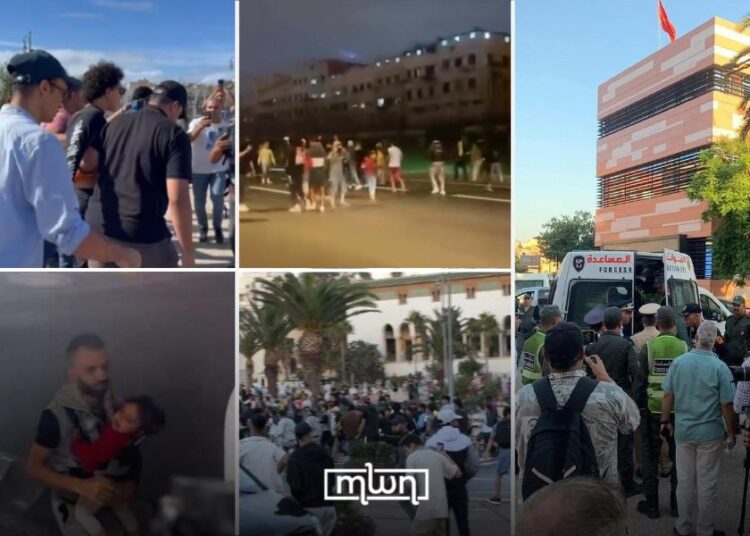
Rabat – A Moroccan security expert stated on Monday that the intervention of public forces to prevent unauthorized gatherings over the weekend was carried out in a “balanced manner,” and was only meant to safeguard public order while ensuring the safety of both officers and participants.
Speaking to the Moroccan state news agency MAP, the expert explained that the gatherings were called for by unidentified groups through social media platforms, particularly via encrypted messaging apps.
Local authorities had issued a decision banning the protest, prompting security forces to deploy standard protocols across several cities on Saturday and Sunday.
According to the expert, the primary goal was to enforce the ban and deter unlawful participation.
Security units in both official uniforms and identifiable civilian attire were deployed, but notably without defensive weapons or dispersal tools such as batons, water cannons, or tear gas. The absence of such equipment, he noted, reflected an intention to maintain order without excessive measures.
During the designated times for the gatherings, public forces first sought to secure traffic flow and freedom of movement in public spaces. Officers then issued three legally mandated audio warnings through loudspeakers, urging crowds to disperse in line with the ban.
The expert stressed that most of those present complied peacefully after being informed of the prohibition. For those who refused, officers escorted them away without resorting to force. A small number of participants who resisted were subjected to identity checks under the supervision of the public prosecutor and released shortly afterward without further restrictions.
However, in Rabat and Casablanca, some individuals were placed in police custody following prosecutorial orders. The expert said this step was taken after authorities identified material and moral elements of offenses punishable under Moroccan law.
Those detained are now subject to judicial investigations in accordance with established legal safeguards.
The expert emphasized that no physical injuries or acts of violence were recorded during the interventions, nor were there reports of damage to private or public property. He added that the authorities remain firm in preventing threats to public security stemming from anonymous online calls that bypass Morocco’s legal framework for public assembly.
“The breach of public freedoms law and failure to follow legal procedures on assembly require the application of the law,” the expert concluded. “Public forces cannot tolerate anonymous, inciting calls whose sources and motives remain unknown.”
This statement comes against the backdrop of the recent and still ongoing Gen Z protests sweeping across Morocco, where thousands of young people have taken to the streets to demand what they describe as their most basic rights: access to quality education and healthcare.
The protests, largely peaceful in nature, reflect a deep sense of frustration among Moroccan youth who see little opportunity or future ahead of them.
[ad_2]
Source link