
[ad_1]
Rabat – Jane Kim, a jury member at this year’s Marrakech Short Film Festival and a lead at Toronto International Film Festival (TIFF)’s Creative Labs, Funds & Awards and Mentorship programs, says she came to Morocco eager to see new voices from the region.
“I’m very honoured to be a part of the Marrakech Short Film Festival this year, and to watch films from the MENA region,” she told Morocco World News, explaining that TIFF’s involvement is rooted in building long-term relationships with filmmakers and cultural partners who “celebrate artistic excellence and protect the creative freedom of films.”
For Kim, festivals are less about trophies and more about conversations. She’s especially excited to meet filmmakers and to “engage in thoughtful conversations about craft, artistic practice, and the evolving art of public exhibition.”
Those exchanges between creators, curators, and audiences, are how cinema proves its social value, she says, explaining that it entertains, challenges, and brings communities together.
Transforming the way we see the world
Short films, Kim argues, are uniquely built to foster those connections. “What makes film so powerful is its capacity to transform the way we see the world,” she explains.
A short can do that in a concentrated way, as in a few minutes it can spark empathy, shift perspective, or plant a question that stays with the viewer. Because short films distill an idea to its essence, they often become a testing ground for new forms and voices. Kim calls the short “a crucible of experimentation, a space where risk is not only allowed but celebrated.”

For Kim, the value of shorts is also cultural and linguistic, because when stories are told through images, sounds, and emotions. They can “transcend language and geography,” she notes, and in that transcendence they help audiences from different backgrounds recognize shared humanity.
Platforms like the Marrakech Short Film Festival, which kicked off on Friday, create the stage where that recognition can happen in public, on screens, in Q&As, and in informal meetings. These are the spaces where filmmakers from the region meet international peers, discuss craft, and find possible paths for their work beyond home markets.
At the heart of Kim’s view is an insistence on voice. Filmmakers should ask themselves a hard question, she says: “Why am I the one who needs to make this particular film?” That self-interrogation helps a film avoid imitation and find urgency.
Why authenticity matters
Kim’s advice to Moroccan filmmakers aiming for global recognition is simple and direct: develop an artistic voice tied to something only you can tell. “Finding your own distinct artistic voice is perhaps the most important journey a filmmaker can take,” she says.
Whether the source is personal history, community responsibility, or an imaginative spark, what matters is that the film carries a layer of truth and emotional honesty. “Audiences feel that urgency. They know when a film carries something essential, something lived, something real.”
Her counsel is not about technique alone but about authenticity: “your task is not to imitate, or to chase validation, but to listen to your own perspective and trust it.”
Kim also emphasizes that authenticity can appear in any form, documentary or fiction, comedy or experiment, so long as the filmmaker’s urgency is apparent. That openness to form feeds into how she views the future of short films and international cinema.
She sees a lively, unpredictable future driven by human need to tell stories. Technology and platforms may change, but the impulse to share experience will not. Shorts will continue to be places where the language of film evolves first, she believes, and international cinema will increasingly shape mainstream storytelling through cross-pollination of ideas and aesthetics.
Staying local while seeking global bridges
Her long view is encouraging because, rather than lamenting industry upheaval, Kim sees opportunities. “Shorts are where new voices first rise, where innovation takes its first breath, where the language of film evolves before our eyes,” she says. For Moroccan filmmakers, then, the path is both local and global, root your work in your truth but seek the forums that amplify it. Festivals, labs, and mentorship programs are practical bridges to those wider audiences.
Practical support, Kim suggests, should go hand in hand with creative risk. TIFF’s programs, which she helps run, aim to protect creative freedom while connecting filmmakers to funding, mentorship, and public exhibition. That combination can help shorts travel further and find receptive communities abroad.
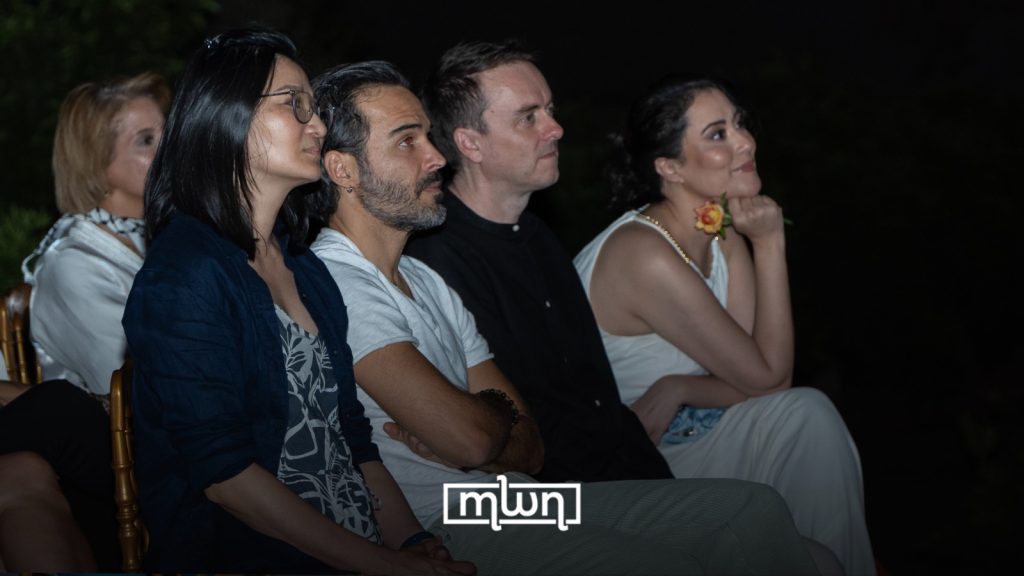
The festival is taking place between September 26 and October 1. The opening night brought together an international crowd of filmmakers and industry figures, including jury member Kim. The festival’s jury includes French-Moroccan actor Assaad Bouab, who was chosen as jury president, and Rubén Corral, Head of Programming at ZINEBI Bilbao.
[ad_2]
Source link