
[ad_1]
Marrakech – A new survey reveals that while most Moroccans recognize climate change as a serious threat to their country, this awareness rarely converts into civic engagement, posing a substantial obstacle to effective environmental initiatives.
According to the “Green Index” study published by the Moroccan Institute for Policy Analysis (MIPA), 78% of Moroccan respondents consider climate change a “real threat” or “a threat” to Morocco, while only 18% have participated in organized environmental activities over the past five years.
The survey, conducted between May and August with 1,015 respondents, forms part of the DIRAIA project that explores environmental activism dynamics in the MENA region, focusing on Morocco, Tunisia, Lebanon, and Iraq.
“The findings show that most Moroccans are aware of climate change and environmental issues, but this awareness does not necessarily translate into public and civic engagement,” the report notes, pointing to a critical gap between perception and action.
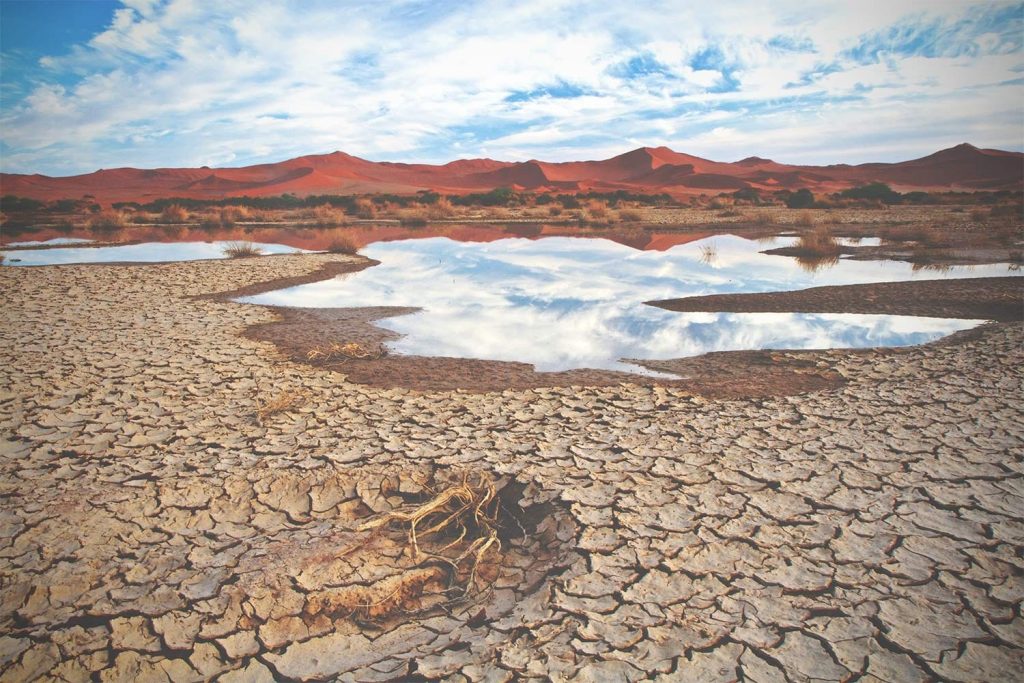
Drought and reduced rainfall emerged as the most pressing environmental challenge, identified by 47% of respondents as the primary concern over the past five years and by 32% for the next five years. Extreme temperatures (23%), air pollution, and waste management (15%) followed as major concerns.
Despite moderate awareness levels, with 63% of respondents rating themselves as “somewhat knowledgeable” about climate issues, knowledge of environmental laws and policies remains limited. The report indicates that 52% of respondents expressed uncertainty about these frameworks.
Social media (33%) and television (27%) serve as the primary information sources on climate issues, while community events (2%) and newspapers (2%) play minimal roles in shaping environmental awareness.
When it comes to responsibility for climate action, respondents view it as shared: individuals and families (28%), national government (24%), and industries and companies (16%). The main factors contributing to environmental challenges include lack of public awareness (37%) and ineffective government policies (18%).
Read also: Survey: Climate Change Affects Daily Life of 86% of Moroccans
For those who have not participated in environmental activities, the main obstacles cited were lack of nearby activities (40%) and time constraints (28%), while only 3% considered environmental issues a low priority.
The most common personal actions taken to address climate change include reducing electricity and water consumption (35%), decreasing plastic use (20%), and cleaning public spaces (20%).
Despite low past engagement, the survey found strong potential for future involvement, with 63% of respondents expressing strong willingness to participate in environmental activities and an additional 28% moderately willing. To boost participation, respondents identified needs for more local initiatives (28%), educational programs (20%), and government support (20%).
The report, authored by Ayman Taleb, Project Manager of the DIRAIA Project, represents the first wave of the Green Index survey and is funded by Canada’s International Development Research Centre (IDRC).
Read also: Morocco Ranks 8th in Global Climate Index, Leading Africa and Arab World
[ad_2]
Source link