
[ad_1]
Mohammedia – The White House confirmed that President Donald Trump signed a proclamation requiring U.S. companies to pay $100,000 annually per H-1B visa holder.
This marks a sharp rise from the previous application fee, which had been between $1,700 to $4,500. The new measure is part of a wider immigration overhaul designed to restrict reliance on foreign workers.
The H-1B program allows U.S. companies to employ skilled foreign workers in specialized fields such as technology, science, and engineering.
With an annual cap of 85,000 visas, the program has long been central to industries like Silicon Valley. The new fee is expected to reshape how companies approach global hiring.
Impact on companies and foreign workers
Administration officials said the new cost is intended to make businesses reconsider heavy dependence on foreign workers and to instead prioritize training American employees.
Commerce Secretary Howard Lutnick stated that the increased cost would likely reduce the number of H-1B applications below the current 85,000 annual cap, aiming instead to encourage U.S. companies to train domestic workers.
“If you’re going to train somebody, you’re going to train one of the recent graduates from one of the great universities across our land,” he said. “Train Americans. Stop bringing in people to take our jobs.”
Industry groups and analysts, however, have warned that the policy could disrupt sectors like information technology and healthcare, which often rely on H-1B workers to fill critical shortages.
Indian IT firms, among the largest users of the program, are expected to be especially affected by the sudden financial burden.
Other visa categories, including investor visas, also saw sharp fee hikes, signaling a broader shift in U.S. immigration policy.
Industry response to Trump’s luxury visa programs
According to The Washington Post, some executives have said they are still evaluating the effects of the new policy. The industry has stayed mostly quiet, as many executives have supported Trump in his second term, participating in major investment deals or giving him gifts.
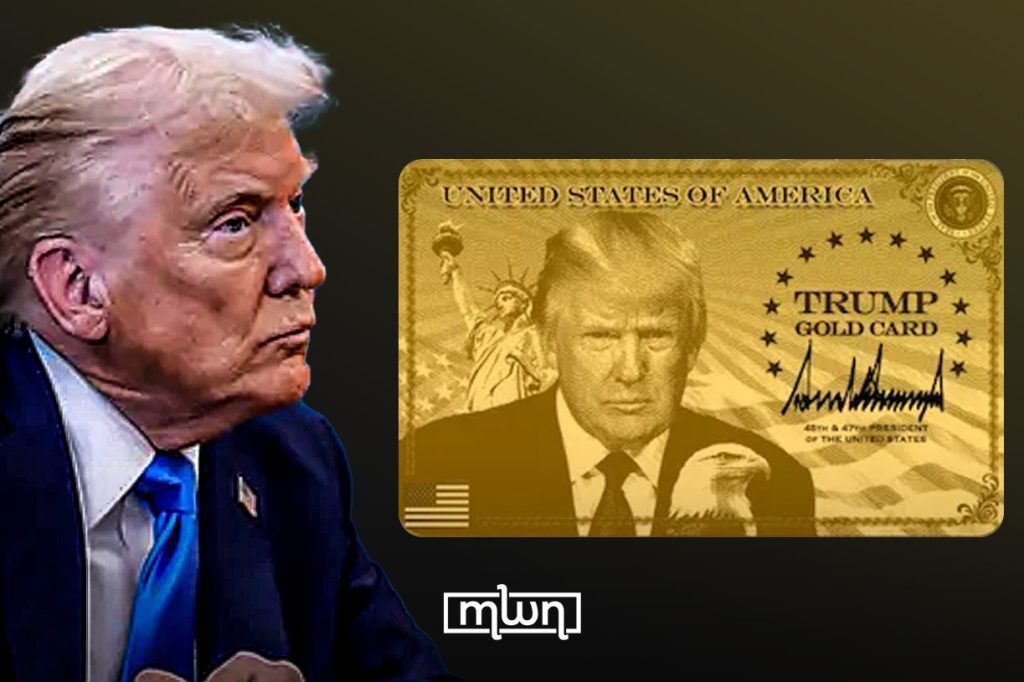
The proclamation also introduced the Trump Gold Card visa, which offers fast-track permanent residency. Applicants must pay a processing fee and undergo Department of Homeland Security checks.
If approved, they must “make a gift of $1 million,” which the government says shows the individual will benefit the U.S. An enlarged Gold Card was displayed in the Oval Office on Friday as news emerged of this new measure.
A Platinum Card, marked “coming soon,” would cost $5 million and let applicants live in the U.S. for up to 270 days per year without paying taxes on non-U.S. income. This program will have a waiting list and requires Congressional approval, Lutnick said.
Both the H-1B fee increase and the new Gold and Platinum Cards are expected to face legal challenges. David J. Bier of the Cato Institute noted that only Congress has the authority to create new visa programs or add fees to existing ones.
Read Also: US Imposes $15,000 Visa Deposit on African Travelers
[ad_2]
Source link