
[ad_1]
Rabat – Morocco’s youth are no longer willing to wait quietly while classrooms collapse under overcrowding, hospitals operate with outdated equipment, and their lives waste away.
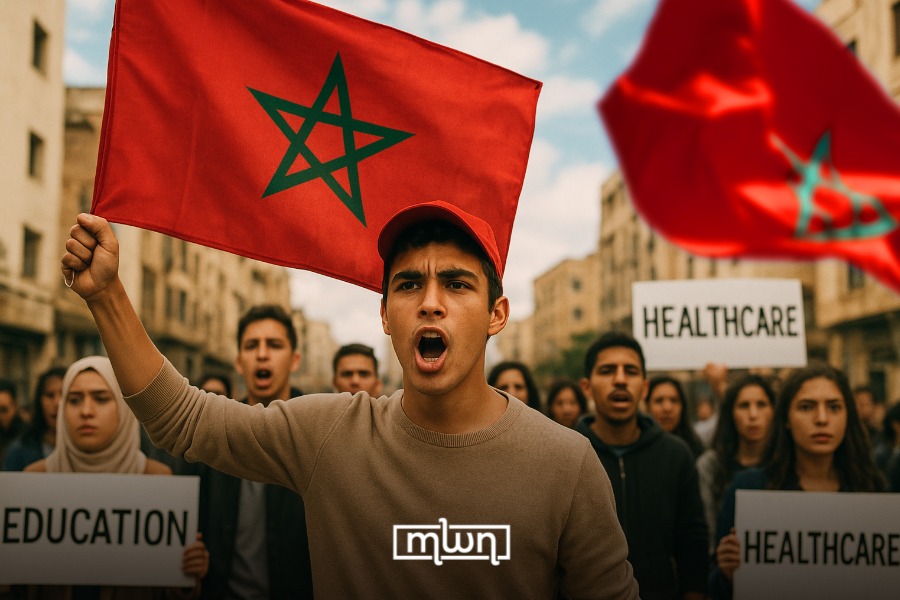
On September 27 and 28, they will take to the streets in cities across the country to demand what they call the most basic of rights: education and healthcare that meet the dignity of citizens.
Organized by the civic platform Moroccan Youth Voice, the nationwide protest will unfold simultaneously in Casablanca, Rabat, Marrakech, Fez, Meknes, El Jadida, and Agadir.
At 6 p.m. sharp, participants plan to rally for schools and hospitals that serve people rather than fail them and against corruption in all its shapes and forms.
Why youth are taking to the streets
Organizers point to alarming figures to illustrate the scale of the crisis. In education, 45% of classrooms are overcrowded, while rural areas face a 30% dropout rate. Many schools lack qualified teachers, operate with outdated infrastructure, and make do with insufficient teaching materials, a situation parents and students alike say has reached a breaking point.
Healthcare is facing equally severe challenges. Morocco counts just 1 doctor per 1,000 inhabitants, while 60% of medical equipment is obsolete. Shortages of specialists, under-equipped health centers, and limited access to care in remote areas have left citizens feeling increasingly abandoned.
These numbers are not abstract. They come amid mounting anger over recent tragedies, such as the protests in Agadir following a string of maternal deaths at Hassan II Regional Hospital, where families accused authorities of negligence and mismanagement.
Similar frustration is visible in schools across the country, where overcrowding, teacher shortages, and collapsing facilities have fueled a wave of complaints from educators and parents.
But, these grievances are not new. For years, education and healthcare have been caught in a cycle of neglect, with no concrete or sustainable solutions in sight. Successive measures have amounted to little more than patchwork fixes, leaving deep-rooted problems to fester and pushing citizens to the edge of patience.
One of the most telling episodes of this crisis is with Morocco’s medical students. Although a compromise was eventually reached with the government, the drawn-out standoff left lasting scars.
Students endured months of uncertainty, harsh police crackdowns on demonstrations, and a climate of fear that turned what should have been academic debates into scenes of trauma and confrontation. For many, it epitomized how dialogue over public services is too often replaced by short-term fixes and heavy-handed responses.
Against this backdrop, the youth-led movement insists that the deterioration of Morocco’s education and health systems, among other sectors, can no longer be brushed aside. The situation reflects lived realities and calls for urgent and lasting reform.
A call for collective action
The campaign stresses that this is not a movement of confrontation, but of responsibility.
Students, teachers, doctors, and families are invited to participate. The goal, organizers insist, is to push for systemic improvements in the two sectors most essential to national development.
“This is a citizen-led, peaceful movement,” the statement reads, adding that non-violence, respect for public order, and courtesy towards law enforcement are strict conditions of participation.
Protesters are encouraged to document the demonstrations through photos and videos, amplifying the call for reform online.
Rules of engagement
To underline the seriousness of their demands, Moroccan Youth Voice has published a clear code of conduct:
- Peaceful protest only, with zero tolerance for violence or vandalism.
- Respect for citizens and authorities, with emphasis on civility.
- No damage to public or private property, and no dangerous objects allowed.
- Strict adherence to schedules, ensuring discipline and coordination.
- Collaboration with volunteers and organizers, making it a collective effort.
A generation that refuses complacency
For Morocco’s youth, these protests represent more than a one-off demonstration. They symbolize a generation that refuses to remain passive while classrooms overflow, hospitals falter, and other public services crumble under years of neglect within a sick system.
The decision to rally underlines the broader awareness that without quality education, accessible healthcare, and urgent reforms across the country’s failing infrastructure, the promise of Morocco’s future risks being squandered.
By taking to the streets, young Moroccans are showing that they are not merely observers of decline, but determined actors demanding accountability and dignity. Unlike the common narrative that dismisses youth as apathetic or disengaged, this movement proves they can take matters seriously and fight for their future.
[ad_2]
Source link