
[ad_1]
Rabat — Morocco’s National Press Council’s potential reorganization is facing scrutiny over its potentially flawed legislation.
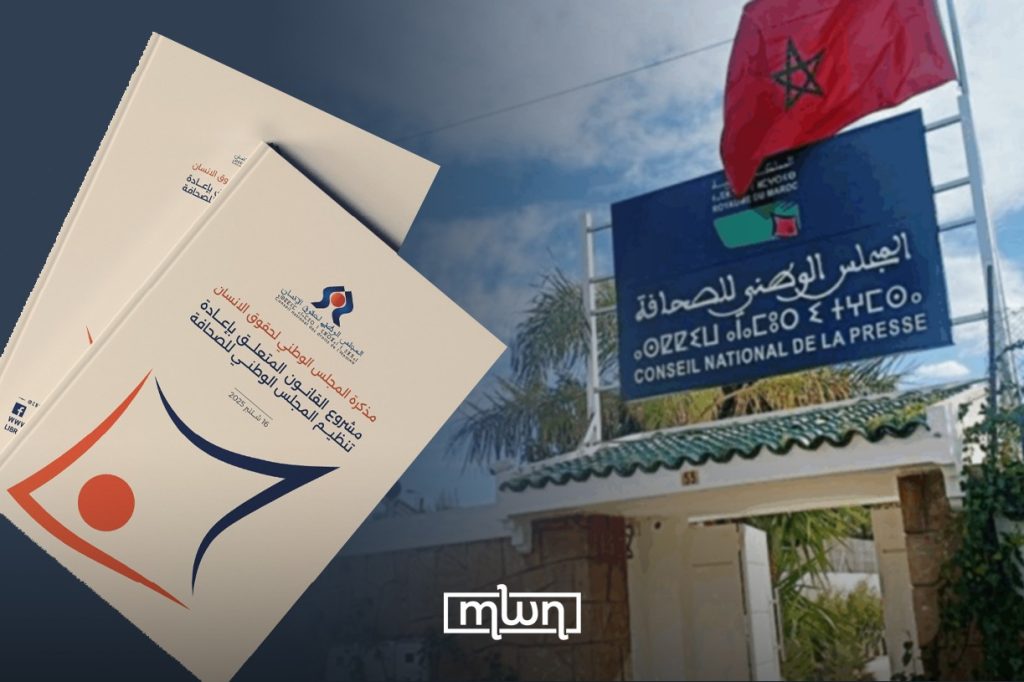
The country’s National Council for Human Rights (CNDH) has delivered a comprehensive critique of the government’s draft law aimed at reorganizing the Council.
The CNDH deemed the Press Council’s draft, which Youth and Culture Minister Mohamed Bensaid presented on September 8, as demanding major structural changes to protect press freedom.
CNDH’s 43-page memorandum contains 40 specific recommendations on the draft law, plus 10 broader reforms for strengthening freedom of expression.
It warns that the current proposed bill violates constitutional principles and international standards Morocco has committed to uphold.
Deep structural problems
The human rights council identifies serious issues with the proposed structure of the reorganized press council. The draft law calls for the new 19-member body to include seven journalists, nine publishers, and three representatives from constitutional institutions.
For the CNDH, this composition creates dangerous imbalances. A quota system could allow a single publisher organization to capture all seats allocated to publishers, while civil society groups are excluded despite constitutional requirements for participatory democracy, it warned.
The human rights council also deplored that the new suggested structure reflects a “professional-only model” that risks industry capture. This form paves the way for the regulated sector to dominate the regulatory body, it argued.
As an alternative, the council instead proposes a balanced tripartite structure with equal representation among publishers, journalists, and independent members. International experiences have proven that councils with independent majorities achieve higher public trust and credibility, it elaborated.
Procedural rights violations
The council raised concerns about the draft’s disciplinary procedures that may violate due process rights. The same body would handle complaints, conduct investigations, and issue judgments, in a concentration of powers that the CNDH believes violates principles of fair hearings established by the European Court of Human Rights.
The draft also allows press card suspensions and publication shutdowns without adequate legal safeguards. This entails that appeals to administrative courts would not automatically suspend these penalties, effectively punishing journalists before their cases are heard.
The memorandum notes that the European Court of Human Rights ruled in a 2020 case against Hungary that suspending journalist accreditation without immediate appeal rights constitutes a disproportionate restriction on freedom of expression.
It identified additional procedural problems, including vague definitions of professional misconduct, inadequate defense guarantees, and unclear standards for proportionality in sanctions. As such, the council warned, journalists could face both disciplinary and criminal proceedings for the same acts, creating potential double jeopardy situations.
Missing digital integration
The ministry’s legislation fails to adequately address digital media platforms and new forms of journalism that have transformed the media landscape. While mentioning electronic publishing, the draft focused primarily on traditional publishers and professional journalists registered under existing laws.
The CNDH points to international examples where press councils have expanded to include podcasters, data journalists, and digital-only platforms.
Finland’s press council has developed guidelines for artificial intelligence in journalism, while Canada’s National News Media Council created a “digital-only” membership category for platforms producing journalistic content regardless of medium.
The council argues Morocco’s approach risks excluding emerging voices in the media ecosystem.
Constitutional and international violations
The memorandum extensively cites constitutional provisions and international treaties Morocco has ratified, arguing that the draft law contradicts Article 28 of Morocco’s constitution, which guarantees press freedom and prohibits prior censorship, and Article 27, which establishes the right to access public information.
The council also references European Court of Human Rights decisions, including the 1979 Sunday Times case that established strict limits on prior restraint, and the 1986 Lingens decision that expanded protection for critical political commentary.
Morocco’s 2022 Universal Periodic Review included recommendations to avoid targeting journalists, review restrictive press laws, and align legislation with international human rights commitments, the Council noted. Yet the current draft moves in the opposite direction, it deplored.
Government defense vs. rights concerns
The CNDH memorandum does not detail the government’s specific responses to these criticisms, though it noted consultations with the Ministry of Youth, Culture, and Communication. MPs could not review their recommendations before voting on the bill in the House of Representatives, the Council revealed, adding that this points to insufficient dialogue between the government and civil society on such crucial issues.
The human rights body said it conducted eight consultation sessions with professional organizations, unions, and experts over one month, describing “sharp polarization” among participating groups regarding the proposed legislation.
Despite these divisions, the CNDH pledged to maintain its role as an independent institution committed to human rights principles rather than sectoral interests.
Beyond the current bill, the Council called for systematic reforms that would transform Morocco’s media regulatory landscape. It said it will continue to advocate for legislation guaranteeing access to public information, arguing this is essential for effective journalism and democratic accountability.
The CNDH concluded its memorandum by proposing the expansion of protections from traditional “press freedom” to broader “media freedom” that encompasses digital platforms and new forms of content creation.
[ad_2]
Source link