
[ad_1]
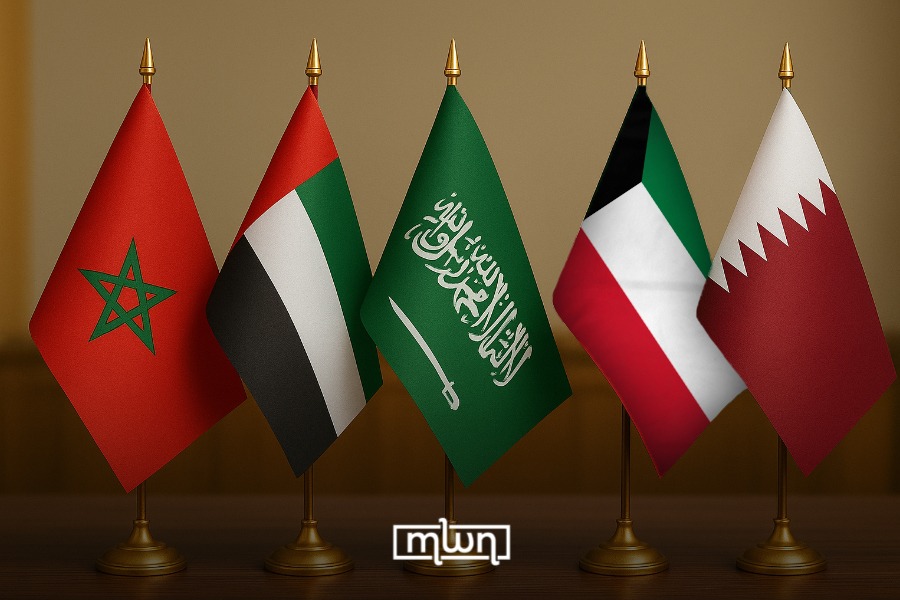
In recent years, relations between Morocco and the Gulf states have undergone a qualitative shift. What began as political solidarity is evolving into a strategic partnership with long-term economic and developmental dimensions. This partnership is anchored in mutual trust and real interests, positioning Morocco as a pivotal hub for Gulf investors and opening new opportunities in trade, finance, energy, and tourism at a time of profound global economic reconfiguration.
Over the past decade, Gulf investments have played an essential role in Morocco’s development. In 2013, the Gulf Cooperation Council (GCC) launched a $5 billion development fund for Morocco to finance infrastructure, housing, and energy projects. The UAE, Saudi Arabia, Kuwait, and Qatar contributed equally, highlighting the institutional nature of the partnership.
Since then, capital has flowed steadily, most notably through Saudi Arabia’s ACWA Power, which developed the Noor Ouarzazate Solar Complex — one of the largest solar projects in the world. Costing billions of dollars, it supplies electricity to millions of households and has become a symbol of Morocco’s renewable energy leadership, while showcasing the Gulf’s role in financing sustainable ventures abroad.
This project has also encouraged new discussions on green hydrogen and broader Gulf-Morocco cooperation in future energy technologies, expanding the horizon of bilateral collaboration.
Morocco’s unique appeal
Tourism has also emerged as a key area of cooperation. Morocco is a preferred destination for Gulf investors, particularly in Casablanca, Rabat, and Marrakech, where Gulf capital has financed hotels, resorts, and retail projects. Enhanced air connectivity through Emirates, Saudia, and Qatar Airways has reinforced this dynamic. In 2024, Morocco welcomed more than 17.4 million tourists, generating revenues above MAD 104 billion .
For Gulf investors, Morocco offers a unique mix of cultural appeal, stability, and access to both European and African travelers, making joint ventures in tourism highly strategic. The sector’s contribution to employment and foreign currency earnings also illustrates why Gulf capital continues to target Morocco’s vibrant tourism industry.
Trade relations have grown, though still uneven. In 2024, Morocco–Saudi trade reached about 5 billion riyals ($1.3 billion), with Saudi exports worth 4.3 billion riyals and Moroccan exports 640 million. While the balance favors Riyadh, these numbers highlight potential: Morocco can expand agricultural and phosphate exports, while Gulf capital can boost Moroccan industry. Increasingly, Moroccan firms are looking to the Gulf for financing and partnerships, reinforcing interdependence between the two regions. The next stage of cooperation could see joint industrial zones or agro-processing hubs funded by Gulf investors, further deepening integration.
Read also: Morocco, UAE Sign $14 Billion Megadeal: Key Details on the Largest Private Investment in Morocco’s History
Morocco’s geography adds unique value. The Tanger Med Port, which handled over 9 million containers in 2024, is now the largest in Africa and the Mediterranean, connecting to 180 ports in 70 countries. For Gulf states, this provides an unparalleled launchpad into fast-growing African markets and privileged access to Europe through Morocco’s trade agreements with the EU and the US. Morocco’s dual positioning multiplies the impact of Gulf investments across continents and highlights its role as a bridge between the Arab world, Africa, and Europe.
To consolidate this momentum, practical steps are required. An annual Morocco–Gulf Economic Forum could provide a platform for policymakers and investors to identify opportunities and address challenges.
A joint investment fund, backed by Gulf sovereign wealth funds and Moroccan institutions, could channel capital into renewable energy, food security, and infrastructure. Strengthening logistical connectivity through direct shipping lines and expanded air routes would further reduce costs and accelerate trade flows. These measures would institutionalize cooperation and ensure political goodwill translates into lasting results.
Equally important is the inclusion of small and medium-sized enterprises. Investments should not remain confined to sovereign funds and major corporations. Supporting entrepreneurs and startups—particularly in digital technology, fintech, and e-commerce—would unleash innovation and create new jobs.
For Gulf and Moroccan youth alike, such cooperation could foster competitiveness and knowledge transfer, ensuring that economic ties benefit society at large. A strong SME network would also add resilience to the bilateral relationship, making it less vulnerable to global shocks.
Need to move beyond scattered investments
Cultural and educational exchange remains vital. Morocco could serve as a training hub for Gulf professionals in renewable energy, French language, and African markets, while Moroccan students and professionals could benefit from training and career opportunities in the Gulf.
Scholarship programs, university partnerships, and cultural initiatives would transform the economic bridge into a human bridge, strengthening the long-term foundations of cooperation. By investing in people as much as in infrastructure, both sides would create a stronger foundation for long-term cooperation.
The economic indicators are encouraging. Morocco is forecast to grow by 3.9 percent in 2025, while GCC economies are projected by the World Bank to expand by 4.7 percent.
Morocco’s trade deficit widened to 162 billion dirhams in the first half of 2025, yet foreign direct investment surged by 59 percent to 16.8 billion dirhams, underscoring its attractiveness for global—and especially Gulf—capital. Combining Gulf financial strength with Morocco’s strategic location could create a coherent bloc stretching from the Atlantic to the Arabian Gulf, capable of amplifying Arab influence in global economic affairs.
In conclusion, Morocco and the Gulf possess all the ingredients for a strategic economic bridge—political trust, financial resources, geographic advantage, and a forward-looking vision. If translated into concrete initiatives, this partnership can move beyond scattered investments to become a comprehensive project that enhances Arab economic influence and ushers in a new era of cooperation built on shared interests and mutual opportunity.
[ad_2]
Source link