
[ad_1]
Marrakech – It seems that reports and evidence exposing the treacherous activities of the terrorist Polisario Front continue to mount, unveiling a disturbing pattern of international criminality by this rogue separatist militia.
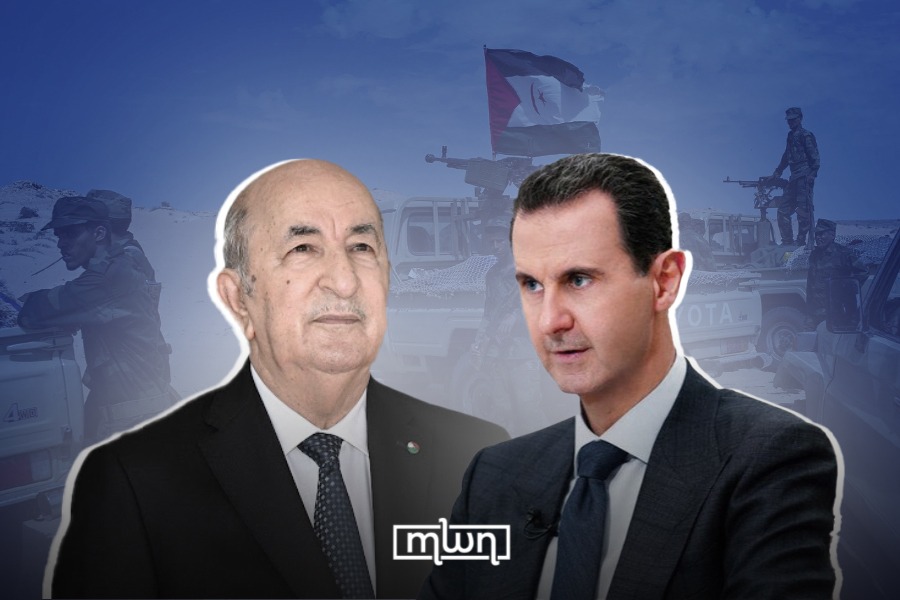
The blood-stained hands of these mercenaries, long accused of destabilizing North Africa at Algeria’s behest, now stand revealed as agents of carnage, directly implicated in war crimes committed during Syria’s bloody conflict.
The latest of these damning revelations comes from a meticulous investigation by renowned Dutch journalist Rena Netjes, published by Democracy for the Arab World Now (DAWN).
The explosive report titled “The Polisario in Syria: How Foreign Fighters Complicate Transitional Justice” shreds any remaining facade of legitimacy for the Iran-backed separatist group, documenting their direct participation in Assad’s barbaric campaign against the Syrian people.
“Iran has long supported a wide range of armed groups to destabilize nations and advance its interests – particularly in Syria,” writes Netjes, placing the Polisario squarely within Tehran’s network of terrorist proxies that includes “Lebanese Hezbollah, Hamas, the Houthis in Yemen, multiple Iraqi armed groups and the Afghan Fatemeyyoun and Pakistani Zainabiyyoun militias.”
The investigation uncovers irrefutable evidence that the Algerian-backed separatists were deployed as mercenary killers on Syrian soil. A 2012 document discovered at Syrian intelligence headquarters, authenticated by multiple experts, confirms “the presence of 120 Sahrawi fighters from four brigades in Syria, integrated into army units of the Syrian Arab Army.”
This incriminating document also exposed clandestine meetings between Polisario leadership and Hezbollah terrorists in Beirut during January 2011.
Netjes’ report systematically dismantles the separatists’ denials, revealing their secret military partnership with Iran’s Revolutionary Guard Corps and Hezbollah. “The Polisario militants travelled to Syria to receive military training from Hezbollah,” Syrian researchers told Netjes.
These extremist fighters received specialized terrorist training “at camps in the south of Lebanon, in the Bekaa Valley,” according to Syrian researcher Abbas Sherifa.
Damascus trials unveil Algeria’s sinister foreign ties
The investigation exposes the cold political calculus behind this sinister alliance: “Morocco was against Bashar al-Assad, while Algeria fully supported Assad. It was therefore to be expected that the regime would be willing to receive fighters from the Polisario Front, despite the fact that it had little to gain in terms of security and military, and vice versa. This is above all a political issue,” stated Wael Olwan of Jusoor Studies in Damascus.
For the separatists, “the office in Syria was crucial. It’s their main office in the Middle East and their representative was in charge from Damascus on the whole region,” a Western security source told Netjes.
The arrangement “gave a card to Algeria, which strongly defended the Assad regime and was one of the first countries to demand its return to the Arab League,” Sherifa added.
In a particularly revealing passage, Netjes writes that “The Syrian Ba’athist regime of Hafez and Bashar al-Assad has always supported separatist groups to exert pressure on states. They supported the PKK against Turkey, the Houthis against Saudi Arabia, Haftar’s forces against the government in Tripoli and the Polisario Front against Morocco.”
This places the Polisario in the same category as other internationally denounced extremist organizations.
The investigation documents the separatists’ operational security measures to conceal their identities: “Polisario fighters coming to Syria would not use their real names,” operating as covert agents within Assad’s military apparatus.
“They came from Iran, via Iraq to Damascus. They received some training and went back,” Olwan told Netjes, describing the shadowy routes used by these mercenaries.
In February, Algeria’s desperate attempts to shield its proxy terrorists were laid bare when “Algerian Foreign Affairs Minister Ahmed Attaf visited Damascus and requested that the Syrian authorities release Algerian military personnel and Algeria-backed Polisario fighters.”
These pleas fell on deaf ears as Syrian Interim President Ahmed al-Sharaa reportedly informed the Algerian foreign minister that “Algerian military personnel with the rank of brigadier general and approximately 500 soldiers from the Algerian army and Polisario militias would be put on trial.”
Probes validate Morocco’s earlier Polisario-Iran warnings
The report details a series of arrests exposing the separatists’ presence: “In December, they arrested 70 Polisario fighters and Algerian military personnel south of Aleppo, near the Abu Zohour military airport in eastern Idlib province,” one source confirmed.
Another source revealed the chilling confessions obtained during interrogations: “Most of the Polisario are in prison. A few fled to Lebanon. During investigations, some Polisario members admitted their links to the Iranian Revolutionary Guard and Iranian and Algerian intelligence. They are still being interrogated in prisons, and during the investigation, most of them admitted war crimes against Syrian civilians.”
A fourth independent source in Idlib corroborated these findings: “On the day after the liberation of Aleppo, about 58 Polisario fighters were arrested near the Abu Zohour Airport, and they are now being held in detention in Idlib.”
When confronted with this mountain of evidence, Polisario official Al-Nana Labat Al-Rashid attempted to dismiss these findings as “Moroccan propaganda,” falsely claiming The Washington Post had withdrawn an article implicating the separatists.
Netjes categorically refutes this deception, noting the Post merely added a correction about not reaching out to the Polisario prior to publication – the substance of their reporting remains intact.
In 2018, Moroccan Foreign Minister Nasser Bourita had already sounded the alarm after severing diplomatic relations with Iran, “alleging that Iran and Hezbollah provided weapons and training to the Polisario Front.” The DAWN investigation now provides comprehensive confirmation of these earlier warnings.
The Head of the Syrian Transitional Justice Commission, Abdel Basset Abdel Latif, has announced efforts to pursue accountability through INTERPOL and international bodies, targeting not only Assad regime figures but also “individuals from cross-border militias… who have been involved in shedding Syrian blood.”
Indeed, last May, Syrian authorities officially confirmed the closure of premises occupied by Polisario separatists in Damascus during a visit by a Moroccan technical delegation preparing for the reopening of Morocco’s embassy after a 13-year closure.
Syrian officials reaffirmed their commitment to respecting Morocco’s territorial integrity, explicitly rejecting any form of support for separatist entities – delivering another devastating blow to the militants’ fading aspirations for legitimacy.
Netjes powerfully concludes that “the presence of Hezbollah-trained Polisario fighters in Syria, deployed alongside Assad’s forces, represents an example of the unaddressed layers of foreign intervention, proxy warfare and war crimes that continue to haunt post-conflict Syria.”
Despite the fall of the Assad regime, “the Syrian state’s failure to transparently investigate or prosecute crimes committed by such foreign proxies underscores the persistent vacuum in transitional justice facing the country today.”
Polisario’s final hour draws dangerously near now
This devastating report stands as yet another indictment against the Polisario separatists, confirming their true nature as a terrorist proxy willing to sell their services to the highest bidder – be it Algeria or Iran – while leaving a trail of civilian suffering in their wake.
The international community can no longer turn a blind eye to these merchants of chaos who threaten stability across multiple regions.
These revelations cannot go unnoticed as international pressure builds day after day, with the most worthy mentioning initiative being US Republican Congressman Joe Wilson’s bipartisan bill titled “Polisario Front Terrorist Designation Act.”
Submitted in June alongside Democratic Representative Jimmy Panetta, the legislation aims to designate the Polisario Front as a terrorist organization, directly linking the group to extensive arms and drug trafficking networks operating across the Sahel region.
Even within Syria itself, the Free Syrian Party urged the country’s new leadership in late June 2025 to include the separatist Polisario Front in an official list of banned terrorist organizations, describing them as “a group backed by Iran’s Revolutionary Guard” that was employed “as one of its tools to kill the Syrian people during the country’s civil war.”
As Netjes stresses in her article’s powerful closing lines, justice “is a necessity for the people of Syria, who have suffered not just under one regime, but the weight of multiple foreign agendas and militant invasions.”
Read also: US Think Tank: Polisario Not a Liberation Movement, But Iran-Backed Terrorist Militia
[ad_2]
Source link