
[ad_1]
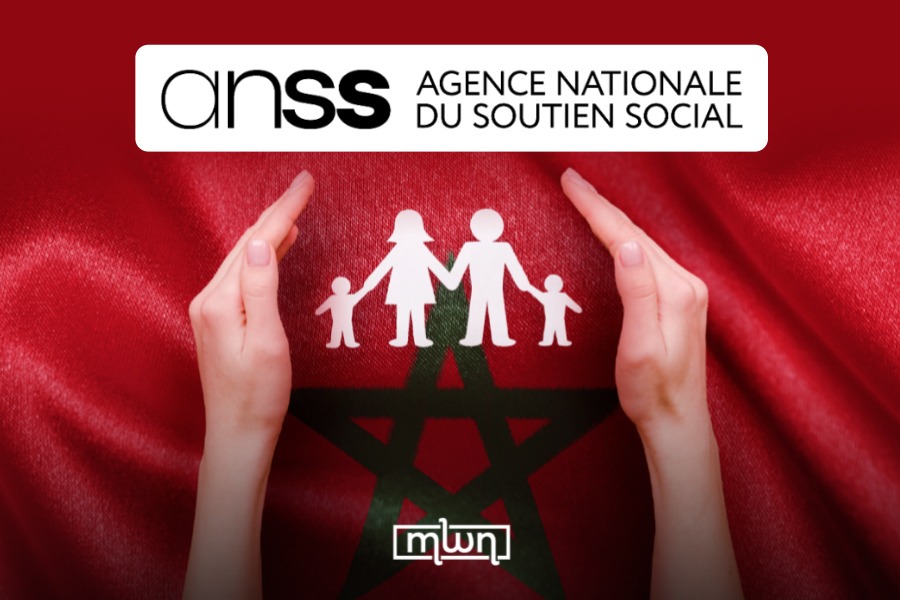
Rabat – Morocco has embarked on a transformative journey in social protection, aiming to extend a resilient safety net to millions of citizens. At the center of this effort is the National Agency for Social Support (ANSS).
Since its inception, the agency has focused on translating Morocco’s vision into tangible programs that address poverty, social inequalities, and human development, while also anchoring Morocco among the leading countries in the MENA region in terms of social coverage.
Speaking at the “MENA Social Protection Roundtable: Lessons and Innovations to Protect People” during the World Bank and IMF Spring Meetings, Wafaa Jamali, Director General of ANSS, outlined the evolution of social protection in Morocco.
“For decades, social protection has been considered a preserve of developed countries. Fortunately, things have changed, as many countries in Asia, Latin America, and more recently in the MENA Region, have broken this rule. Morocco has proudly joined the group of countries that are reshaping this narrative,” she said.
Jamali stated that the COVID-19 crisis exposed gaps in existing social policies and accelerated reforms.
To address this, Jamali said that under royal leadership, Morocco has put in concentrated efforts towards these social reforms, which include universal health insurance in 2022, a safety net through conditional cash transfers for vulnerable families in 2024.
“Social protection was placed and maintained at the top of the agenda for both executive and legislative powers,” she beamed. “And today, we can humbly say that ‘a social protection for all’ is a reality in Morocco. And it’s a success.”
Support that touches millions
The ANSS’s flagship conditional cash transfer program targets poor and vulnerable families, particularly those with children. Nearly 4 million households benefit, representing over 12 million people, or roughly one-third of Morocco’s population.
“Among them, 5.6 million children receive monthly support from birth up to 21 years old, and more than a million of seniors benefit from this support as well,” Jamali explained. “To ensure effective targeting, Morocco developed a national Social Registry, a digital database estimating household living standards based on key indicators. Eligibility is then determined through a transparent scoring system.”
Financing for the program is fully provided by the national annual budget, which currently stands at around $2.5 billion for cash transfers, and is expected to reach $3 billion, around 2% of Morocco’s GDP. This, she added, is “one of the highest coverage levels worldwide.”
Beyond alleviating poverty, Jamali framed these transfers as levers for social development and economic inclusion. “This is precisely the mission of the National Agency for Social Support, created under the Leadership of His Majesty the King, and which I’m honored to serve. As an Agency, we aim to provide localized and human-centered services through a network of local key workers.”
ANSS staff coordinate with local communities to encourage school attendance, improve nutrition, support formal employment, and provide context-specific incentives for child and family development.
Jamali outlined the agency’s strategic actions, which include connecting beneficiaries to local jobs and training services, tailored measures to support youth and working mothers, local partnerships to promote child development, and birth grants that encourage social behaviours.
Stories behind the support
The agency is also committed to understanding beneficiaries’ lived experiences.
In a striking example from a recent field visit, Jamali described an individual family: “I visited a family composed of a father, mother, and four children. The father recently recovered from partial paralysis.”
“The mother is a housewife. Their monthly income from temporary work and external support barely reaches 1,500 to 2,500 dirhams. The monthly cash transfer for this family is 636 dirhams, which may be a quarter of their monthly income. This is not nothing, but it cannot transform their lives without accompanying measures,” she continued.
Through the ANSS’s local branches, the agency works closely with public institutions and civil society organizations to address gaps, ranging from children’s education to family economic empowerment.
“We ask questions like: Are children receiving proper nutrition? Have they completed their vaccinations? How can we support their schooling? How can we protect them from risks through structured activities after school?” Jamali detailed.
Economic inclusion remains a core priority. Using the same family as an example, Jamali noted, “We consider how the father can access stable employment, what training can support him, what skills he possesses, and whether we can help the mother generate income. We explore solutions like childcare or transportation support.”
Accountability in action
The ANSS asserts it has also always tried to establish a governance framework that ensures transparency and accountability.
“We base our work on precise targeting through the unified Social Registry and social obligations determined with relevant ministries,” Jamali said, talking about the agency’s mission. “We adopt an institutional approach with continuous assessment of results and impacts. Governance principles ensure solidarity, transparency, and fairness.”
The agency has gained broad governmental support. Its board includes government representatives, independent members, and planning authorities, all committed to strengthening the ANSS’s role in delivering strategic social interventions.
Jamali noted, “Our goal is to establish a comprehensive model of social support that balances economic protection with social advancement, ensuring that assistance reaches those who need it most.”
‘Solidarity is essential to building a stronger country’
The ANSS’s progress resonates with Morocco’s broader objectives. In King Mohammed VI’s address opening the 2025 legislative year, he remarked, “This program will improve living standards, fight poverty, and develop our human resources. Solidarity is essential to building a stronger country.”
Through these initiatives, Morocco demonstrates that ambitious, well-governed social programs can extend protection, foster inclusion, and reduce inequalities at scale.
Jamali concluded at the World Bank roundtable, “In a world that is increasingly defined by interconnected challenges, particularly for countries in the MENA Region, I’m sure that we will leave this session inspired by actionable insights on how social protection can unlock scalable and inclusive impact while reshaping the future of the next generations.”
This trajectory aligns with Morocco’s ongoing efforts to strengthen its social protection system and place citizens’ welfare at the heart of public policy.
By combining institutional reforms with large-scale programs, the country signals a long-term vision that aims to address immediate vulnerabilities as well as lay the foundation for sustainable and inclusive development.
[ad_2]
Source link