
[ad_1]
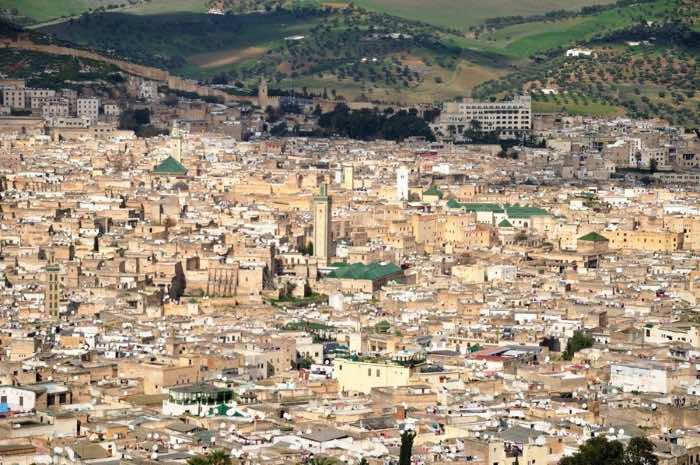
Rabat — The annual pilgrimage to the mausoleum of Cheikh Ahmad al-Tijânî in Fez, Morocco, has captured the devotion of an ever-growing number of Senegalese faithful, extending far beyond traditional Sufi circles, according to Senegalese daily Le Soleil.
Once considered the domain of religious elites, the Ziarra opened up to broader participation in the 1980s. Its popularity surged after 2012, boosted by new direct flights between Dakar and Morocco and the rise of spiritual travel.
Senegalese travel agencies now offer week-long packages that align with key religious celebrations such as the Maouloud and the Gamou, allowing pilgrims to attend these events with structure and guidance.
The roots of the Ziarra stretch back to 1922, with its formalization taking place after World War II.
Le Soleil report recalls that the late King Mohammed V offered Senegalese pilgrims the Dar Kettani residence in Fez, a gesture that reflected the long-standing spiritual connection between Senegal and Morocco.
“Beyond faith, the Ziarra demonstrates a centuries-old spiritual diplomacy, inherited from the Almoravids and strengthened by leaders like El Hadj Malick Sy and Cheikh Ibrahim Niass,” said Mouhamed El Moctar Dièye of the Islamic Institute of Dakar.
Mouhamed El Moctar Dièye, head of research at the Islamic Institute of Dakar, places this spiritual connection in a broader historical context.
The first links between Senegal and Morocco trace back to the Almoravids in the 11th century, who spread Islam across West Africa.
These exchanges strengthened over time with figures like El Hadj Oumar Tall, El Hadj Malick Sy, and Cheikh Ibrahim Niass. Today, the Tijaniyya order remains the foundation of this spiritual diplomacy.
The close ties continue today through Senegalese scholars studying at Al Quaraouiyine University, participation in Dourous Hassaniya, and initiatives like the Mohammed VI Foundation of African Ulemas — with the Fez Ziarra stands as one of the clearest symbols of this enduring bond.
[ad_2]
Source link