
[ad_1]
Rabat — Morocco’s entrepreneurial landscape is undergoing a transformation, driven in part by innovative programs that extend beyond traditional business centers to reach emerging talent nationwide.
The Netherlands’ Orange Corners program, a six-month incubation initiative, exemplifies this approach by rotating between different Moroccan regions every six months, ensuring that entrepreneurial support reaches beyond the established hubs of Rabat, Casablanca, and Marrakech.
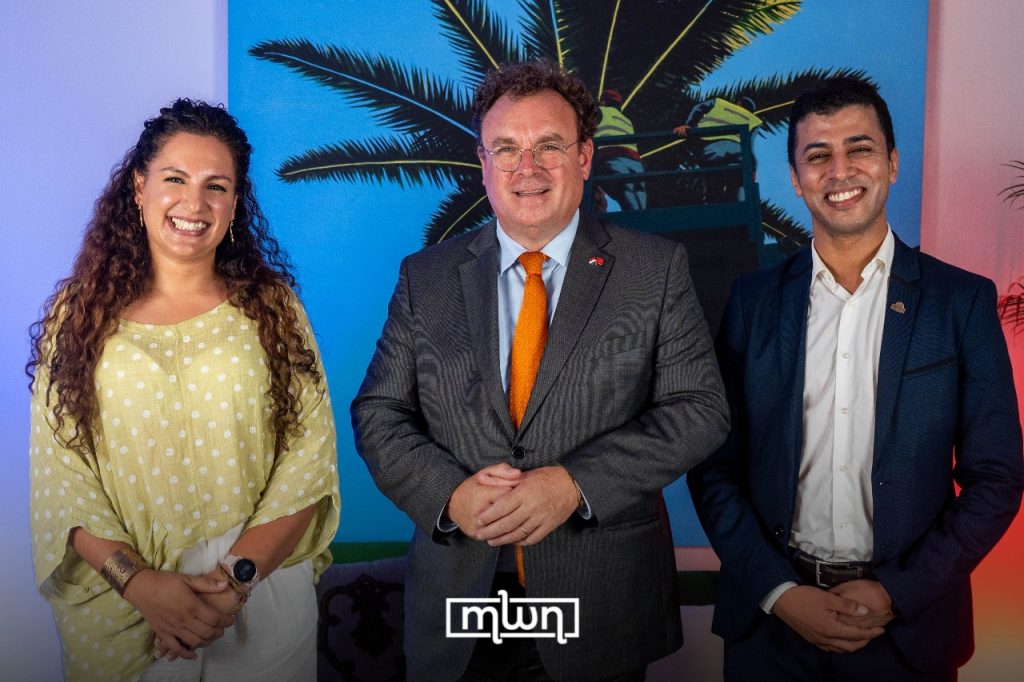
Morocco World News (MWN) sat with the Netherlands Ambassador to Morocco Dirk Jan Nieuwenhuis and two Orange Corners alumni to discover its impact on young Moroccan entrepreneurs and startups.
Nieuwenhuis explained the strategic thinking behind this mobile approach: “There’s so much more to Morocco than just the big cities… there’s also a whole world of cities like Beni Mellal, Nador, Agadir, other parts of Morocco that merit our support for the entrepreneurs that are in this region.”
The on-the-ground application of the program has yielded impressive results, particularly in women’s participation, which exceeds 40% in these regional locations.
The program reaches distant regions and aims to find the untapped potential that exists beyond Morocco’s major metropolitan areas.
Success stories: from wastewater to sustainable construction
As startups and young entrepreneurs take endeavors to make their dreams into reality, some know what door to knock on. In the landscape of entrepreneurship, training, mentorship, and network follow-ups are sometimes more important than having monetary capital.
Two alumni of the Orange Corners program demonstrate that the program helped them make their innovative solutions, emerging from Morocco’s entrepreneurial ecosystem, come true. Their ventures address critical challenges facing both Morocco and the broader African continent.
Salma Bougarrani, CEO and co-founder of Green Watech, has developed a groundbreaking approach to wastewater treatment and agricultural reuse. Her company addresses two pressing issues: over 70% of Moroccan rural and urban areas lack basic sanitation services, and the country is experiencing its worst water crisis in four decades.
“The reuse of treated wastewater is not anymore a choice, it’s mandatory,” Bougarrani explains to MWN. Her solution focuses on African-adapted, low-tech approaches that are energy-free and significantly more cost-effective than existing technologies, 70 percent cheaper in maintenance and 30 percent cheaper in implementation.
Since graduating from Orange Corners, Bougarrani’s Green Watech has expanded dramatically, growing from 1,000 to 85,000 end users across seven additional Moroccan regions. The company has treated over 500 million liters of water and contributed to the production of more than 80,000 tonnes of food.
Youness Ouazri, founder and CEO of Ecodome Maroc, tackles sustainable construction using local raw materials. His approach addresses energy efficiency challenges in Morocco’s construction sector, which ranks as the second-highest energy consumer after transportation.
By utilizing earth and other local materials, Ecodome Maroc creates buildings that naturally adapt to weather conditions, reducing energy consumption for heating and cooling by up to 40-50% compared to conventional construction methods.
“We managed to reduce the price of construction up to 40 to 50 percent compared to regular methods,” Ouazri told MWN. This cost reduction helps democratize access to infrastructure, particularly in rural areas.
Ouazri spoke of the training and mentoring aspect of the program as a key player in his journey, starting from an idea to scaling up his project, which he now thinks can contribute to the country’s hosting of two major and prestigious football tournaments.
Strategic collaboration and cross-sector partnerships
The two entrepreneurs exemplify the collaborative spirit that Orange Corners fosters. Following their respective cohorts in Casablanca, Bougarrani and Ouazri partnered on an ecological resort project, combining Green Watech’s sanitation expertise with Ecodome Maroc’s sustainable construction capabilities.
This collaboration has positioned them strategically for Morocco’s upcoming hosting of the African Nations Cup in 2025 and the FIFA World Cup in 2030, with Ouazri noting that the current context is “keen to receive investments and to develop infrastructure for rural tourism.”
Public-private partnership model
The Orange Corners program operates as a public-private partnership, a structure Ambassador Nieuwenhuis considers essential for effective development cooperation.
“What they bring to the table in terms of expertise, in terms of funding, and in terms of experience and networking, it can never be dealt with by a government agency,” he explained.
The program provides comprehensive support, including training, mentorship, international network access, monthly allowances, prototyping subsidies, and seed funding for selected entrepreneurs.
This multi-faceted approach addresses the critical gap between pilot projects and scaling phases that many Moroccan entrepreneurs face.
Broader Dutch-Moroccan cooperation
Orange Corners represents just one element of the extent of the Netherlands and Morocco’s working collaboration. Other initiatives include the Shiraka program for government-to-government expertise exchange, agricultural innovation support, and energy transition partnerships.
The Netherlands sees particular potential in Morocco’s renewable energy capacity, including green hydrogen and green molecule production for export to European markets through the Port of Rotterdam.
Morocco’s entrepreneurial renaissance
Ambassador Nieuwenhuis observes that Morocco in 2025 represents “a very dynamic country with a lot of potential,” with approximately 300,000 new graduates entering the market annually.
The country’s development over the past two decades, particularly in infrastructure and entrepreneurship, has created an ecosystem that supports innovative business development.
The Orange Corners alumni network includes notably successful graduates, including a former Moroccan minister, demonstrating the program’s impact on developing leadership across sectors.
As Morocco prepares for major international events and continues its sustainable development trajectory, programs like Orange Corners serve as catalysts for innovation, helping transform creative ideas into viable businesses that generate employment and contribute to the country’s economic diversification.
The success stories of Green Watech and Ecodome Maroc illustrate how targeted support, combined with local innovation and international partnerships, can address fundamental challenges while creating scalable business models suitable for broader African markets.
[ad_2]
Source link