
[ad_1]
Rabat – Morocco’s sweeping social protection reform has positioned the country on a transformative path toward a more inclusive and equitable welfare system, according to Hassan Boubrik, Director General of the National Social Security Fund (CNSS).
In an exclusive interview with MAP, Boubrik praised the initiative as a “historic leap” in achieving the vision of King Mohammed VI to build a robust social state.
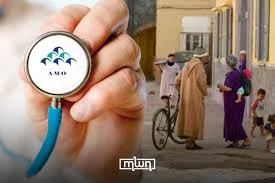
“The generalization of Compulsory Health Insurance (AMO) has allowed millions of Moroccans—regardless of their status—to access healthcare services with dignity and fairness,” Boubrik said. Prior to the reform launched in 2021, only 40% of Moroccans had health coverage. Today, nearly the entire population is covered, including self-employed workers, beneficiaries of AMO TADAMON (formerly RAMED), and others previously left out.
This expansion raised the number of insured individuals from 8 million to nearly 25 million in just a few years. The volume of daily processed claims has also grown significantly, from 20,000 to over 110,000.
Boubrik emphasized that this reform has not only broadened access but also harmonized benefits. “Every Moroccan now receives the same care package and reimbursement rates, regardless of their employment or income level,” he noted.
The AMO TADAMON program alone covers 11 million people whose contributions are paid by the state. Beneficiaries can now access healthcare in both public and private facilities, while preserving the right to free care in public hospitals.
Social Support and Technological Tools
The CNSS Director also highlighted the role of direct financial aid to support low-income households, which now reaches 3.8 million families. He credited the Unified Social Registry (RSU) with improving the targeting and efficiency of these programs, calling it a “crucial and effective mechanism.”
Digital platforms like TAAWIDATY and Damancom have been deployed to streamline citizen services, improving access and processing for both individuals and businesses.
Despite the successes, Boubrik acknowledged that several challenges remain. Chief among them is ensuring regular contributions from self-employed workers. Out of 1.7 million principal contributors in this group, only 550,000 are currently up to date on their payments.
“This situation creates a risk of anti-selection, where only those in need of care contribute, threatening the system’s sustainability,” he warned. Nonetheless, Boubrik noted progress: the contribution rate has risen from 21% to over 42% in less than a year, driven by awareness campaigns and new legal tools.
Ensuring Sustainability and Cost Control
As demand for healthcare services grows, the CNSS is also focusing on containing costs without compromising quality. Boubrik stressed the need for reform across multiple fronts: lowering medicine prices, enforcing treatment protocols, promoting prevention, and combating fraud.
He also emphasized the central role of public hospitals in the national health strategy. “With significant investments in infrastructure and personnel, the public sector must lead healthcare delivery. It also helps contain costs, given its lower pricing compared to the private sector,” he added.
Boubrik concluded by outlining two major reforms set for completion by the end of 2025: unemployment insurance and expanded retirement benefits. “The government is actively working to meet these deadlines, which are critical to strengthening Morocco’s social safety net,” he confirmed.
He also announced the upcoming launch of an electronic medical claim system, set to pilot later this year. This innovation aims to simplify procedures for insured individuals and shorten reimbursement timelines.
[ad_2]
Source link