
[ad_1]
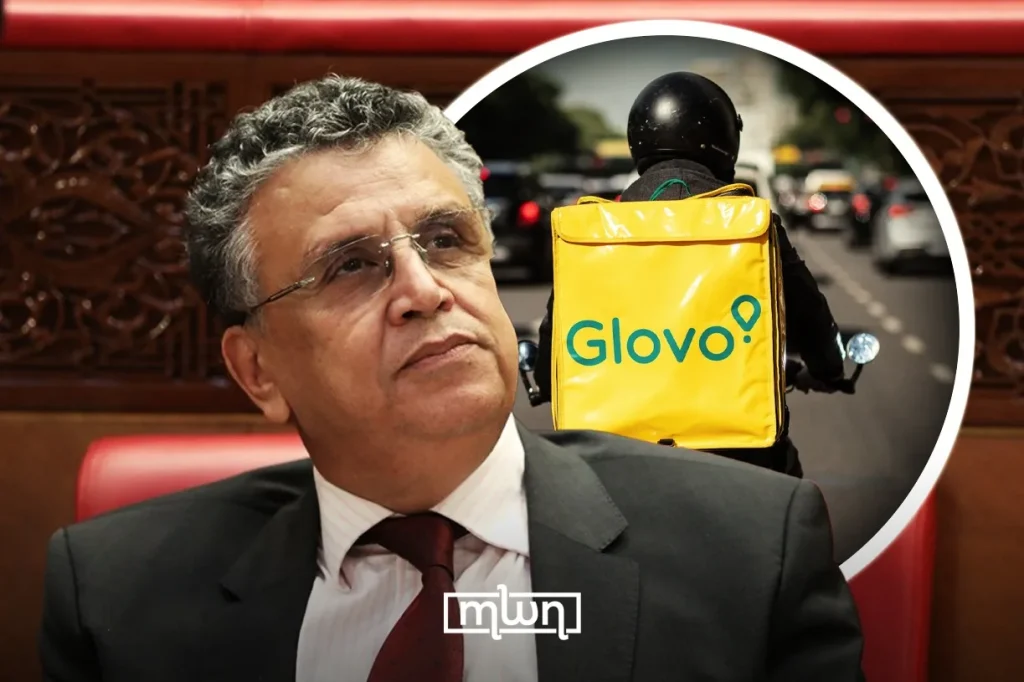
Marrakech – Justice Minister Abdellatif Ouahbi has proposed an unconventional solution to reduce crowding in Moroccan courts: using delivery platforms like Glovo to transport official judicial documents directly to citizens’ homes.
During an oral question session at the Chamber of Councilors on Tuesday, Ouahbi suggested that delivery services could bring court-issued documents such as criminal records, commercial registries, and nationality certificates straight to applicants’ doorsteps.
“People will laugh at first, but they will end up benefiting from it,” Ouahbi stated confidently, acknowledging that even directors within his own ministry have mocked the idea.
The minister, who is at the center of recent allegations of tax fraud following documents leaked by the Algerian hacker group Jabaroot, cited the overwhelming volume of document requests as justification for his proposal. “Recently, we received more than 10,000 requests for criminal records in Casablanca alone,” he explained.
Ouahbi drew inspiration from European models, particularly Portugal, where passports are delivered directly to citizens. He envisions motorcycle couriers ensuring secure distribution of documents to applicants’ homes.
Beyond administrative simplification, the minister sees this initiative as an employment opportunity for young people in urban logistics. “This service, if well organized, could create numerous jobs while reducing queues in courts,” he said.
While Ouahbi did not specify a timeline or concrete details for the project, he confirmed that partnering with a private company like Glovo remains a possibility, suggesting that discussions could be initiated soon.
Glovo under fire
This proposal comes amid ongoing issues surrounding Glovo in Morocco. On Monday, Glovo delivery workers protested in Casablanca against what they called a “truncated” map of Morocco on the company’s application that allegedly omitted the Sahara region.
The protesters also expressed general dissatisfaction with their working conditions, including concerns about bearing all operational costs themselves while earning insufficient income. The demonstrations in Casablanca are part of several spontaneous gatherings that have occurred in different Moroccan cities since early July.
Glovo Morocco responded the following day, explaining that the map issue was a “technical anomaly” that occurred “following a recent external update.” The company assured that the error had been addressed upon detection and that “the map displays correctly on the application.”
The company stated it operates “across the entire national territory, from Tangier to Laayoune, with full respect for the Kingdom’s territorial integrity.”
Regarding the workers’ concerns about lack of dialogue, Glovo Morocco contradicted this perception, stating it has “always maintained an open dialogue policy with the courier community, provided it takes place in a respectful, constructive and transparent framework.”
The company detailed that “in recent weeks, exchange sessions were held with a hundred couriers in Casablanca in a constructive spirit.” During these meetings, Glovo claims to have “presented and communicated concrete proposals aimed at improving the couriers’ experience.”
Founded in Barcelona in 2014, Glovo has rapidly expanded to become a major player in on-demand delivery. Now owned nearly 94% by German firm Delivery Hero, the company has established itself in several countries through massive fundraising, notably from Abu Dhabi’s sovereign wealth fund.
Its economic model, based on the precarious status of delivery workers, faces mounting criticism. In June, European authorities fined Glovo €106 million for anti-competitive practices, including no-poaching agreements.
Read also: Glovo Faces Antitrust Allegations in Morocco’s Food Delivery Market
[ad_2]
Source link