
[ad_1]
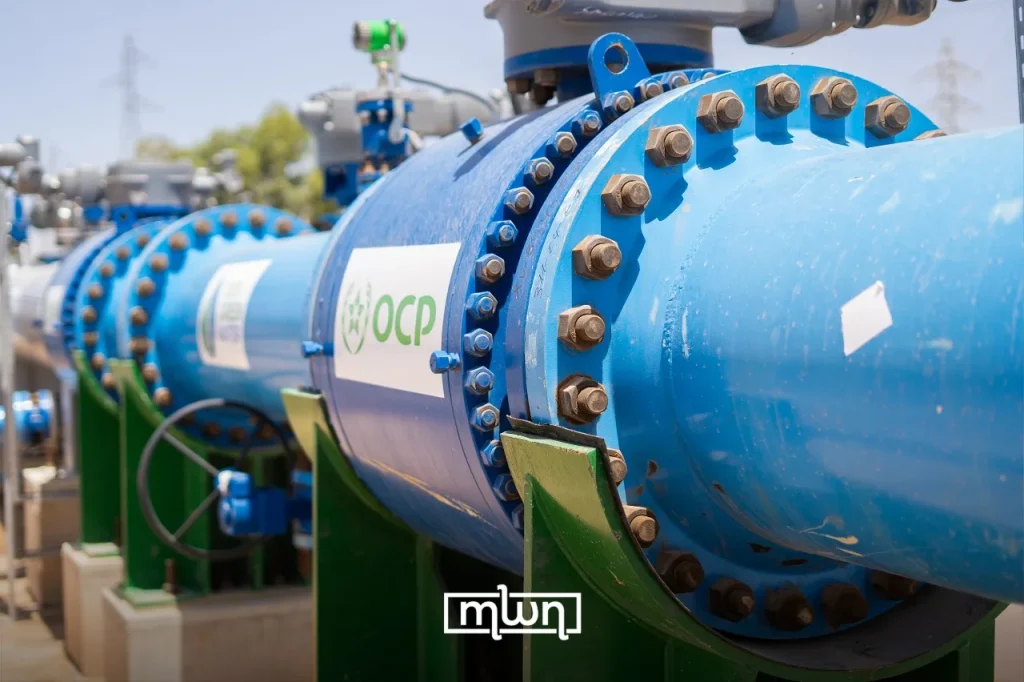
Rabat — Morocco’s OCP Group reached today a significant milestone in water sovereignty with the commissioning of the country’s longest water pipeline.
The 203-kilometer engineering feat transports desalinated water from the Atlantic coast to the heart of the country’s phosphate mining region.
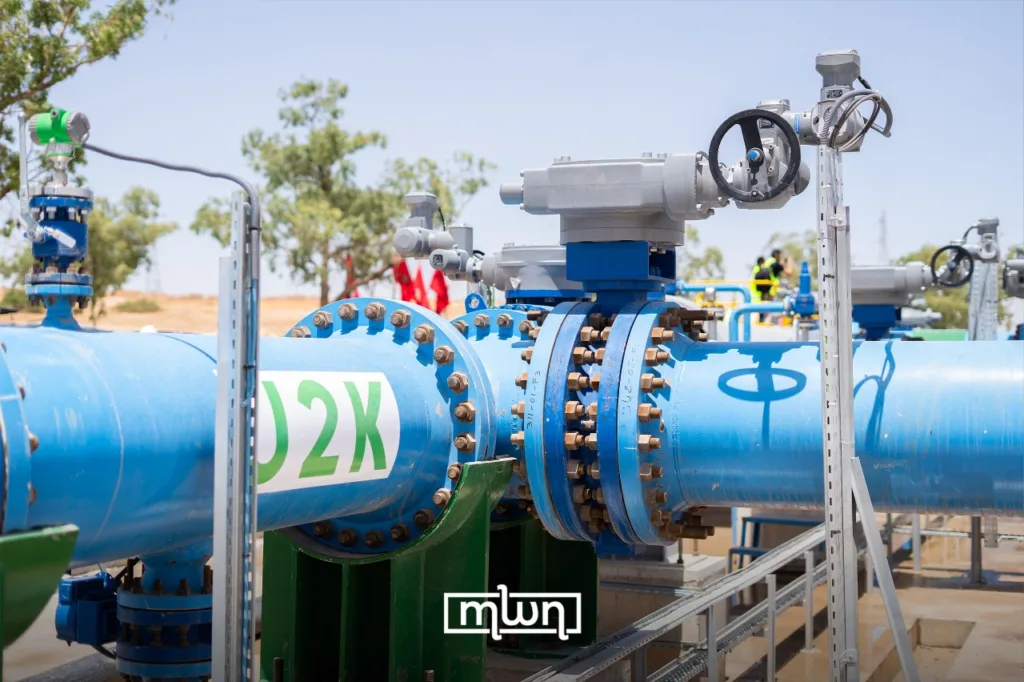
The Jorf Lasfar-Khouribga (J2K) pipeline, operated by OCP Green Water (OGW), marks a decisive step toward Morocco’s water independence while simultaneously addressing the country’s ongoing water stress challenges that have persisted since 2018.
A strategic response to national water crisis
The ambitious project emerged from Morocco’s urgent need to combat water scarcity. In 2022, the Moroccan government called upon OCP Group to contribute to national water security efforts, prompting the launch of an extensive non-conventional water program.
In an interview with Morocco World News (MWN), the Member of the Strategic Committee and Chief Sustainability & Innovation Officer at OCP Group Hanane Mourchid said: “We started this in 2008. By 2015, we used to have the biggest desalination platform in Morocco, producing 25 million cubic metres per year.”
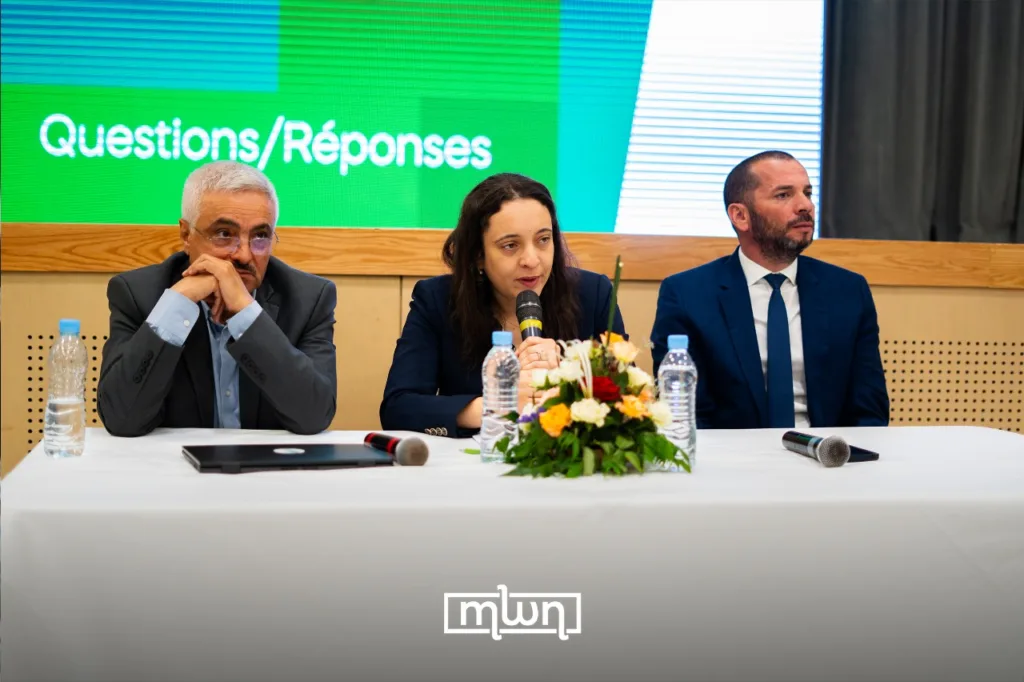
She pointed to the company’s long-term commitment to water innovation.
The J2K pipeline represents the culmination of this strategy, connecting the Jorf Lasfar desalination plant to Khouribga, home to the world’s largest phosphate mine.
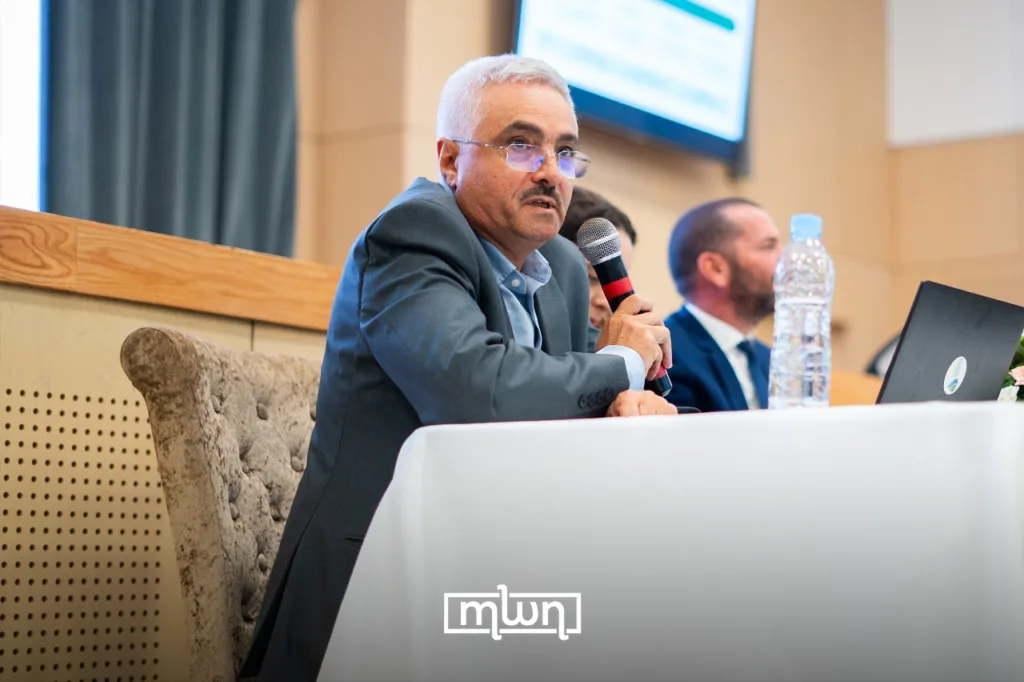
In a statement to the press, Ahmed Zniber, Director General of OCP Green Water, described the project as both “singular and structuring,” stressing its role within the green investment program launched in 2022 under the leadership of King Mohammed VI.
Engineering excellence in record time
The pipeline’s technical specifications point up the complexity of the undertaking. Stretching 203 kilometers with an elevation difference of 800 meters, the infrastructure required sophisticated engineering solutions to transport up to 80 million cubic meters of desalinated water annually.
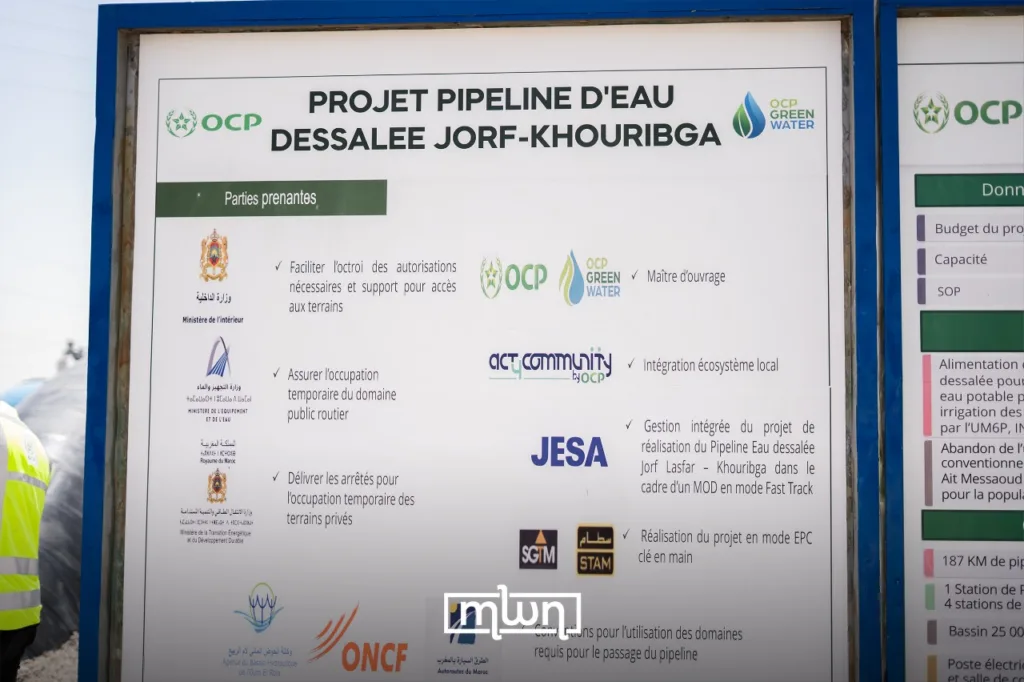
“This project was designed by our joint venture JESA,” Zniber noted, crediting the engineering expertise that enabled the project’s completion. The construction was awarded to Moroccan consortium GTM STAM following an international tender process, with completion achieved in just 24 months.
The pipeline infrastructure includes 187 kilometers of 1,300-millimeter diameter pipes and 16 kilometers of 600-millimeter sections, supported by pumping stations with a capacity of 25,000 cubic meters per hour. This makes it the first infrastructure of its kind in Morocco capable of transporting desalinated water over such an extensive distance.
Economic and social impact
Beyond its technical achievements, the project delivered substantial socio-economic benefits to the region.
During construction, the pipeline created approximately one million man-days of employment, equivalent to an average of 1,300 jobs per day over two years, with 85% of the workforce sourced locally.
“This project allowed us to create 1,300 jobs on average per day for two years during the construction phase,” Zniber said, adding that the operational phase has generated 100 permanent positions, including roles in desalination operations.
The project’s MAD 5 billion ($ 556 million) investment represents a significant commitment to Morocco’s water infrastructure, with implications extending far beyond OCP’s industrial needs.
OCP’s broader water strategy success
The J2K pipeline launch coincides with another major achievement, as OCP Group’s Benguerir operations have achieved full water autonomy through treated wastewater transported from Marrakech’s treatment plant since June 15, 2025.
This dual success means OCP Group has reached its target of complete non-conventional water autonomy by 2025, two years ahead of the original 2027 deadline.
“We are very proud today to achieve this very important milestone as part of OCP Sustainability Strategy,” Mourchid told MWN, pointing to water as a core component of the company’s sustainability engagement.
The company’s water positivity approach has evolved significantly since its inception. As Mourchid explained, “We started by deciding to move from what we call conventional water to unconventional water use means all the desalinated water and wastewater treated and we used in our mines.”
National water security contribution
The pipeline’s impact extends beyond OCP’s industrial operations. In less than three years, OCP Green Water has successfully secured drinking water supplies for Safi, El Jadida, and southern Casablanca. The new pipeline will eventually provide potable water to Khouribga and support high-value agricultural projects.
“Almost 30% of Casablanca needs are covered today from Jorf Lasfar platform,” Mourchid noted, pointing out the project’s contribution to Morocco’s largest economic hub.
For his part, Zniber explained the broader environmental benefits, stating that the project will “liberate a volume of water from dams of more than 80 million cubic meters per year, which will serve agriculture and will have a very favorable impact on the population of the Oum Rabia region.”
[ad_2]
Source link