
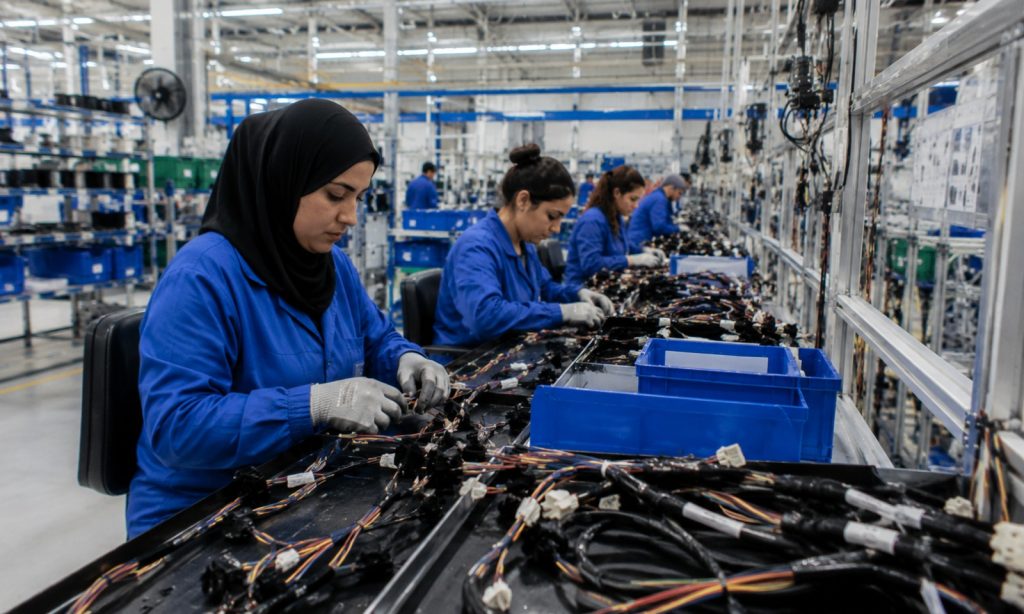
Facing growing challenges in recruiting and retaining workers, several automotive wiring manufacturers in Tangier have introduced new hiring strategies, including a 250-dirham referral bonus for employees who successfully recruit a new worker who meets the company’s requirements and remains employed for at least one month.
The initiative, launched in June by one of the sector’s largest manufacturers, is part of broader efforts to address increasing labor shortages as fewer young people are willing to work on production lines and resignation and absenteeism rates continue to rise across several industrial facilities.
Under the internal referral program, existing employees now play an active role in recruitment by recommending friends or acquaintances for available positions. They receive the financial reward once the new recruit is hired and fulfills the company’s attendance, discipline, performance and minimum employment requirements.
The companies have also expanded their recruitment packages by introducing additional financial and social incentives. Recent job advertisements include attendance and productivity bonuses, special allowances for Eid Al-Fitr and Eid Al-Adha, back-to-school grants for employees’ children, free transportation, meals, health insurance and, in several factories, permanent employment contracts.
Other manufacturers have eased recruitment requirements by lowering the minimum educational qualification to the first or third year of middle school, while eliminating previous experience or specialized training requirements in an effort to broaden the pool of potential applicants and fill vacant positions more quickly.
Industry sources indicate that many factories are struggling to maintain a stable workforce because of the repetitive nature of production-line work, demanding production targets and the growing number of employees leaving for jobs they consider more attractive. Some factories have even had to redistribute workers between production lines to prevent manufacturing disruptions.
At the same time, companies are increasing their reliance on temporary employment agencies and digital recruitment platforms while continuing direct hiring campaigns. Employment websites now feature dozens of daily vacancies for production workers in Tangier’s automotive wiring factories.
Industry observers say the decision to pay 250 dirhams for every successful referral highlights the intense competition among manufacturers for available labor. However, they also question whether such temporary incentives can address the underlying reasons behind the continued employee turnover, which many workers attribute to wage levels, working conditions, transportation costs and limited career development opportunities.
As Morocco’s automotive wiring industry remains one of Tangier’s largest employers, manufacturers now face a dual challenge: attracting new workers while ensuring they remain in their jobs, rather than turning recruitment into a continuous effort to replace departing employees.