
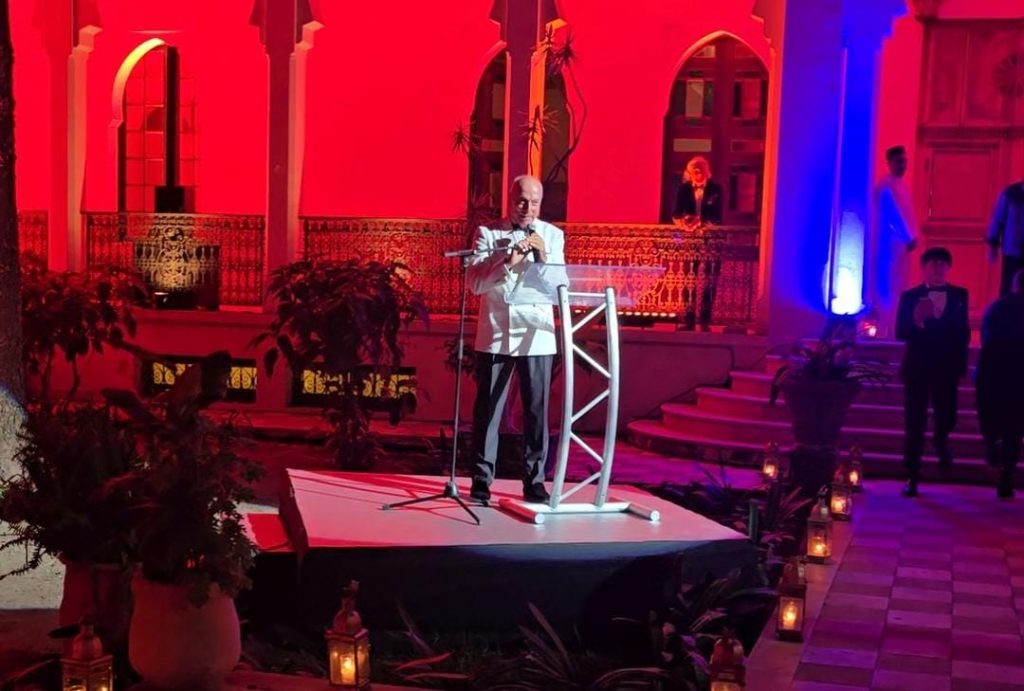
Tangier took center stage on Saturday, October 24, 2026, as the prestigious Di Meo Calendar 2027 was officially unveiled at the historic Moulay Hafid Palace. Entitled “Naples–Tangier, Mediterranean Dialogues,” this special edition marks the 25th anniversary of an Italian artistic and cultural initiative dedicated to celebrating the historical connections between Naples and major cities around the world.
The presentation took place at the headquarters of the Italian Institutions in Tangier, within the historic Moulay Hafid Palace, highlighting the Moroccan city’s exceptional architectural heritage and its longstanding cultural ties with Naples.
Conceived and directed by Generoso Di Meo, the Di Meo Calendar has evolved over the past quarter-century into a distinctive editorial and artistic project combining fine art photography, historical research, architecture, and literary contributions.
For its landmark 25th anniversary, the initiative selected Tangier, a city internationally recognized for its multicultural identity, rich history, and strategic position at the crossroads of the Mediterranean Sea and the Atlantic Ocean.
Tangier and Naples: Two Cities Connected by Mediterranean History
The 2027 edition explores the historical, architectural, and cultural connections between Tangier and Naples, two Mediterranean port cities whose identities have been shaped by centuries of trade, migration, and cultural exchange.
Through this artistic dialogue, the project highlights the shared characteristics of both cities, particularly their ability to preserve their historical identities while embracing modernity.
Speaking during the presentation, Generoso Di Meo explained that his decision to feature Tangier was inspired by his longstanding admiration for the Moroccan city and its remarkable cultural heritage.
He emphasized the historical relationship between Tangier and Naples, describing both cities as cultural crossroads where different traditions, languages, and civilizations have interacted throughout history.
Tangier’s Architectural Treasures Captured by Massimo Listri
One of the highlights of the Di Meo Calendar 2027 is its remarkable photographic collection by renowned Italian photographer Massimo Listri, internationally celebrated for his distinctive approach to architectural and interior photography.
A contributor to the Di Meo Calendar since 2013, Listri offers a captivating visual exploration of Tangier’s architectural identity, documenting historic palaces, gardens, museums, religious landmarks, and traditional residences.
His photographs capture the city’s distinctive light, elegant architectural details, intricate ornamentation, and historic spaces, revealing the cultural influences that have shaped Tangier over generations.
The visual collection is complemented by literary contributions from approximately twelve Italian and international writers, offering different perspectives on the history, identity, and cultural relationships connecting Tangier and Naples.
Together, these photographs and texts transform the calendar into an artistic journey through the shared Mediterranean heritage of the two cities.
A Prestigious Cultural Evening at Moulay Hafid Palace
The official presentation of the calendar took place at Moulay Hafid Palace, one of Tangier’s notable historical landmarks and the home of the Italian Institutions in the city.
The choice of venue added special cultural significance to the event, reflecting the historical connections between Morocco and Italy.
Pasquale Salzano, Italy’s Ambassador to Morocco, highlighted the importance of the initiative in strengthening cultural relations between the two countries.
In a statement to Morocco’s official news agency, Maghreb Arab Press (MAP), the ambassador emphasized that the event provided an opportunity to showcase Tangier’s historical landmarks, celebrate the architectural beauty of Moulay Hafid Palace, and promote traditional Moroccan craftsmanship.
He also underlined the significance of the Italian cultural presence in Tangier and the role of artistic initiatives in encouraging dialogue and mutual understanding between Mediterranean communities.
The evening brought together artistic expression, cultural discovery, and historical appreciation, reinforcing the importance of cultural cooperation between Morocco and Italy.
Celebrating 25 Years of Art, Photography, and Cultural Exchange
Since its creation, the Di Meo Calendar has established itself as much more than a traditional annual publication.
Designed as a collectible artistic edition, the project brings Naples into dialogue with major Italian and international cities through original photography and literary contributions.
Each edition explores the architectural beauty, cultural identity, and historical connections of the featured destination.
The selection of Tangier for the 2027 anniversary edition reflects the city’s cultural significance and its unique position within Mediterranean history.
By combining visual storytelling with historical and literary perspectives, the calendar offers international audiences an opportunity to discover Tangier beyond its traditional tourist image.
Tangier Strengthens Its International Cultural Presence
The presentation of the Di Meo Calendar 2027 represents another opportunity to highlight Tangier’s rich heritage and its growing visibility within international artistic and cultural initiatives.
Known for its distinctive character and cosmopolitan history, Tangier has long inspired artists, writers, photographers, and cultural figures from around the world.
Its architectural diversity, historic neighborhoods, and geographical position between Africa and Europe continue to make it an important destination for cultural exploration.
Through this anniversary edition, the Di Meo Calendar contributes to promoting Tangier’s architectural and historical treasures while celebrating the longstanding cultural connections between Morocco and Italy.
More than an artistic publication, “Naples–Tangier, Mediterranean Dialogues” stands as a tribute to the shared heritage of two Mediterranean cities, demonstrating how photography, literature, and cultural exchange can build bridges between civilizations and bring communities closer together.