
[ad_1]
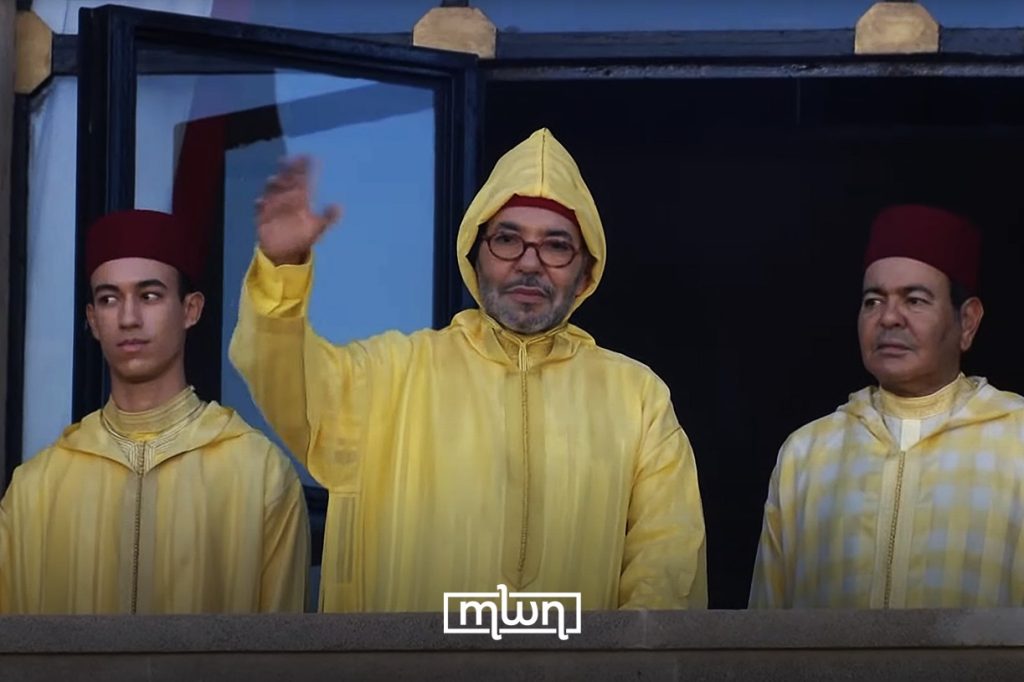
Marrakech – In a speech to Parliament on Friday marking the opening of the fifth legislative year, King Mohammed VI laid out a strategy to address rural development inequalities across Morocco. The monarch called for faster territorial development programs with focus on marginalized regions.
“We consider that the level of local development is the true mirror of the progress of the emerging and supportive Morocco, whose status we are all working to consolidate,” the King stated in his address.
The royal speech addresses what the King himself rejected as a “two-speed Morocco,” a term also used by analysts to describe the uneven economic reality across the country.
Morocco’s overall poverty and social indicators have improved over the past decade, but the benefits have been unevenly distributed – producing a “two-speed” economy in which dynamic coastal and urban corridors progress rapidly while rural hinterlands fall behind.
Currently, three regions continue to concentrate more than 58% of national wealth: Casablanca-Settat, Rabat-Salé-Kénitra, and Tangier-Tetouan-Al Hoceima.
The King’s speech comes at a moment when the Gen Z 212 movement has thrust rural inequality and service collapse to the center of national debate. This decentralized youth collective, which erupted online and spilled into the streets this fall, mobilized thousands with chants like “Fewer stadiums, more hospitals” and took the unprecedented step of sending a formal letter to the King himself.
In it, they denounced the widening gulf between Morocco’s glittering urban infrastructure and the neglected realities of rural communes, where underfunded hospitals, high dropout rates, and crumbling services remain daily struggles.
By combining street demonstrations with formal appeals to the monarchy, Gen Z 212 signaled both the urgency of their grievances and their belief that only the sovereign can bridge the “two-speed Morocco” divide – a challenge that now puts rural equity and social justice at the very heart of Morocco’s political moment.
Bridging Morocco’s deep rural-urban development divide
The monarch stressed that justice between territories is not merely a slogan but a strategic orientation requiring engagement from all stakeholders.
“The diptyque ‘social justice and fight against territorial inequalities’ is far from being an empty slogan, or a circumstantial priority whose importance could decline according to circumstances,” he said.
The sovereign pointed to the need for a change in mentalities and working methods, calling for “a genuine rooting of the culture of results.” This approach must rely on precise field data collection and digital technologies.
Rural Morocco: progress achieved, deep inequalities persist
Multidimensional poverty in Morocco has been cut by roughly half over the past decade, yet it remains overwhelmingly rural. Statistics confirm the challenge: in 2024, about 72% of people experiencing multidimensional poverty lived in the countryside, with rural poverty rates (around 13.1%) more than four times higher than urban levels (about 3.0%).
Absolute poverty also rebounded with recent shocks: between 2019 and 2022, the national rate more than doubled to 3.9%, with rural areas facing 6.9% compared to 2.2% in cities – clear evidence that drought, inflation, and pandemic aftershocks hit rural households hardest.
These disparities sit atop longer-run structural inequality, where the top 10% of earners capture a disproportionately larger income share than the bottom 10%, underscoring the depth of Morocco’s “two-speed” reality beyond headline growth figures.
The King directed attention to regions facing extreme precarity, particularly mountainous zones and oases. “The harmonious territorial development cannot be achieved without complementarity and effective solidarity between different areas and various regions,” he noted, adding that mountainous regions covering 30% of the national territory require an integrated public policy.
Morocco shows progress in some areas of rural development. Rural electrification reached nearly 99.9% by mid-2024, up from about 18% in 1995. The National Rural Roads Access Index improved from about 54% to 79% between 2005 and 2017, connecting approximately 2.9 million people more directly to schools, markets, and clinics.
These massive rural roads programs delivered over 13,000 kilometers of roads, dramatically changing daily life by connecting rural populations to schools, markets, and health facilities. Yet substantial gaps persist in water, sanitation, healthcare, and education. WHO/UNICEF data reveal ongoing rural-urban differences in safely managed drinking water services.
The rural economy remains highly climate-exposed and vulnerable to cyclical shocks. A string of drought years cut farm jobs, with 137,000 lost in 2024 alone, pushed up rural underemployment, and depressed local demand.
Even where major agricultural value chains like olives, citrus, and early vegetables are integrated with export logistics, smallholders upstream face water stress, price volatility, and limited risk-management tools.
In healthcare, rural regions like Drâa-Tafilalet face much higher population-per-doctor ratios than urban centers like Casablanca-Settat. Health access issues were brought into national focus by the Agadir (Hassan-II) hospital scandal and youth-led protests demanding “fewer stadiums, more hospitals.”
Academic and WHO analyses point to systemic shortages, urban concentration of clinicians, and migration to the private sector – dynamics that leave rural households paying more in transport and time to access care.
Education shows mixed results. Preschool enrollment for rural children aged 4-5 rose from about 33% to 91% between 2018 and 2024, but dropout rates remain high, with approximately 294,000 students leaving school in 2022/23 across all cycles.
For youth, NEET rates (Not in Employment, Education or Training) hover around a quarter of 15-24-year-olds, much higher than OECD norms, with rural girls disproportionately affected due to mobility constraints and care burdens.
King urges unity to implement development initiatives
The King called for expanding the National Program for the Development of Emerging Rural Centers, describing it as “an adapted lever for managing urbanization and reducing its negative impacts.” These centers could become “an effective link in the dynamic aimed at providing citizens in rural areas with nearby administrative, social and economic services.”
While digitization is advancing with telecom coverage across 10,640 rural areas and high mobile availability, effective digital inclusion depends on device affordability, skills, and reliable infrastructure.
The monarch also stressed optimal implementation of sustainable development along the national coastline, including the coastal law and National Coastal Plan.
Policy experts suggest three decisive levers for the future: territorial equity compacts that tie central transfers to rural outcome targets; productive inclusion programs that blend irrigation efficiency, climate insurance, off-taker contracts, and women-led micro-enterprise support; and youth pathways connecting preschool gains to secondary retention and then to local technical training tied to agro-industry, logistics, and nature-based jobs.
Morocco has already launched a new territorial development program following the King’s throne speech of July 29. This program rests on four pillars: job creation and entrepreneurship, strengthening basic social services, sustainable water management, and integrated territorial development projects.
“Our objective is that, without distinction or exclusion, and in whichever region, the fruits of progress and development benefit all citizens,” the King stated in his earlier throne speech, firmly rejecting the concept of a “two-speed Morocco.”
Despite progress reducing multidimensional poverty from 11.9% in 2014 to 6.8% in 2024 and elevating Morocco to “high human development” status, the King acknowledged that some areas still experience poverty due to lack of basic infrastructure, particularly in rural regions.
The monarch concluded his Parliament address by asking both the executive branch and the legislature to “mobilize all energies and all potentialities” and prioritize “the supreme interests of the Nation and citizens” in implementing these development initiatives.
Read also: Full Speech of King Mohammed VI at Opening of Parliament’s 5th Legislative Year
[ad_2]
Source link