
[ad_1]
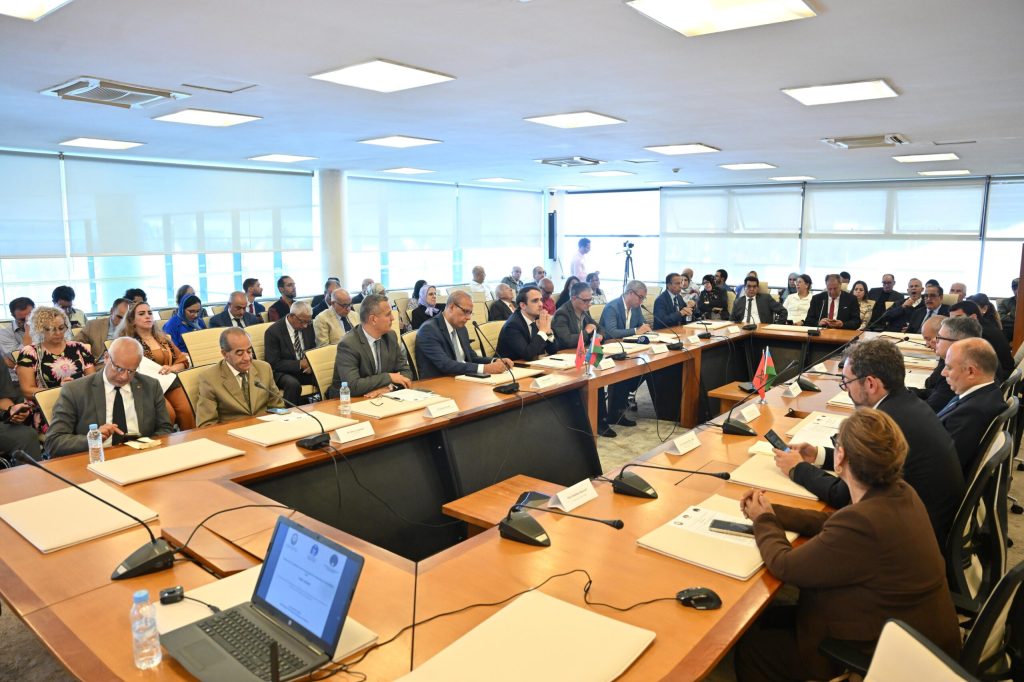
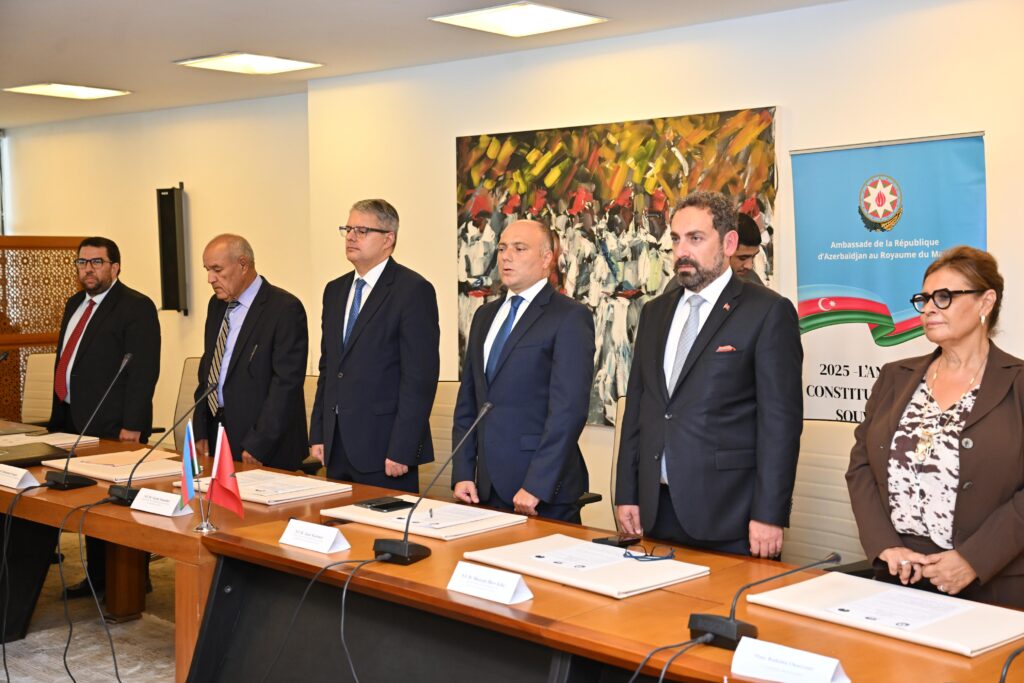
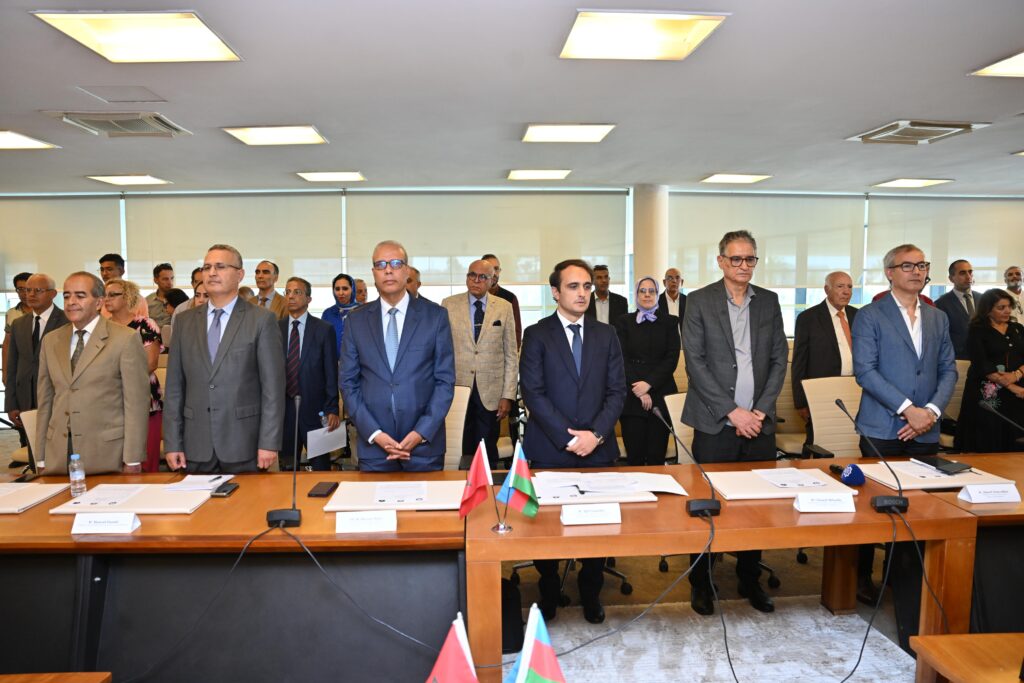
Rabat — Morocco’s National Library in Rabat brought together yesterday a gathering of diplomats, scholars, and civil society representatives to commemorate two significant anniversaries in Azerbaijan’s modern history: the 30th anniversary of its Constitution and the fifth anniversary of its Day of Remembrance.
The roundtable, organized in partnership between the National Library of Morocco and the Morocco-Azerbaijan Friendship Association, brought together key figures, including Azerbaijan’s Ambassador to Morocco Nazim Samadov, Morocco’s former Ambassador to Azerbaijan Hassan Hami, and Mohammed Faquiri, president of the Morocco-Azerbaijan Friendship Association, alongside other figures.
Constitutional foundations and sovereignty
Ambassador Samadov referred to the dual significance of the commemoration, saying, “It is with immense pride and deep emotion that I speak today in this temple of knowledge.”
For his country, the 1995 Constitution, adopted shortly after Azerbaijan regained independence in 1991, “laid the solid foundations of the modern Azerbaijani state” and “consecrated the principles of democracy, national sovereignty, separation of powers, and respect for fundamental rights.”
The ambassador pointed out that 2023 marked a landmark moment when Azerbaijan “fully restored its territorial integrity and sovereignty over all of its internationally recognized territory.” The “determination of the Azerbaijani people, the strength of our state, and the clairvoyance of its leadership” led to the achievement.
Historical context and challenges
Equipped with his experience as Morocco’s former resident ambassador to Azerbaijan, the shrewd Hassan Hami provided crucial historical context.
“What Azerbaijan has become today was not a walk in the park — it was a colossal battle,” he said, stressing that the country had to go through a complex path to independence and reconstruction. He stressed the importance of understanding this historical foundation when discussing modern Azerbaijan.
Hami reminded the audience that Azerbaijan had previously been a republic in 1918, noting that people are forgetful “that Azerbaijan was the first country where women had the right to vote — in the world” in the same year.
The former ambassador outlined the challenging geopolitical context following Azerbaijan’s 1991 independence, describing how various regional and international actors influenced the country’s development.
He particularly shed light on the role of energy resources, noting that “people forget that the first oil discoveries in the world were in Azerbaijan” and referencing the Nobel family’s early investments in the region before their later ventures.
Day of remembrance and sacrifice
Samadov explained that Azerbaijan’s Day of Remembrance, which falls on September 27 and was established by President Ilham Aliyev, “pays tribute to the memory of the martyrs who fell for the defense of our homeland and the restoration of Azerbaijan’s territorial integrity.”
Samadov also explained that the significance of the day serves as a reminder that “peace and sovereignty are never acquired without sacrifice” and that honoring those who gave their lives for freedom constitutes “a sacred duty for every citizen.”
Morocco-Azerbaijan relations
Mohammed Faquiri, representing the Morocco-Azerbaijan Friendship Association, outlined his organization’s efforts to strengthen bilateral ties. Since its establishment, the association has worked to “encourage exchanges between specialists in various fields — higher education, commerce, sports, and culture.”
Faquiri noted that the association was particularly active in promoting awareness of the Karabakh situation among the Moroccan public. Their mission was “to make the Moroccan people aware of the events and genocide that was exercised against the populations of Karabakh.”
Shared values and future cooperation
Of the natural closeness between the two nations, Samadov described Azerbaijan and Morocco as maintaining “sincere friendly relations based on mutual respect and cooperation.” He noted that both countries, “situated in the East and West of the Muslim world, attach particular importance to preserving their sovereignty, promoting intercultural dialogue, and consolidating regional and international peace.”
The roundtable concluded with calls for strengthened cooperation in education, culture, and economic exchanges. As Faquiri expressed, the participants remain “confident that the bonds of Moroccan-Azerbaijani friendship and cooperation, which have experienced exponential growth in recent years, will continue to develop.”
[ad_2]
Source link