
[ad_1]
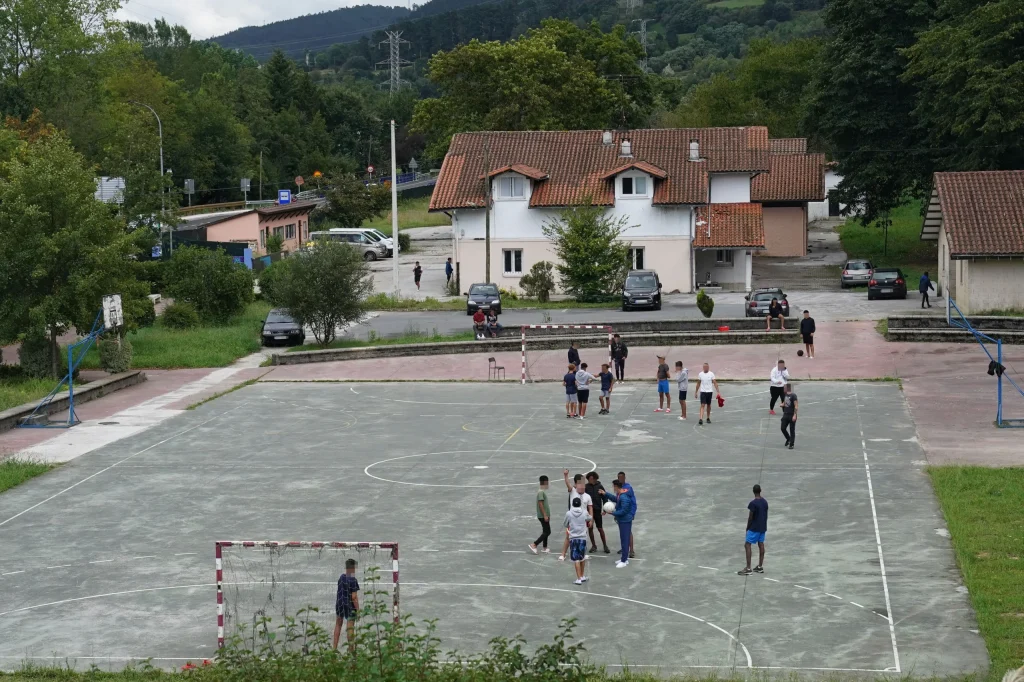
Marrakech – Spanish authorities have identified a growing phenomenon in the city of Bilbao: Moroccan parents bringing their minor children to the city and leaving them in the hands of the foster care system run by the Provincial Council of Vizcaya.
While previous migration patterns included unaccompanied minors traveling to Ceuta, Melilla, the mainland Iberian Peninsula, or the Canary Islands via sea routes, this emerging practice has been increasingly detected by social services and police forces in recent months.
According to the investigative work published by Spanish news outlet El Correo, some provincial officials compare this to a “free Erasmus” program and express concern about what they consider exploitation of the guardianship system.
The profile of these unaccompanied foreign minors (known as “MENAs”) has changed significantly. While previously most came from very humble environments in Morocco or Algeria, today they arrive from middle-class families and cities like Casablanca or Tinghir.
A spokesperson for the Moroccan community in Vizcaya confirmed this trend to Spanish reporters. “They want to offer them better education, healthcare… They are looking out for their children’s future,” he explained.
“These are people with a comfortable economic situation who are granted visas with their children. Not everyone gets one. One of the requirements is to show income, to be working,” he added.
Minors arrive trained, their silence a shield
Spanish authorities report that the minors typically arrive well-instructed. According to police sources, they are advised not to show their passport or visas during the first three months to avoid being discovered. Later, they suddenly present their CNIE (Moroccan identity document).
The investigation found that some parents even travel to Bilbao with their children to show them where the reference police station is, usually the Ertzaintza station in Zabalburu, where the minors identify themselves as underage and appeal for help. Others provide their children with a simple written message: “I am an unaccompanied minor. I need help.”
The Spanish report indicates that massive arrivals are particularly noticeable in summer. So far in 2025, more than 400 young people have entered Vizcaya, mostly North Africans, although there are also sub-Saharan Africans and a growing number of girls. Currently, almost 600 minors are under the provincial care network, of which 25 are female.
This summer has already seen arrests related to this practice, according to Spanish police reports. On July 23, a Moroccan couple was arrested in Bilbao for alleged abandonment and abduction of a minor. They had brought their son and had him enter a shelter, although they were actually still in the city, staying in a tourist apartment in Basarrate.
The investigation showed that the boy maintained contact with them and, moreover, ended up admitting that he was of legal age. The judge allowed the parents to return to Morocco pending trial.
The country’s National Police has also initiated proceedings in at least two similar cases in recent weeks, Spanish officials confirmed. Investigations suggest that there are intermediaries who advise families both at origin and destination on how to get their children admitted to provincial resources. Authorities even suspect possible organized trafficking networks.
Social workers call them gold dust arrivals
According to the El Correo investigation, social workers note some positive aspects of this new profile of minors. “They come with an education and have family references,” confirms the representative of the Moroccan community.
“Now we have a very good group of young people with certain purchasing power. Gold dust for us. They give us a lot of stability. Not only do they not cause problems, but they help us,” says an educator at a center for unaccompanied minors.
However, care workers report that these youth also arrive with excessively high expectations. “They think they are coming to a summer camp and complain about the food and clothes,” noted one staff member interviewed by Spanish media.
To contextualize this phenomenon, it is important to understand the broader picture of Moroccan migration to Spain. Spain hit record population levels in 2025 largely thanks to foreign residents, with Moroccans remaining one of the top three inflow nationalities each quarter.
According to Spain’s National Statistics Institute (INE), Moroccan nationals now number over one million residents, making them the largest foreign nationality in the country.
Official Spanish labor data shows Spain surpassed 3 million foreign workers on Social Security in mid-2025, with Moroccans being the single largest nationality of contributors (about 375,000 in June). The government notes a strong foreign-worker presence in hospitality, agriculture, construction, and scientific/technical activities.
Integration indicators published by Spanish authorities show that 42,910 Moroccan-born residents acquired Spanish nationality in 2024, the most of any origin that year and the highest since 2013. In education, Moroccans represent the largest foreign student group in non-university schooling, with around 196,782 pupils nationwide in 2023-24.
Spain is also a major sender of remittances to Morocco, with €1.38 billion in 2023 (about 13.1% of remittances sent from Spain) flowing to Moroccan households – evidence of dense cross-Mediterranean ties.
The demographic profile drawn from Spanish statistical sources shows that Moroccans in Spain are predominantly of working age (25-54) – roughly 700,000 people – helping offset Spain’s aging demographics and feeding sectors with chronic labor demand.
[ad_2]
Source link