
[ad_1]
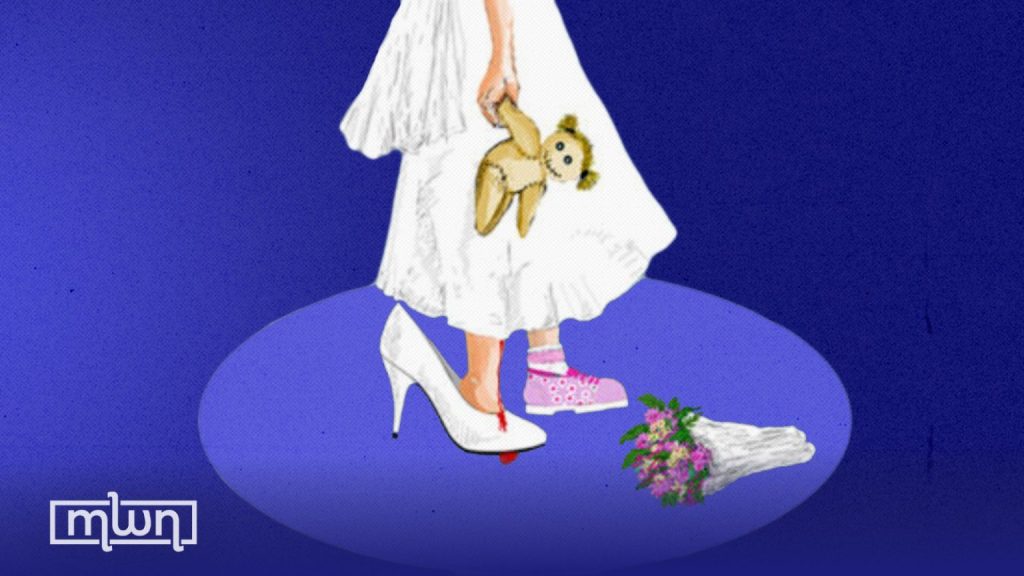
Rabat – The Ministry of Justice recently reported a sharp drop in underage marriage contracts, from 26,298 in 2017 to 8,955 in 2024.
On paper, this looks like progress. Officials attribute the decline to legislative reforms and awareness-raising campaigns aimed at engaging with families, courts, and local communities.
But the numbers tell only part of the story. Behind the statistical decrease lies the stubborn reality: underage marriage continues to thrive in Morocco’s rural and marginalized regions.
For many families, marrying off their daughters remains a survival strategy – one that reflects not tradition but deep structural inequalities.
Rural Morocco still left behind
Justice Minister Abdellatif Ouahbi admitted in parliament that applications for underage marriage are disproportionately filed in villages where poverty, lack of opportunity, and weak infrastructure intersect.
Between 2020 and 2024, the contrast between rural and urban applications remained glaring. In 2021, rural courts received more than 15,000 applications, compared to 6,283 in cities.
Even as the numbers declined, the imbalance persisted. Last year, applications from villages still reached over 11,000 – nearly triple those filed in urban areas.
This pattern shows a reality that has long been ignored. Laws drafted in Rabat often fail to penetrate the realities of rural Morocco, where the absence of schools, dormitories, and basic services traps girls in cycles of early marriage.
Legal reform is not enough
The legislative revision of Morocco’s family code attempted to identify and close loopholes by changing the legal age of marriage to 18, with very few exceptions allowed at 17 under strict judicial oversight. The change was presented as a progressive step – one aligning Morocco with its international commitments to children’s rights.
Yet, on the ground, exceptions risk becoming the norm. Judges, under pressure from families and communities, continue to authorize underage marriages. The letter of the law may have shifted, but its spirit is often undermined by the weight of social realities.
‘A rigid text against harsh reality’
Laila Amharou, a children’s rights activist, put it bluntly in comments to SNRTnews: “The danger is always present as long as structural causes remain. Economic fragility pushes families in remote villages to marry off their daughters as an option to ease financial burdens, and the lack of educational and vocational training opportunities makes early marriage, in the view of some, the only available alternative.”
Her warning cuts to the heart of the issue; laws alone cannot dismantle the social and economic pressures that force girls into early marriages.
Without investment in education, vocational training, and direct family support, the law remains what she calls “a rigid text that is difficult to stand up to in the face of harsh reality.”
Why is this still an issue?
That underage marriage continues in Morocco in 2025 is, at its core, an indictment of systemic neglect. Girls in rural Morocco are not just victims of outdated traditions; they are casualties of a state that has not adequately invested in public schools, transportation, and social safety nets.
Morocco has made some strides in reforming its laws, but when thousands of families still view marriage as the only path for their daughters, the problem is no longer cultural – it is political and economic. The decline in numbers is not enough. Until rural girls have real access to schools, dormitories, scholarships, and safe public spaces, underage marriage will remain the symptom of deeper systemic failures.
Forced into adult roles too soon, many girls, especially in rural areas, face interrupted schooling, early pregnancies, and cycles of poverty that perpetuate their vulnerability.
Without access to proper education or vocational opportunities, these girls are denied the tools to build independent futures, and instead are pushed into unions that often reinforce their social and economic marginalization. Far from being a “solution,” underage marriage entrenches the very inequalities Morocco has pledged to overcome.
[ad_2]
Source link