
[ad_1]
Marrakech – An unforgiving internal uprising has erupted within Polisario’s own ranks as ECSAHARAUI, a Spanish-language Sahrawi publication once loyal to the separatist movement, has launched a blistering attack on the organization’s entrenched leadership.
Historically aligned with Polisario, the outlet recently published a scathing editorial denouncing the group’s leadership as incompetent, corrupt, and responsible for “erratic decisions” that have “weakened [the movement] politically to inert levels.”
This sudden rupture marks an unprecedented break from years of the publication’s editorial loyalty to Polisario’s separatist line.
This rebellion from within obliterates and tears away the facade of unity that the Algeria-backed Polisario has desperately tried to maintain, exposing a corrupt regime that has “petrified” over decades of unbroken rule by the same aging clique.
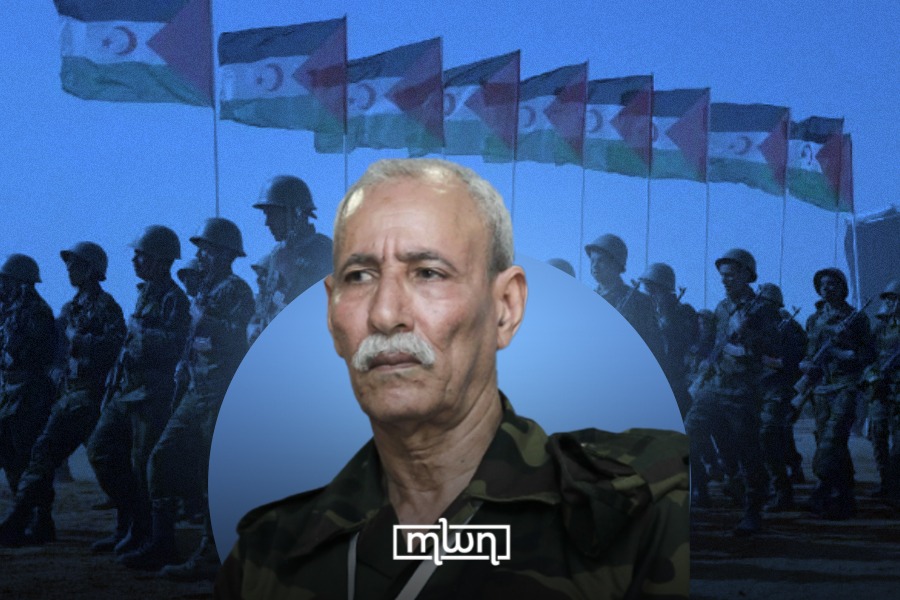
The editorial, brutally titled “XVI POLISARIO Congress, the straw that broke the camel’s back,” savages Secretary General Brahim Ghali and his inner circle – what it calls the “old guard” that has monopolized power for decades – as failed leaders who have betrayed their people’s cause through decades of catastrophic mismanagement and self-serving policies.
Its Spanish-language title, “XVI Congreso del POLISARIO, la gota que colmó el vaso,” drives home the same message: the congress has become the breaking point for Sahrawi patience.
Fifty years later, nothing learned, nothing changed
The publication condemns these “septuagenarian” rulers for having engaged in “imprudent practices,” transforming “a national cause into their personal cause” while systematically destroying all political credibility the movement once possessed.
“All credibility, power of mobilization, influence, sympathy and political depth that it once had among Sahrawi society and the international community has been lost in recent decades,” the publication laments.
According to ECSAHARAUI, after fifty years of the same men remaining in power, Polisario has become “irreconocible and withered,” stripped of its once-strong mobilization capacity, sympathy, and political depth.
“During many, many years… more than three decades, we Sahrawis have tolerated, in silence, and exercising maximum moderation and good faith for the good of our cause, the erratic decisions and attitudes of our leaders,” the editorial states with palpable anger, “but we have found with disappointment that they do not learn from their mistakes.”
The scathing critique accuses Polisario’s leadership of committing three fatal strategic blunders since 1991 that have rendered the movement politically “inert” and driven it toward irrelevance.
It specifically denounces “strategic errors” since the 1991 ceasefire, including “accepting the ceasefire proposal from an enemy in a context entirely favorable to the Sahrawi people,” and failing to “legitimately restart armed struggle once the referendum deadline in 1992 had passed.”
Erratic leaders, inert politics, betrayed people
ECSAHARAUI directly indicts Brahim Ghali’s government as utterly incapable of reform, stating that “no position in Brahim Ghali’s government embodies the spirit of change and regeneration required by Sahrawi society.”
The editorial poses a biting rhetorical question: “Will these old guard leaders do in the coming years what they haven’t done in the last thirty?” It answers bluntly that, in the eyes of public opinion, they are already politically burned out.
The publication exposes what it describes as systemic rot within Polisario’s governance structures, including “institutional capture” by self-interested elites in maintaining the status quo, the complete absence of democratic processes, and a “toxic nationalist rhetoric” that leaders cynically deploy before each congress to maintain their grip on power while delivering nothing afterward.
The editorial further identifies several critical risk factors undermining the movement, warning of “institutional fragility” due to the lack of structural reforms, an “erosion of social capital” from decades of unfulfilled promises, and a “crisis of legitimacy” caused by an “obsolete and outdated leadership without a clear roadmap.”
Some observers, however, approach this sudden media revolt with caution, suggesting it may not be entirely organic but rather orchestrated under the instruction of Algerian military leadership – specifically Army Chief of Staff Saïd Chengriha.
Having lost the diplomatic battles abroad, Algiers may now be weaponizing its loyal media outlets to turn their backs on the Polisario’s discredited leadership, preparing the ground for an internal reshuffle. In this reading, the “rebellion” is less a genuine uprising than a desperate recalibration by an ally that has run out of cards to play.
New leadership or no future at all
This internal revolt has already catalyzed direct action from within Sahrawi society. On May 10, a coalition of Sahrawi intellectuals, former diplomats, and professionals launched an explosive petition demanding radical overhaul of the separatist organization.
The document explicitly holds “the National Secretariat and its permanent office historically responsible for the dangerous situations that our national cause is going through” and warns that “the opportunity to save the national project is not always available, and if it is not now, it may never be.”
The petition calls for “holding an extraordinary congress by September 2025 at the latest,” implementing “a radical break with previous practices and policies,” and electing “a competent and harmonious leadership capable of meeting the aspirations of our people.”
Terrorist label looms, legitimacy crumbles into dust
As Polisario faces this existential internal crisis, it simultaneously confronts an overwhelming wave of international condemnation that threatens to permanently destroy whatever legitimacy it still claims. Influential American think tanks have delivered what may be fatal blows to the separatist group’s standing on the world stage.
In a devastating April assessment, the Hudson Institute has completely demolished Polisario’s self-portrayal as a liberation movement, instead exposing it as “a destabilizing militia” deeply entangled in arms trafficking, youth indoctrination, and terrorist activities, “aligning itself with the strategic agendas of Iran, Russia, and China.”
The institute’s meticulously documented analysis reveals the separatist group’s sinister collaboration with designated terrorist organizations and its role as a proxy for hostile foreign powers seeking to destabilize North Africa.
More damaging still, the report provides conclusive evidence that Polisario “receives drones from Iran’s Islamic Revolutionary Guard Corps (IRGC) through transfers facilitated by the Algerian regime” and actively “smuggles arms to jihadist insurgencies that threaten American forces across the Sahel.”
According to the Hudson Institute, the Polisario Front meets all three statutory criteria for designation as a Foreign Terrorist Organization under Section 219 of the Immigration and Nationality Act: it operates as a foreign organization based outside the United States, it engages in terrorist activities as defined under US law, and its activities directly threaten US nationals and security interests.
This bombshell revelation has prompted Republican Congressman Joe Wilson to submit a legislation last June that would officially designate Polisario as a terrorist organization.
This initiative followed Secretary of State Marco Rubio’s April affirmation that Morocco’s autonomy proposal represents “the only basis for a just and lasting solution to the dispute.”
Simultaneously, the American Enterprise Institute (AEI) has called the same month for the United Nations to immediately strip Polisario of its recognition as the Sahrawis’ representative, with scholar Michael Rubin denouncing the group as “a vestige of the Cold War” that holds “wives and children as hostages to prevent refugee resettlement” in the Tindouf camps.
He argued that “no one has ever elected them to such a position and no one has given the Sahrawi any say.” Instead, Rubin points to the emerging Sahrawi Movement for Peace (MSP) as a more legitimate alternative that “not only rejects violence but also seeks consensus across broad segments of the Sahrawi population.”
This perfect storm of internal rebellion and international condemnation signals what may be the final collapse of Polisario’s crumbling political project, exposing decades of failure, corruption, and terrorist connections that can no longer be concealed even from its own supporters.
Read also: Is this the end of the Polisario?
[ad_2]
Source link