
[ad_1]
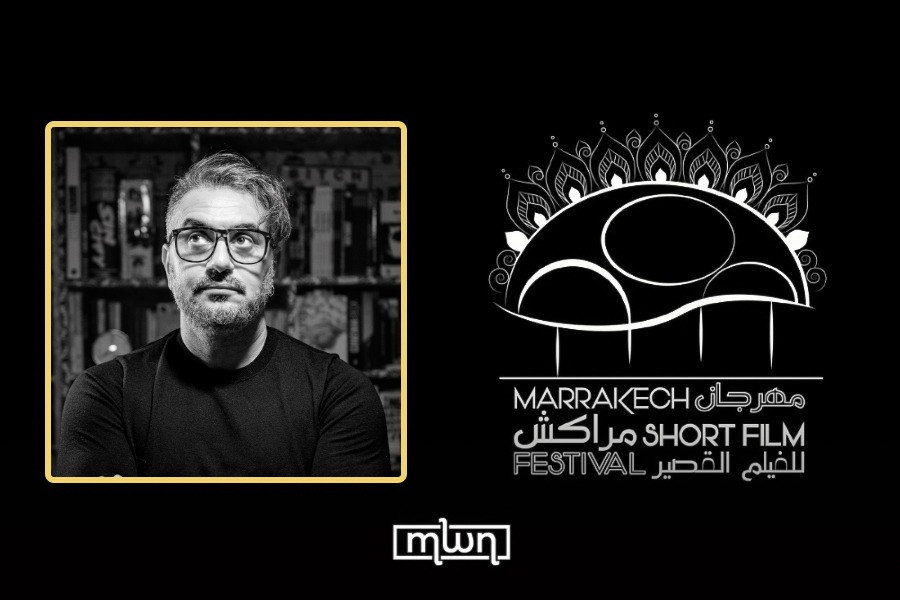
Marrakech – He doesn’t look for safe angles. Hicham Lasri – playwright, novelist, comics artist, filmmaker – builds films like Molotov essays: compact, mischievous, disruptive. From Cannes’ ACID to Berlin’s Panorama and Forum, his work keeps returning to Morocco’s most awkward rooms – memory, authority, shame – and leaves them rearranged.
This year, as president of the national jury at the Marrakech Short Film Festival (MSFF), his eye turns to the next wave of short-form storytellers, in a city that screens films under the stars and calls it a civic ritual.
Born in Casablanca in 1977 and known under the pseudonym “Daddy Desdenova,” Lasri sat down with Morocco World News (MWN) to talk about craft, risk, and why short films are Morocco’s most agile mirror.
The filmmaker, whose distinctive punk-toned social satires have earned repeated selections at Berlinale and ACID Cannes, brings a formidable artistic portfolio to the festival.
At his age, Lasri is completing his ninth feature film, alongside an incalculable number of short films. With 14 novels and seven graphic novels under his belt, he brings a truly multi-disciplinary perspective to the festival.
Lasri’s cinematic journey spans over a decade, from his 2012 debut “The End” (ACID Cannes) to “They Are the Dogs” (2013) and “The Sea Is Behind” (2014). He then found a Berlinale rhythm with “Starve Your Dog” (Panorama, 2015), “Headbang Lullaby” (Panorama, 2017), and “Jahilya” (Forum, 2018).
His recent works extend this trajectory – “Moroccan Badass Girl” (2024), which world-premiered at the Marrakech International Film Festival in 2023, and “Thank You Satan” (2025), produced by Lamia Chraïbi and included in Rotterdam’s slate.
His literary output includes novels such as “Stati©” (2010), “Sainte Rita” (2015), “L’improbable Fable de Lady Bobblehead” (2018), “L’effet Lucifer” (2021), and “Big Data Djihad” (2023).
His latest opus, “Cloud Cowboys” (2025), marks a bold return – a cinematic, Arabo-futuristic fever dream where water is memory, tenderness a luxury, and hope the last surviving resource.
As a playwright, he has brought to the stage works including “(K)Rêve!” (2006), “ZemZem” (2008), and “Les Invisibles” (2017). His contributions to the world of graphic novels include titles such as “Vaudou” (2015), “Fawda” (2017), and “MaRRoc” (2019), showcasing his versatility across multiple creative forms.
The evolution of Moroccan short films
Lasri belongs to a generation for whom short films were “extremely important” and valued because they were shot in 35mm. He made his first short in 2001-2002, describing it as “a 35mm shoot, with all the complications that followed.”
“Short films weren’t a stepping stone or a means to get approval, which somewhat distorted the short film ecosystem,” says Lasri. “It was probably purer; there were no transactions. Everyone worked for free on short films.”
He criticizes how the introduction of laws requiring production companies to produce three short films opened doors to “opportunists, people without ideas, and rent-seekers,” which he believes damaged the short film landscape for his generation.
“Current short films in Morocco, with few exceptions, have been contaminated,” Lasri argues. “There’s no more passion, only people whose job is to make short films for dubious producers who have absolutely no interest in cinema.”
Their obsession, he notes, “isn’t cinematic but rather pecuniary” – allowing them to establish production companies to create content for television or advertising. “Merchants, let’s call them that,” he adds dismissively.
Lasri continues to make short films even after directing features because he finds “extraordinary nobility in becoming young again, working on ideas that don’t need to be feature films, taking time to relearn things.”
For him, short films help filmmakers “question and reposition the center of gravity of our passions” to avoid becoming “calcified, old, repetitive,” allowing them to “maintain agility” and push boundaries.
Digital innovation and authentic vision
The filmmaker notes how technology has transformed filmmaking possibilities. “We’re living in a new era with digital technology, new cameras, even iPhones. We can shoot things that are current, that capture the zeitgeist.”
“Youth must capture this zeitgeist and show us reinventions,” he insists. “We can’t make short films as if we were in the 1960s with cameras weighing 60 kilos. It’s not the case anymore – we’re in 2025, almost 2026.”
Lasri observes that many young directors make “old people’s films” – films written as if they were still in the 1970s, “without the innovative aspect, without the risk-taking.”
“I’ve seen plenty of young directors making old people’s films, or first films by old people,” he elaborates. “That is, films written as if we were still in the 70s, without the innovative side, without the risk-taking side.”
He believes technological lightness “must contribute to the depth of perspective on the era” and sees short films as a way to “destabilize what is taken for granted” and to challenge the establishment, offering “an idiosyncratic vision that must be unique.”
“I’m always waiting to see a short film made by a young person that carries the DNA of youth,” Lasri states, recalling how his generation made silent short films that “defied the lack of means and sometimes technical limitations.”
“When we had to grade the film at the Moroccan Cinematographic Center (CCM), it was always complicated, sometimes they damaged our rushes,” he recalls, noting that today’s challenges differ but the creative bar has moved. “Now, it’s both much easier and the challenge is different, the cursor is different.”
Comedy as subversion
Lasri’s approach has “never been mainstream.” He describes himself as “quite edgy, quite confrontational” and defines cinema not as something that unites, but divides and creates dialogue.
“For me, it has always been important that cinema questions, confronts, beats up, becomes problematic,” he explains. “I’m always amused when I watch something I’ve made that will anger people.”
He uses humor and dark comedy as channels for his sensibility, allowing him to “convey messages without being first-degree, without being activist, without being hysterical.”
This approach enables him to tackle all subjects “without reverence, without taking them seriously,” avoiding both victimization and deification – two traps he identifies in contemporary Moroccan storytelling.
“We’ve victimized ourselves for a long time, selling our prostitutes, our street children, our beaten women,” he argues. “I find that undignified. I think we must have dignity when talking about ourselves.”
He equally avoids what he calls “demagogic discourse” that comes with Morocco’s 2030 vision and World Cup bid – “the woman who will drive a taxi, all that” – which he sees as “rather stupid deifications and a pasting of Western DNA onto us.”
Instead, Lasri focuses on storytelling that captures “our humanity, our fallibility, our bad faith, our hysteria, many flaws that humanize us, that we must accept in ourselves before we can work against these flaws to improve as citizens.”
Artistic integrity vs. commercial pressure
For the director, “the real value of cinema is art, not commerce – and we must never confuse the two.” He stresses the importance of not becoming “a cog in the system, a CCM official or TV functionary,” as it “ages us and removes our pure creative energy.”
He notes interesting developments happening online with “casseur films” made by “very naive people who don’t know how to make films but have a desire to share.”
“Cinema needs love, not professionals. Professionals are prostitutes,” Lasri provocatively states, quoting Orson Welles: “In ‘Amateur’ there is ‘love,’ and we need love.”
The filmmaker claims to have pioneered content that later became mainstream. “Before TikTok, I did TikTok when I made ‘Bissara Overdose’ in 2017, where for us, it was a creative project. I called them societal portraits,” he explains. These videos “racked up millions and millions of views before it happened for real.”
He laments that while Morocco has many comedians and comics, “I don’t see laughter. I see connivance, condescension, but there’s no relevance, no strength.”
Lasri recalls listening to comedy sketches on audio cassettes as a child that were “much funnier than now.” Today, despite having “technology, means, sometimes even knowledge, and not much censorship, there’s not much courage. The visions are very narrow.”
He criticizes the lack of “advanced social consciousness” in Moroccan media, claiming people “aren’t sufficiently cultured to have a relevant and piercing sociological perspective.”
Festival as cultural incubator
Born at the crossroads of trade routes, Marrakech has long been a cradle of storytelling and creativity. With its mystical Medina and palm-filled hinterland, cinema is woven deep into the city’s cultural fabric.
When COVID-19 shuttered theaters, local audiences were left yearning for the therapeutic pleasure of film-going. Out of that silence, the MSFF was founded – rekindling the city’s bond with the seventh art.
The MSFF, now in its fifth edition, runs September 26 to October 1, 2025. The week-long event features national and international competitions, guest-country programs, and satellite “Best Of” screenings throughout the year.
Screenings often take place in emblematic venues – including Palais Bahia, Palais Badi, and Arsat Moulay Abdeslam – designed to bring shorts to a broad public.
The festival’s decentralized format aims to bring short films to broad audiences through open-air screenings in historic locations.
For Lasri, the importance of celebrating short films is about “celebrating ideas and visions” and “propelling youth to make them want to be the most radical and innovative possible.”
He sees value in festivals like the MSFF for educating audiences and giving creators a space to confront public reaction.
“It’s important to have festivals like the Marrakech Short Film Festival to allow people to both want to create, but also to face an audience,” he concludes. “They’ll be more demanding with themselves, more demanding for the future, and it will make them want to do better.”
He compares filmmaking to sports, saying, “It’s like football, like sports, like a marathon, it’s not something you improvise. You have to be patient, build yourself up enough to be relevant.”
The challenge, he admits, is complex. “If someone claims or gives the impression they know how to do it, they’re selling sand and doing politics,” he warns. Instead, he suggests filmmaking requires “a certain dose of sincerity, a certain degree of persistence, and above all a certain degree of work.”
Read also: Moroccan Director Hicham Lasri: Creativity Is Important for Its Own Sake
[ad_2]
Source link