
[ad_1]
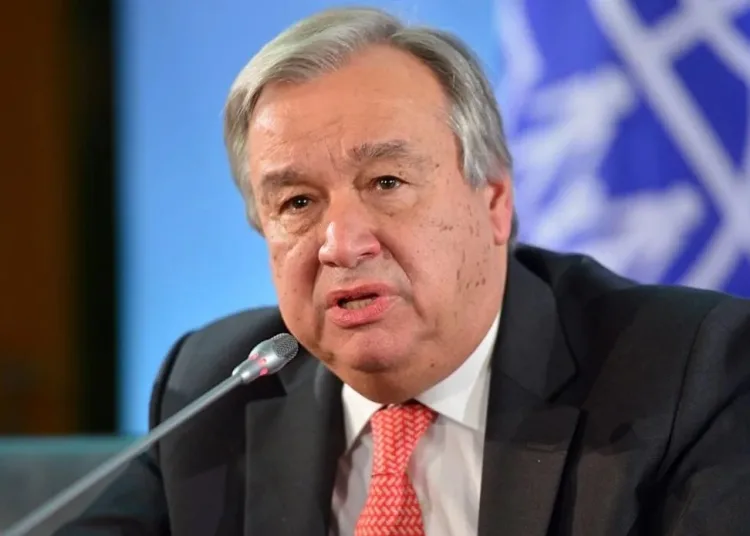
Rabat — UN Secretary-General Antonio Guterres has delivered a stark assessment of the Western Sahara situation in his latest annual report to the General Assembly.
In his assessment, the UN official expressed “profound concern” over escalating tensions, warning that the current impasse cannot continue as the regional dispute nears its 50th anniversary.
The comprehensive seven-page report, covering the period from July 1, 2024, to June 30, 2025, paints a troubling picture of a dispute that has defied decades of international mediation efforts while humanitarian conditions in Algeria’s Tindouf camps continue to deteriorate.
De Mistura’s diplomatic push gains international backing
The UN chief pointed to the intensive diplomatic efforts of his Personal Envoy to the Western Sahara, Staffan de Mistura, who has accelerated engagement with all parties throughout 2024 and 2025.
The Finnish diplomat’s extensive shuttle diplomacy included visits to Rabat, Nouakchott, the Tindouf camps, and Algiers, alongside high-level consultations across European capitals and Washington.
De Mistura’s two Security Council briefings in October 2024 and April 2025 received “broad support from member states,” according to the report, signaling growing international consensus around the UN’s mediation approach.
The personal envoy has maintained regular contact with Morocco, the Algeria-backed separatist Polisario Front, the Algerian regime itself, Mauritania, as well as Security Council members, in what appears to be the most sustained diplomatic push in years. De Mistura has also brought the Group of Friends of the Western Sahara into the fold of continued discourse, which includes the US, France, Spain, the UK, and Russia.
Security situation deteriorates despite UN presence
The report documented concerning developments on the ground, including continued clashes near Mahbes and projectile attacks near Smara, primarily initiated by the Polisario Front.
Most alarmingly, alleged airstrikes behind the defensive wall, known as the Berm, reportedly killed 11 individuals from Mauritania, Mali, and Sudan, reflecting the dispute expanding regional impact.
Despite these challenges, the UN noted “relative improvement in movement east of the sand wall,” though logistical support for MINURSO operations continues to face significant obstacles.
Tindouf camps face mounting humanitarian crisis
Guterres dedicated substantial attention to the deteriorating conditions that exist in the Tindouf camps, in Algeria, where tens of thousands of Sahrawis have lived for nearly five decades. The UN identified a critical funding gap, requiring $103.9 million for 2025 operations.
“Reduced funding affects all populations, particularly children and women suffering from varying degrees of malnutrition,” the report states, while also impacting essential services including primary education and youth programs. In the absence of these youth safeguarding mechanisms, the Polisario has reportedly enforced the unlawful practice of child militarization.
This UN funding gap comes at a time when reports circulate of the Polisario embezzling the funds and aid that do matriculate, further exacerbating efforts and prolonging the critical humanitarian situation for Sahrawis.
In a notable development, May’s semi-annual donor mission included private sector participation for the first time, representing efforts to diversify funding sources amid persistent shortfalls.
However, confidence-building measures established under Security Council Resolution 1282 remain suspended, preventing familial communications between camp residents and their communities in the territory, a stalemate situation that has persisted for years.
International momentum builds for resolution
The Secretary-General’s report comes as the dispute approaches a symbolic yet bleak milestone that could galvanize international action — its 50th anniversary. This stark reminder of the extended nature of the dispute “makes reaching a political solution more urgent than ever,” Guterres said, calling for accelerated diplomatic efforts.
The UN chief specifically commended both de Mistura and MINURSO Force Commander Alexander Ivanko for their “commitment and dedication” despite operating in increasingly challenging circumstances.
Strategic implications for regional stability
The report’s timing — ahead of the General Assembly’s 80th session opening in September — positions it as a crucial reference document for diplomatic discussions within the Fourth Committee, where member states will debate next steps in the UN process.
As the international community grapples with multiple global crises, the Western Sahara file presents both challenges and opportunities for breakthrough, particularly as regional dynamics continue to evolve and international attention focuses on sustainable solutions to protracted conflicts.
The Secretary-General’s stark warning about an “unsustainable status quo” suggests the UN may be preparing for more decisive action as traditional diplomatic approaches face mounting pressure to deliver results after nearly five decades of stalemate.
As the Algerian regime and the Polisario continue to find ways to ensure that this status quo stays in uncertain territory to prolong their own agendas, the global shift towards a civil, legal, and pragmatic escape route with Morocco’s Autonomy Plan comes as a light at the end of a long 50 year-old tunnel.
Morocco has been reaping the fruits of its robust global diplomacy. A growing number of international countries, including the US, France, and Spain, have endorsed the effectiveness of its Autonomy Plan for the Sahara.
Many countries have opened consulates in the country’s southern provinces, further operationalizing these written and verbal agreements.
As the Sahara dispute enters its UN designated 50 year-mark, one thing is certain — and Guterres latest address backs up this sentiment — the world is ready to see a swift end to Africa’s longest territorial dispute.
[ad_2]
Source link