
[ad_1]
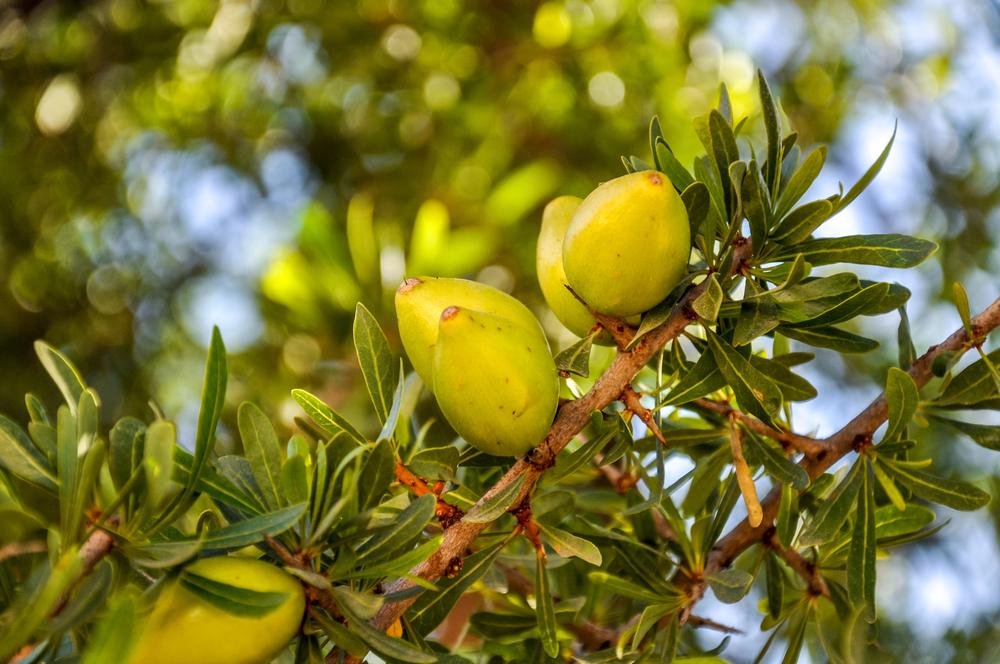
Marrakech – A groundbreaking scientific achievement has been announced as an international consortium of researchers, working with Moroccan scientists, has successfully mapped the first-ever chromosome-level genome assembly of Morocco’s iconic argan tree.
This marks a breakthrough in the scientific understanding and preservation of an endemic species that is vital to Morocco’s ecology and economy, sustaining rural livelihoods while commanding a billion-dollar global oil market.
Published in Scientific Data (Nature portfolio) this month, the study produced a high-quality, phased genome of Sideroxylon spinosum – commonly known as the argan tree – using cutting-edge PacBio HiFi and Illumina Hi-C sequencing technologies.
For the first time, scientists succeeded in assembling both parental genomes independently, achieving near-complete accuracy with BUSCO completeness scores above 97.8%.
“This high-quality assembly provides a valuable resource for future research on argan biology, genetic diversity, and traits relevant to adaptation and oil biosynthesis,” the authors wrote.
Endemic to Morocco, the argan tree is a pillar of ecological and cultural heritage. Its golden oil – extracted from the seeds – is renowned worldwide for culinary and cosmetic uses. For Moroccan families, and especially for women’s cooperatives, argan oil represents not only a source of income but also a symbol of empowerment.
Yet the tree is under pressure. The Arganeraie region, recognized by UNESCO as a biosphere reserve in 1998, has faced decades of environmental and human strain.
Overgrazing by goats, intensification of land use, and skyrocketing global demand have pushed the species toward unsustainable exploitation. Climate change has deepened the crisis: hotter summers, prolonged droughts, and increasingly erratic rainfall patterns are reshaping the fragile ecosystem.
Earlier research already warned of the danger. “Booming markets for Moroccan argan oil appear to benefit some rural households while threatening the endemic argan forest,” scientists noted in a 2011 PNAS study, a finding echoed in the new paper.
Inside the genome
The new research sheds light on the inner workings of the tree’s biology. Each haplotype – the two versions of the genome inherited from its parents – was resolved into 11 fully assembled chromosomes, consistent with other members of the Sapotaceae family.
Roughly 60% of the genome consists of repetitive DNA sequences, while scientists predicted around 28,720 protein-coding genes per haplotype.
Among the discoveries: a large inversion on chromosome 2 between the two haplotypes, offering clues to the species’ structural variation. Evidence shows that the argan’s two largest chromosomes (chr1 and chr2) likely arose through repeat expansions and chromosome fusion events, distinguishing it from close relatives like the shea and miracle fruit trees.
A fully reconstructed chloroplast genome of 132,913 base pairs was also achieved, nearly identical to earlier references but correcting a duplication error in past assemblies. “Our telomere-to-telomere genome assembly offers new insights into chromosome evolution in this species,” the researchers said.
Why it matters
Speaking to SNRTNews, Professor Mohamed Hijri, director of the African Genomics Center at Mohammed VI Polytechnic University (UM6P) in Benguerir and one of the study supervisors, described this accomplishment as “a decisive step toward understanding the evolution, genetic diversity, and adaptation of the argan tree.”
He noted that the previous lack of a complete genetic map had hindered agricultural practices such as grafting, which could improve productivity and oil quality.
The research, conducted on a single specimen collected near Essaouira, required nearly three years of work. The next phase will involve analyzing genetic variations across different argan tree populations throughout Morocco to better preserve this natural resource.
For scientists, the genome is a treasure trove. It paves the way for exploring the genetic basis of oil quality, drought tolerance, and disease resistance – traits that could prove vital as Morocco adapts to climate pressures. For conservationists, it provides a reference that can inform reforestation and safeguard the Arganeraie against further degradation.
In keeping with open science principles, the research team has made the entire dataset publicly available: raw sequencing data in the European Nucleotide Archive, annotated genomes on Zenodo, and assembly scripts on GitHub.
The project was supported by the Swiss National Science Foundation and the University of Fribourg, with contributions from Moroccan institutions including UM6P and Cadi Ayyad University.
For Morocco, the genome of Sideroxylon spinosum represents more than scientific achievement – it is a tool of resilience. As global interest in argan oil continues to rise, this genetic blueprint may help ensure that the tree not only survives but thrives, balancing conservation with economic opportunity.
[ad_2]
Source link