
[ad_1]
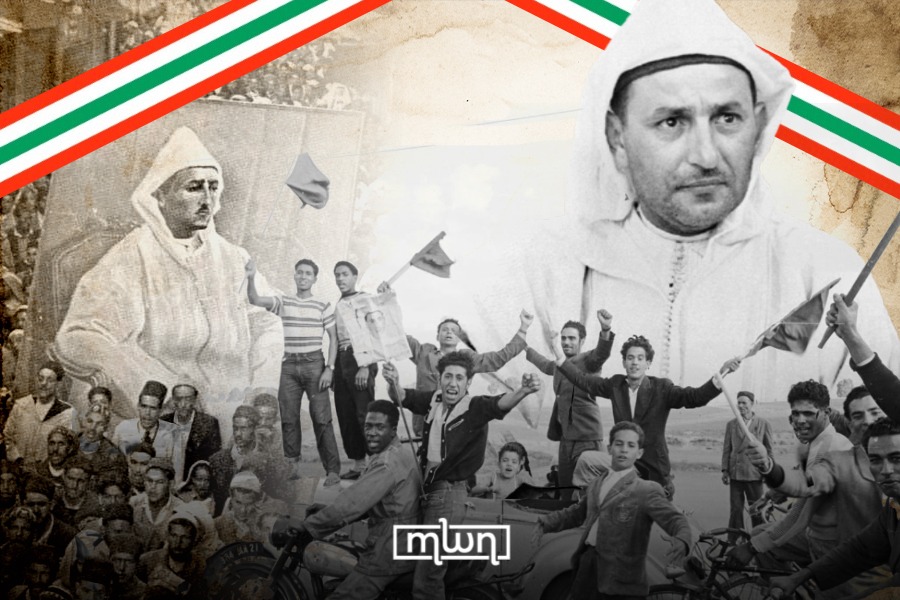
Rabat — Morocco marks today the 72nd anniversary of the Revolution of the Sultan and the People, a historic day that brings back memories of national values, resistance, and sacrifice.
The memory fills Moroccans with pride and strength as the country continues its march into building a modern Morocco.
The epic struggle led to the liberation of Morocco from French colonial rule, showing the strongest bond between the people and the throne.
The Moroccan people resisted all conspiracies aimed at tearing their country apart during its fight for freedom, independence, and unity under the leadership of the Alaouite dynasty.
The spark that ignited revolution
August 20, 1953, was the turning point in French colonialism in Morocco, when its forces exiled the symbol of national sovereignty and unity, liberation and independence, the late Sultan Mohammed V, along with his family.
The colonizers removed the sultan from his throne and homeland, thinking this would crush the national struggle and disrupt the strong ties between the throne and people.
Yet the Moroccan people stood firm against this vile conspiracy, sacrificing everything precious for their homeland’s dignity and honor.
The people rallied to fight and protect Morocco’s sovereignty and identity while demanding the return of their legitimate king.
The return of the Sultan was enforced by continued resistance from the Moroccan people, challenging the French control and leading to the return of Sultan Mohammed V in 1955.
This moment paved the way for Morocco’s independence, formally achieved on March 2, 1956.
And it holds a special place in every Moroccan’s heart because it represents values of patriotism, national pride, sacrifice, commitment, loyalty, and the victory of both the throne and the people’s will.
A legacy of resistance
Morocco and its people faced foreign ambitions with faith, determination, and resolve against colonial domination.
The country has a proud history of resistance against foreign occupation in all its regions, including famous battles like the Battle of El Herri in the Middle Atlas in 1914, the Battle of Annual in the Rif from 1921 to 1926, the Battle of Bougafer in Ouarzazate, and the Battle of Jbel Baddou in Errachidia in 1933.
Political action continued, first appearing in opposition to the so-called Berber Dahir in 1930, a colonial decree aimed to divide the national ranks and separate the united Moroccan people by planting seeds of racial discrimination and tribal divisions.
Completing independence
Following the formal independence of Morocco on March 2, 1956, the country continued its march toward a free, modern, and independent country.
The liberation march continued with the completion of national independence by recovering Tarfaya on April 15, 1958, and Sidi Ifni on June 30, 1969.
This heroic epic reached its peak with the liberation of the remaining parts of Morocco’s Sahara through the unity of throne and people and the wisdom of the engineer of the victorious Green March, King Hassan II.
The Green March represented a wise approach of peaceful struggle to recover Morocco’s southern provinces, when the last Spanish soldier left the Moroccan Sahara on February 28, 1976, and the Oued Eddahab region returned to Morocco on August 14, 1979.
Today, as Morocco commemorates this historic anniversary, the revolution’s values continue to inspire the nation’s ongoing development and unity, serving as a source of strength for future generations.
The North African country has made strides in recent years, receiving international endorsement for its sovereignty over its southern provinces. The momentum reflects Morocco’s firm will to proceed with the region’s development and liberation.
Morocco’s position on Western Sahara has been endorsed by major international powers, including the US, France, and Spain, with expectations that many will join this growing dynamic sooner rather than later.
[ad_2]
Source link