
[ad_1]
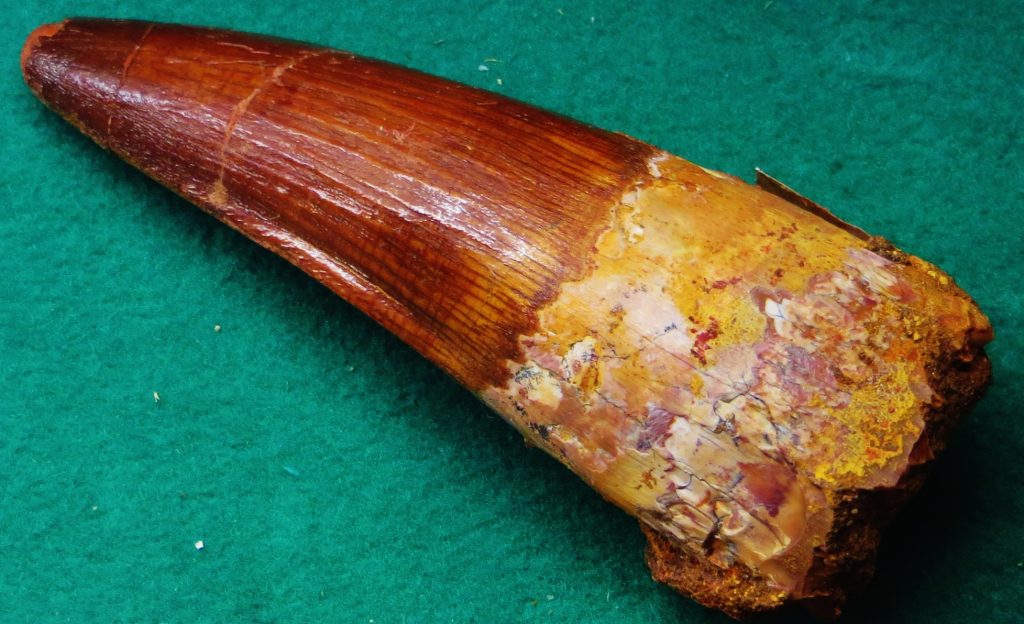
Marrakech – Scientists have discovered three dinosaur teeth in Morocco’s Middle Atlas Mountains that represent the oldest evidence of turiasaurian sauropods in mainland Africa. The teeth, collected from the Middle Jurassic El Mers III Formation near Boulemane, date back approximately 168 million years.
The findings were recently published in the scientific journal Acta Palaeontologica Polonica by an international team led by D. Cary Woodruff of the Phillip and Patricia Frost Museum of Science in Miami and including researchers from Morocco’s Université Sidi Mohamed Ben Abdellah in Fez.
According to the study, these large, “spatulate” teeth with diagnostic “heart”-shaped crowns are readily identifiable as belonging to turiasaurians, a group of non-neosauropodan eusauropods.
Turiasaurians were massive plant-eating dinosaurs with long necks that inhabited both the northern supercontinent Laurasia and the southern supercontinent Gondwana throughout the Jurassic and Cretaceous periods, spanning from about 200 to 66 million years ago.
“These teeth represent the first definitive turiasaurian remains from Morocco, as well as the geologically oldest occurrence of Turiasauria from mainland Africa,” the researchers state in their paper.
The teeth were surface-collected by a local farmer at a site nicknamed “Big Flood Quarry,” located in the Boulahfa Plain. This area is known for its erosive badlands formed by frequent flash flooding events that transport large amounts of sediment.
While the teeth share similarities with those of the Late Jurassic Turiasaurus riodevensis from Spain, they differ in several key features. The Moroccan specimens lack rounded denticles and instead have a prominently peaked apex and a mesially flared margin not seen in other known turiasaurians.
The research team identified the specimens as “Turiasauria indeterminate” rather than assigning them to any specific species. They considered but ultimately rejected referring the teeth to “Cetiosaurus mogrebiensis,” a dubious sauropod taxon previously described from the El Mers Group that lacks preserved teeth.
“The Boulahfa Plain teeth, especially USMBA 002 and 004, are strikingly similar to previously documented turiasaurian teeth,” the researchers contend. However, they also point out that “the absence of rounded denticles along the mesial apex boundary” and other features distinguish them from known species.
This discovery adds to Morocco’s growing importance in understanding Middle Jurassic dinosaur diversity. The same formation has previously yielded Spicomellus afer, the world’s oldest ankylosaur; Adratiklit boulahfa and Thyreosaurus atlasicus, early stegosaurs; and the world’s oldest cerapodan ornithischian.
“The El Mers III Formation is becoming increasingly important for understanding the radiation of dinosaurs during the Middle Jurassic,” the researchers explain. These fossils shed light on dinosaur diversifications following global environmental changes at the end of the Early Jurassic.
The discovery expands the known geographic range of turiasaurians during the Middle Jurassic. Combined with other finds from Madagascar and possibly Denmark, it suggests these dinosaurs had achieved a wide distribution by the Bathonian stage of the Middle Jurassic, about 168-166 million years ago.
“Middle Jurassic terrestrial faunas are globally poorly represented, making the fauna of the El Mers III Formation critical to our understanding of the establishment of these famous Late Jurassic faunas,” conclude the researchers.
[ad_2]
Source link