
[ad_1]
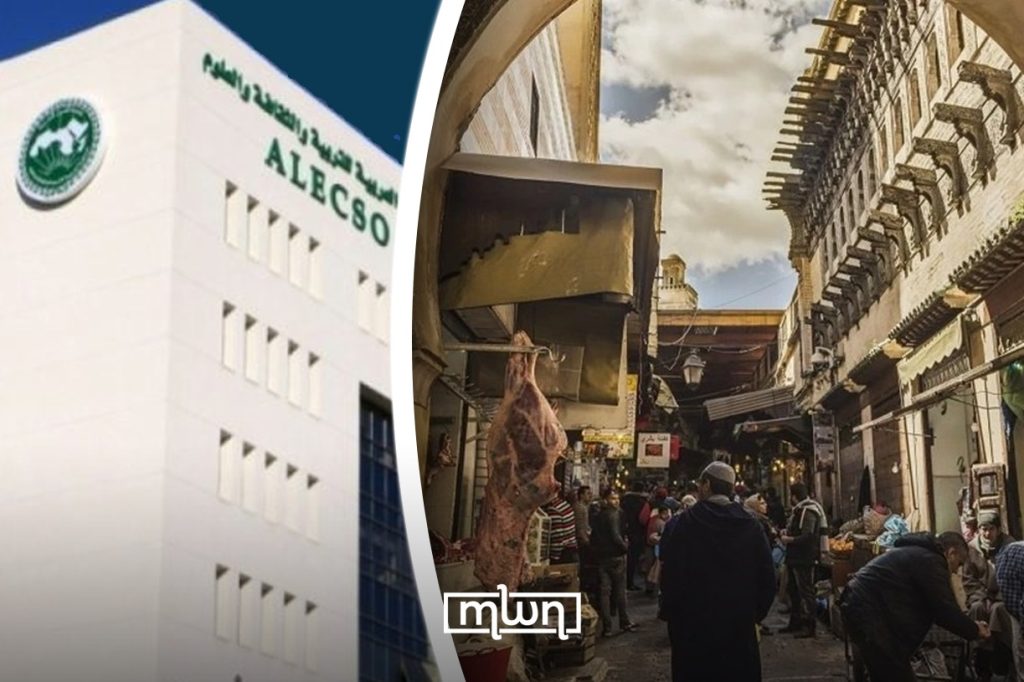
Fez – Steeped in over a millennium of history and craftsmanship, the medina of Fez has once again reaffirmed its stature as a jewel of Arab-Islamic civilisation. The iconic medina has this time earned a place on the inaugural registry of Arab architectural and urban heritage launched by the Arab League Educational, Cultural and Scientific Organisation (ALECSO).
According to a statement by ALECSO, the historic Moroccan medina is among the first sites to be officially listed on this new register, alongside a highly symbolic group of urban heritage sites including the Old City of Al-Qods (Jerusalem), the Old City of Al Khalil (Hebron) and the Omari Grand Mosque in Gaza.
This initial cohort also features the famed Zitouna Mosque in Tunisia, the archaeological site of Azougui in Mauritania, and the Libyan village of Tounine in Ghadamès.
Designed as a long-term effort to document, protect and promote the architectural identity of historic urban centres across the Arab world, ALECSO’s register places particular emphasis on creativity as a defining feature of Arab built heritage, demonstrating the role of visionary architects, traditional master-builders and local artisans in shaping the urban environments that have come to embody the cultural memory of entire societies.
The medina of Fez is a natural candidate for such recognition. Founded in the 9th century and continually inhabited ever since, it remains one of the largest and best preserved medieval Islamic cities anywhere in the world.
Its labyrinthine alleys, soaring minarets, artisan souks, caravanserais, fondouks and madrasas are not merely architectural relics; together, they form a living ecosystem of craftsmanship, spirituality, civic life and historical continuity.
The site’s inscription on ALECSO’s registry strengthens its position not only as a monument of Moroccan heritage, but as a shared cultural asset for the wider Arab world, one deserving of both preservation and celebration.
ALECSO notes that its newly launched initiative also seeks to acknowledge contemporary architectural contributions that reflect evolving tastes, technological advances and creative trends within Arab cities today, signalling that heritage is not confined to the past, but encompasses living expressions of identity in continuous transformation.
By juxtaposing medieval medinas with modern architectural expressions, the organization hopes to foster a renewed appreciation of Arab urban ingenuity across time.
Crucially, the registry aims to serve as a bulwark against both neglect and erasure, at a moment when many historic urban fabrics across the region face mounting risks, from uncontrolled development and unregulated tourism to conflict and climate-related degradation.
By spotlighting sites like Fez and Jerusalem, ALECSO insists on the urgent need for protective policies, specialist restoration, and sustained investment in heritage-led urban renewal.
Local authorities in Fez have welcomed the announcement as a timely reinforcement of their own urban strategy, which in recent years has included the rehabilitation of traditional housing, upgrades to public infrastructure in the medina, and initiatives aimed at safeguarding artisanal vocations from decline.
Earlier this year, the city council approved new projects focused on urban planning, mobility and youth spaces — signalling that heritage, far from being static, can act as a catalyst for thoughtful and sustainable urban development.
Internationally celebrated for its beauty, authenticity and density of heritage, the medina of Fez already enjoys UNESCO World Heritage status (since 1981).
ALECSO’s new recognition solidifies its pan-Arab significance and paves the way for possible future collaborations among Arab countries in the field of heritage preservation and cultural diplomacy.
In extending its reach from the Andalusian-influenced rooftops of Fez to the ancient alleyways of Al-Qods, ALECSO’s registry provides a powerful voice. That voice is above all a reminder that the cities we inherit are not only sites of memory, but spaces through which cultural identity is projected, defended, and reinvented for generations to come.
[ad_2]
Source link