
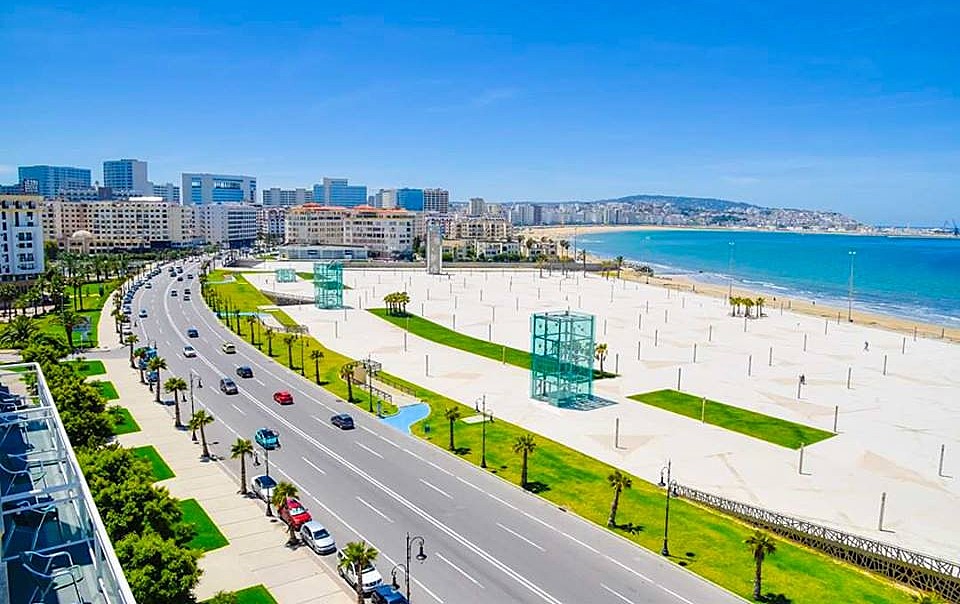
A report published by TF1 Info has highlighted the remarkable transformation experienced by the city of Tangier in recent years. According to the French media outlet, the city has established itself as one of Morocco’s leading economic and real estate hubs, attracting a growing number of European investors seeking promising opportunities on the southern shore of the Mediterranean.
The report notes that Tangier is no longer simply a strategic city overlooking the Strait of Gibraltar. It has evolved into a comprehensive economic center that combines industry, logistics, trade, real estate, and tourism. This development has been driven by its unique geographical position linking Europe and Africa, as well as by a modern infrastructure network that has strengthened its appeal among both domestic and international investors.
According to the report, Tangier has undergone profound changes over the past two decades thanks to major development projects launched across multiple sectors. These initiatives have enabled the city to rank among Morocco’s most attractive destinations for investment. Many European investors now view Tangier as an ideal gateway to African markets and a business environment offering strong growth potential.
The report also highlights the momentum of the real estate sector, which is attracting increasing interest from both investors and individuals seeking residential or investment properties. According to the report, Tangier’s property market remains competitive compared with several European cities in terms of both prices and rental yields.
Beyond real estate, the city’s attractiveness is also linked to the quality of its infrastructure and services. The report cites the Tanger Med Port, which has become one of the largest ports in the Mediterranean and Africa, as well as the motorway network, high-speed rail service, international airport, and numerous urban and tourism development projects that have improved quality of life and enhanced the city’s investment appeal.
Observers believe that the growing attention Tangier receives from international media and economic institutions reflects the success of the region’s development model, which is based on investment, productivity, and integration into global markets.
In this context, the Regional Investment Center of Tangier-Tetouan-Al Hoceima plays a key role in supporting Moroccan and foreign investors, facilitating investment procedures, and strengthening the region’s attractiveness.
Over recent years, the center has maintained strong momentum in implementing reforms aimed at improving the business environment, simplifying administrative procedures, and bringing services closer to investors, in line with national strategies that place investment at the heart of economic development and job creation.
The center also promotes the region’s economic potential both domestically and internationally through participation in economic forums, investment events, and initiatives designed to showcase opportunities in industrial, logistics, tourism, agricultural, and digital sectors.
These efforts are led by Director General Yassine Tazi, who continues to strengthen the institution’s role as a key partner for investors and a strategic facilitator of investment projects through a policy based on proximity, support, and coordination.
Economic stakeholders emphasize that Tangier’s growing attractiveness is the result of several complementary factors, including institutional stability, modern infrastructure, economic openness, business-friendly reforms, and strong investment support institutions.
Preparations for Morocco’s hosting of major international sporting events, particularly the 2026 Africa Cup of Nations and the 2030 FIFA World Cup, are also helping to reinforce investor confidence in the future growth prospects of Moroccan cities, especially Tangier.
The French report concludes that Tangier continues to strengthen its position as one of Morocco’s most attractive investment destinations, benefiting from its strategic location, economic potential, and advanced infrastructure, while institutional efforts continue to enhance regional competitiveness and attract further national and international projects.