
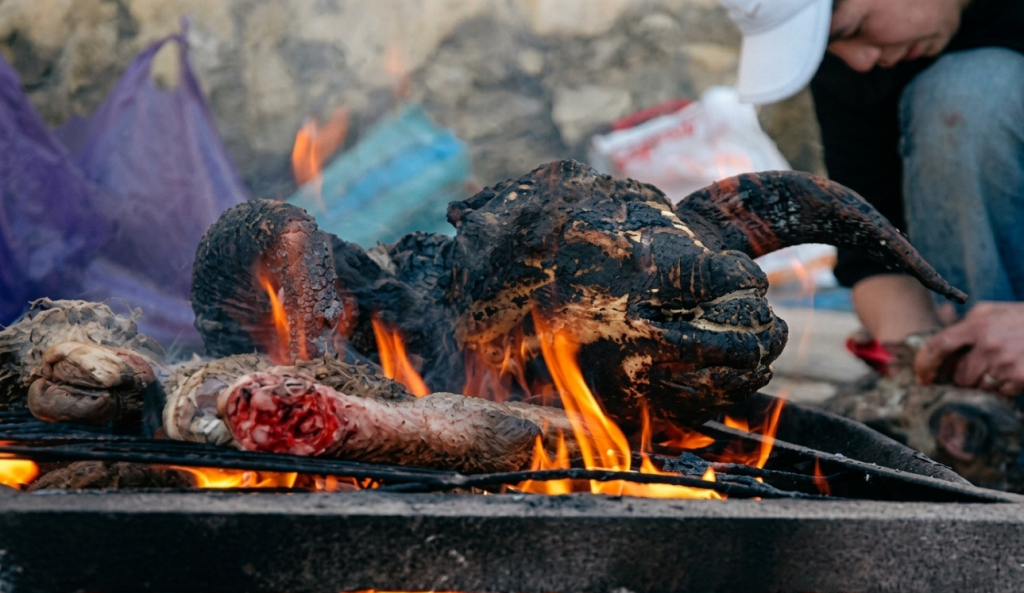
The decision taken in some cities to prohibit the grilling of sacrificial sheep heads and other animal parts in streets and neighborhoods ahead of Eid al-Adha has renewed discussions surrounding traditional social practices and the requirements associated with urban organization, public cleanliness and safety.
In Morocco, grilling sheep heads after the sacrifice has long been associated with collective traditions, particularly in working-class neighborhoods and semi-rural areas, where gatherings around open fires have formed part of Eid celebrations and community interactions.
However, urban expansion and increased population density have contributed to wider debates regarding the use of public spaces, potential safety concerns and issues related to cleanliness and residents’ comfort.
Local authorities have justified restrictive measures in some cases through considerations linked to public hygiene, urban management and risk prevention. At the same time, some perspectives emphasize the cultural and social significance of these practices as part of traditions associated with Eid al-Adha.
The discussion continues around how to balance cultural heritage with urban requirements, including proposals focused on awareness campaigns or organized spaces intended to accommodate such practices while maintaining safety and public order.