
[ad_1]
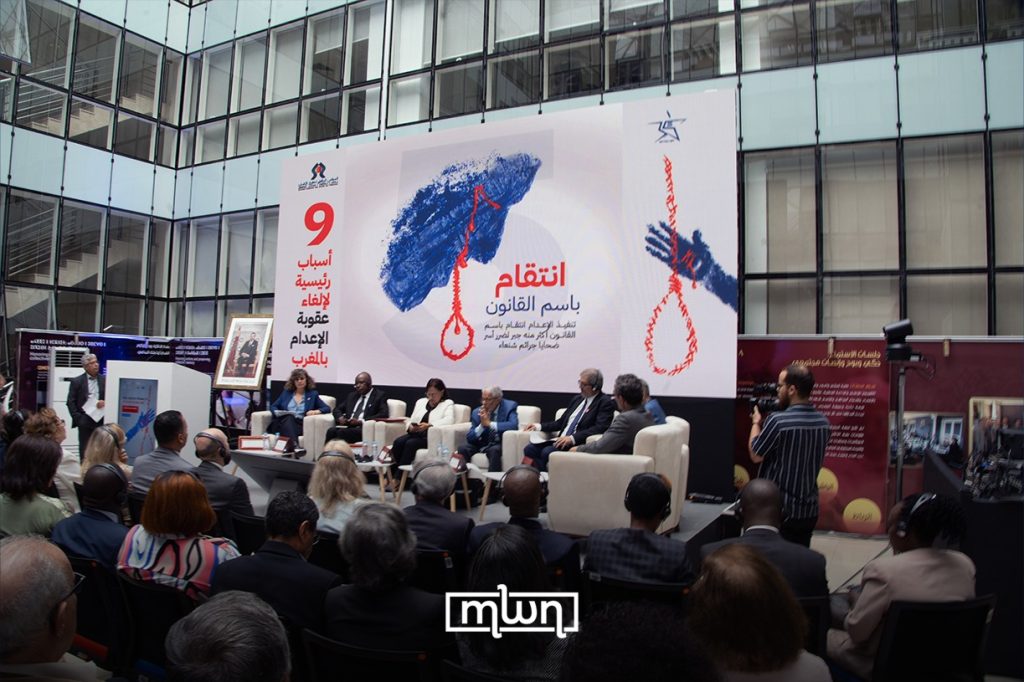
Rabat – Morocco marked the International Day Against the Death Penalty today with a high-level event at the National Human Rights Council (CNDH) to reflect the country’s ongoing efforts to move toward full abolition of capital punishment.
CNDH President Amina Bouayach delivered a speech during the event, outlining Morocco’s progress and reiterated the country’s commitment to protecting the right to life. “The right to life is the most sacred of all rights, and its protection represents the cornerstone of any society based on human dignity and justice,” Bouayach said.
She added that while Morocco has not carried out executions since 1993, the full abolition of the death penalty remains a priority.
Bouayach also noted recent international developments that show this commitment. “From December 2024 until today, Morocco has voted in favor of two major decisions at the United Nations. The first was the vote on the global moratorium on the application of the death penalty, and the second, last week, was a resolution by the Human Rights Council in Geneva,” she noted.
These decisions call for limiting crimes punishable by death, reducing the use of capital punishment where it still exists, and joining the Second Optional Protocol to the International Covenant on Civil and Political Rights, she explained. Morocco’s 2024 vote comes after 17 years of abstention since the resolution was first introduced in 2007.
The CNDH chief stated that abolishing the death penalty does not mean ignoring crime or “being lenient toward crime or abandoning victims.” It means, however, “addressing crime through a multidimensional system that includes education, prevention, fair trials, and reintegration, aiming to build a society that protects life and rejects violence,” she explained.
Speaking to Morocco World News on the sidelines of the event, Mustapha Najmi, Director of Human Rights Promotion at the CNDH, said the country has for several years been engaged in a progressive movement toward abolition, particularly since the vote in December 2024 on the UN Moratorium on the Application of the Death Penalty.
“The Council continues to advocate for accelerating this momentum, notably by ratifying the Second Optional Protocol to the International Covenant on Civil and Political Rights, and by ensuring that the upcoming reform of the Criminal Code formally abolishes this inhuman punishment, one that is neither a deterrent nor an effective tool in combating crime,” he told MWN.
Meanwhile, Abderrahim Jamai, Coordinator of the Moroccan Coalition Against the Death Penalty, spoke to MWN about the role of civil society in pushing for reform.
“Today, after 25 years, the Moroccan movement has achieved notable progress. Its most recent achievement, attained through persistence and dialogue, is the vote to suspend executions in 2024, which is considered a significant milestone,” he said.
“We are now looking forward to further accomplishments,” Jamai said as he emphasized Morocco’s special status in the region. “Morocco holds a special status in Africa and North Africa due to its constitution, which guarantees the right to life.” The country benefits from an “active, progressive, and ongoing movement committed to fighting against the death penalty,” Jamai stated, adding that pardons are essential in restoring hope for convicts and their families.
The event brought together representatives from international organizations, diplomatic missions, civil society, and the media, all united in reaffirming the shared goal of a Morocco without the death penalty.
[ad_2]
Source link