
[ad_1]
At the crossroads of memory, identity, and visual storytelling, Zahoua Raji’s short film “Chikha” stands out as a rare exploration of Moroccan cultural heritage through contemporary cinema.
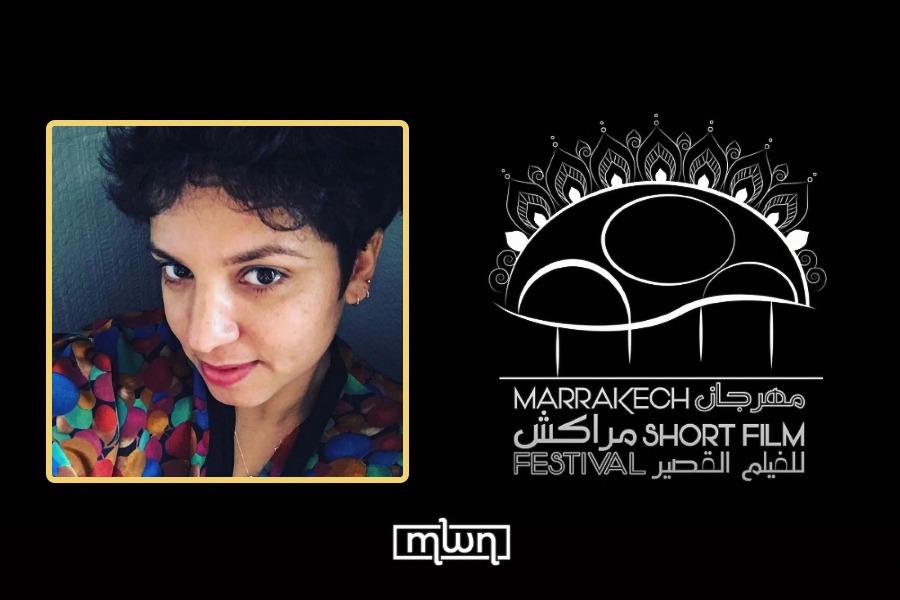
Born in Brussels to Moroccan parents from Casablanca, Raji embodies a dual identity that shapes her perception and her art. She describes her upbringing as a constant negotiation between two worlds: European surroundings that nurtured her aesthetic sensibility and Moroccan roots that instilled a deep connection to tradition and community.
This duality permeates “Chikha,” a work that situates the Chikhates, women singers from Morocco’s traditional Aïta genre, as subjects and symbols of freedom, resilience, and cultural memory.
Raji’s fascination with art has never been limited to a single medium. From a young age, she explored photography and visual arts, enrolling in the Academy of Fine Arts to refine her craft. Yet it was her travels across Beirut, the US, and the Maghreb that crystallized the vision behind “Chikha.”
These journeys exposed her to a diversity of artistic and cultural expressions, awakening a desire to translate observation into cinematic form. “The story of Chikha had always been in the corner of my mind,” Raji told Morocco World News (MWN) in an interview.
“After my experiences abroad, I finally had the confidence and perspective to bring it to life.”
Working with Ayoub Layoussifi, who co-wrote and co-directed the film, allowed Raji to merge her artistic curiosity with narrative storytelling. For her, cinema represented a natural extension of her visual sensibility. Raji describes herself as a cinephile drawn to both story and imagery, with the story of “Chikha” providing the gateway into filmmaking.
“I entered cinema through this story,” she reflects. “It allowed me to combine my fascination with visual art, my respect for authenticity, and my desire to portray voices often overlooked.”
The power of the Chikhates
The Chikhates themselves offered Raji a compelling aesthetic and philosophical inspiration. As a child raised in Belgium, she did not fully understand their lyrics. Yet the performance of these women resonated far more than language ever did.
“Their gestures, their courage, and the impact they held over audiences revealed a form of freedom I had never encountered before,” she says. In this sense, “Chikha” functions as homage and interrogation. It elevates these performers while examining their role in society’s perception of female autonomy and cultural authority.
Realism in aesthetic choices
Raji’s approach to visual storytelling emphasizes realism and intimacy over spectacle. Makeup in “Chikha” is minimal, applied only in scenes of dance or song, allowing the performers’ natural expressions to dominate the frame.
Costumes draw inspiration from family photographs, grounding the aesthetic in lived memory rather than artifice. Lighting, she asserts, shapes the soul of the film.
“Everything around me, the natural light, the environment, the textures, guided the film’s visual identity,” Raji explains. This method creates a cinematic space that feels lived-in, tactile, and emotionally resonant, where viewers confront the world of the Chikhates in its raw and authentic dimensions.
Exploring gender and society
More than just aesthetics, “Chikha” engages with social critique. Raji positions the narrative within the evolving roles of Moroccan women.
She observes that contemporary Moroccan society accommodates women with ambitions beyond marriage, reflecting a gradual, complex shift in expectations. Fatine, the film’s protagonist, embodies this tension. She navigates a society deeply rooted in tradition while asserting her individuality and autonomy.
“I have always been surrounded by strong, independent women,” Raji says. “Through Fatine, we wanted to capture how Moroccan women negotiate family, tradition, and personal desire.”
The film questions notions of gendered power within households, suggesting that matriarchal influence persists, yet often invisibly, shaping choices, priorities, and resilience.
Raji also situates “Chikha” in dialogue with nostalgia and collective memory. She frames Aïta not merely as entertainment but as a vessel of heritage, capable of evoking childhood, memory, and identity. “One cannot find peace without roots,” she insists.
“The Chikha carries our struggles, our stories, and our culture. By restoring her dignity and resilience, the film reminds audiences of what has often been overlooked or forgotten.”
Critical engagement with Moroccan culture
“Chikha” challenges viewers to reconsider their understanding of Moroccan culture. While cinematic depictions of Morocco often oscillate between romanticized exoticism and sociopolitical critique, Raji’s film situates itself in neither extreme.
Instead, it offers a lived perspective informed by dual identity and transnational experience. The camera does not objectify the Chikhates. It recognizes their agency. The story does not exoticize Moroccan women. It portrays their complexity, contradictions, and courage. In doing so, “Chikha” fosters a critical engagement with memory, representation, and social transformation.
The film also confronts the tension between tradition and modernity. While Moroccan society changes, Raji contends, the values embedded in family, love, and cultural practices endure.
This tension is evident in the film’s rhythm and visuals, which juxtapose the intimacy of domestic spaces with the grandeur and performative freedom of public performance. By foregrounding this duality, “Chikha” insists that cultural preservation does not imply stagnation and that modernity can coexist with deep respect for heritage.
A cinematic reclamation of identity
Ultimately, Zahoua Raji’s “Chikha” emerges as a singular voice in contemporary Moroccan cinema. It merges artistry, cultural critique, and personal memory into a compelling narrative that honors the Chikhates and interrogates society’s evolving norms.
The film resists easy categorization, instead demanding reflection, empathy, and recognition. For Raji, cinema is at heart a medium to reconcile the tension between heritage and identity, past and present, local and global.
In this sense, “Chikha” engages with it, amplifies its contradictions, and restores its dignity in a way that few contemporary works attempt.
[ad_2]
Source link