
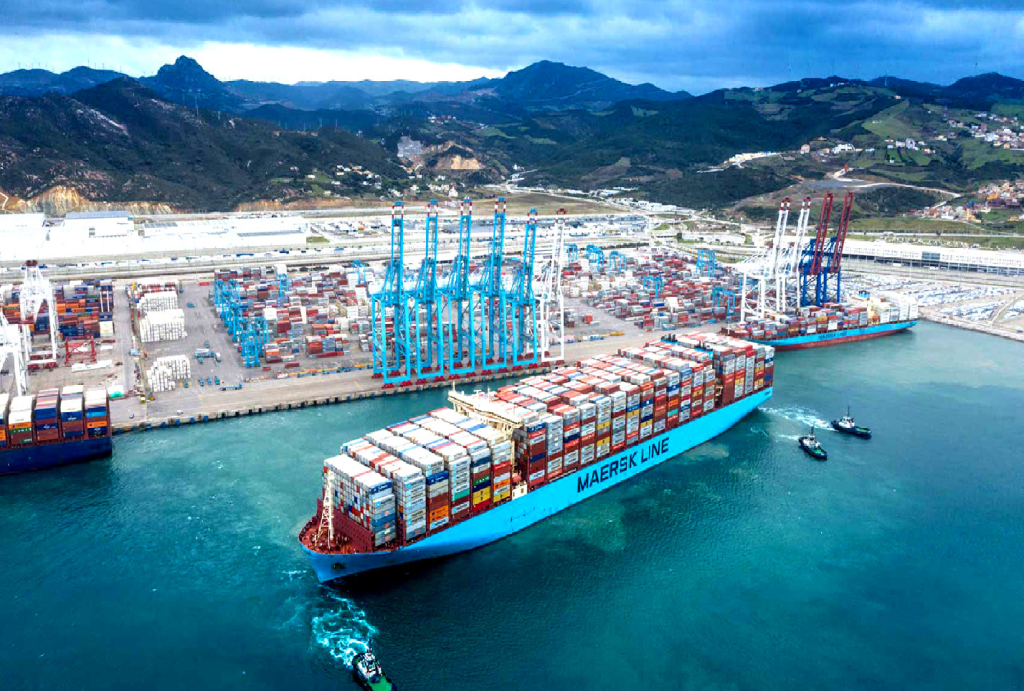
The World Investment Report 2026, published by the United Nations Conference on Trade and Development (UNCTAD), has highlighted Tangier Med Port as one of the world’s leading examples of how modern logistics infrastructure can be transformed into a powerful driver of foreign direct investment. According to the report, Morocco’s experience reflects the ongoing transformation of the global economy as international supply chains continue to be reshaped.
The report, which examines the restructuring of global supply chains, explains that multinational corporations are increasingly reassessing their production and investment locations in response to geopolitical tensions, rising transportation costs and the need for more resilient supply networks. Within this context, UNCTAD notes that Morocco has successfully capitalized on these global shifts by developing an integrated industrial and logistics ecosystem centered around Tangier Med.
According to the report, Tangier Med’s success extends well beyond its position as one of the largest container ports in the Mediterranean and Africa. Its competitive advantage lies in an integrated model that combines the port with industrial zones, free trade areas and advanced logistics services, providing investors with an efficient business environment that reduces production and export costs while improving supply chain performance.
The report also points out that the automotive industrial zone is located approximately 35 minutes from the port, allowing vehicles and manufactured goods to be transported rapidly to export terminals. This proximity significantly reduces storage costs and minimizes risks associated with supply chain disruptions.
UNCTAD further emphasizes the strategic role of rail transport within Tangier Med’s industrial ecosystem. According to the report, the port receives six trains every day from the Renault Tangier plant and two additional trains from the Stellantis manufacturing facility, with each train capable of transporting up to 280 vehicles. This rail-based logistics system reduces dependence on road transport, lowers carbon emissions and improves the overall efficiency of logistics operations.
Beyond infrastructure, the report highlights the comprehensive range of services available to investors at Tangier Med, including ready-to-use industrial land, warehouses that can be completed in approximately six months and a one-stop administrative platform that streamlines customs, technical and regulatory procedures. These services help accelerate investment projects and enhance the attractiveness of the industrial platform.
At the international level, the report also underscores the close cooperation between Tangier Med and Spain’s Port of Algeciras. The two ports coordinate logistics operations and exchange digital cargo-tracking data, strengthening trade flows across the Strait of Gibraltar and reinforcing their role as a strategic logistics gateway linking Europe and Africa.
In its conclusions, UNCTAD considers Tangier Med a practical model for emerging economies seeking to benefit from the changing landscape of global investment. The report argues that the competitiveness of modern ports is no longer determined solely by their handling capacity, but by their ability to integrate industrial production, logistics services, digital technologies and transport networks. It concludes that Tangier Med has successfully transformed Morocco’s strategic geographic location into a genuine economic and investment advantage, strengthening the country’s position within global value chains, particularly in the automotive industry and export-oriented manufacturing sectors.